Blogs
EMI Magnetic Shielding: 7 Powerful Differences Every Engineer Should Understand
A production facility was experiencing repeated failures in its control systems. Engineers initially suspected software issues, faulty wiring, and even power fluctuations. After weeks of troubleshooting, the actual culprit emerged: electromagnetic interference affecting communication signals and nearby magnetic fields disrupting sensitive sensors.
The solution was not simply adding more shielding—it was selecting the correct type of shielding. Proper EMI Magnetic Shielding can prevent both electromagnetic and magnetic interference from affecting sensitive equipment and control systems.
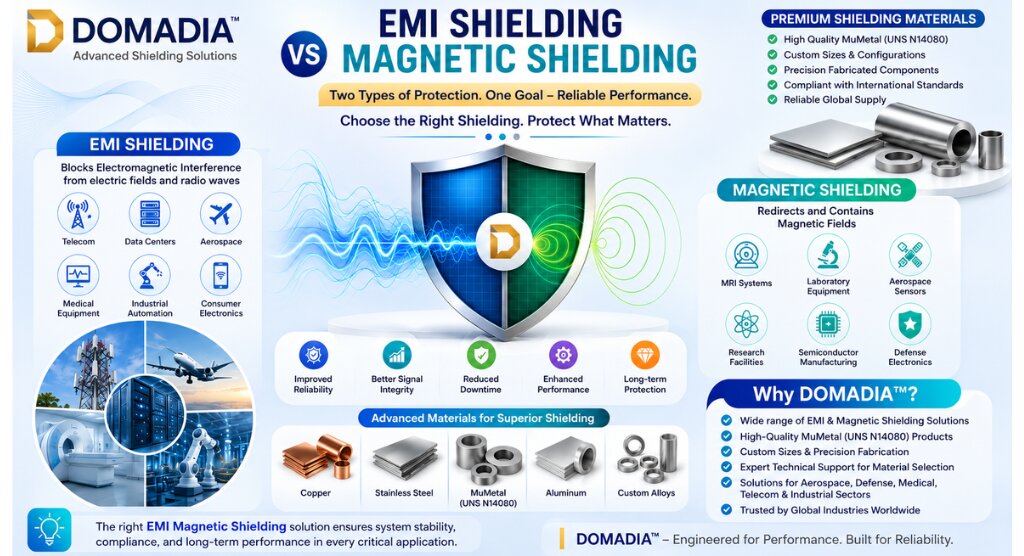
Many professionals use EMI shielding and magnetic shielding interchangeably. While both aim to protect equipment from interference, they address entirely different physical phenomena and require different materials, designs, and engineering approaches.
Understanding these differences can significantly improve system reliability, reduce downtime, and optimize equipment performance. Selecting the right EMI Magnetic Shielding solution helps engineers achieve better system stability, improved signal integrity, and long-term operational reliability.
Understanding EMI Magnetic Shielding
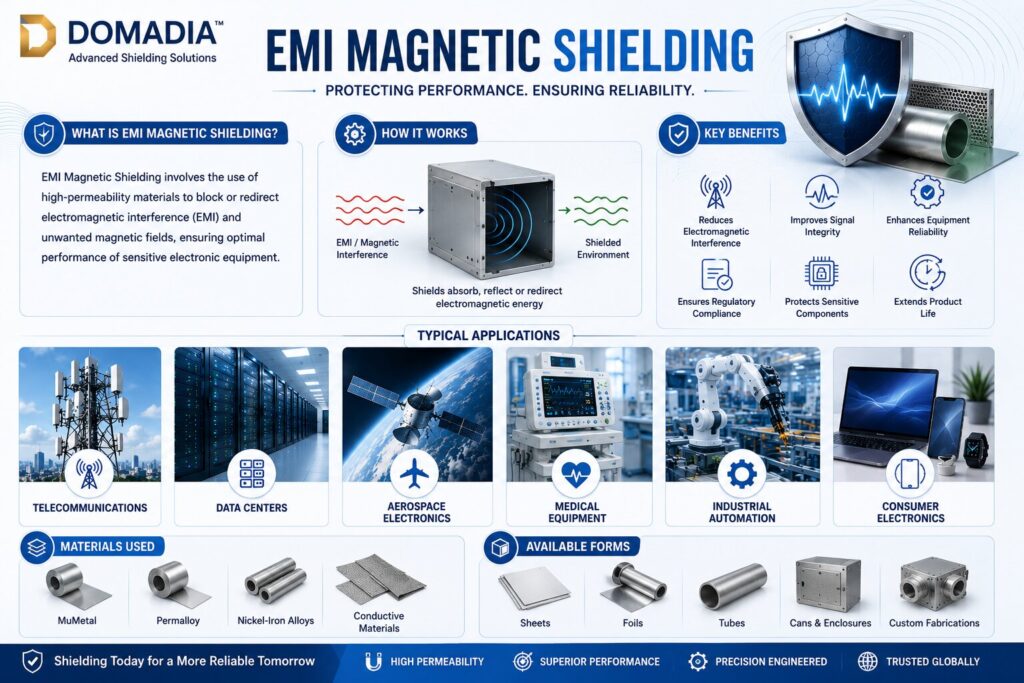
EMI Magnetic Shielding refers to protection methods designed to reduce unwanted electromagnetic or magnetic field interference affecting electronic systems.
Although both shielding methods focus on interference reduction, their operating principles differ significantly:
- EMI Shielding primarily blocks electromagnetic radiation.
- Magnetic Shielding redirects magnetic field lines away from sensitive components.
Selecting the wrong solution can lead to ineffective protection and unnecessary costs.
What Is EMI Shielding?
EMI (Electromagnetic Interference) shielding protects electronic devices from unwanted electromagnetic radiation.
This interference may originate from:
- Wireless communication devices
- Power electronics
- Switching circuits
- Industrial machinery
- Radio transmitters
- High-frequency equipment
EMI shielding works by creating a conductive barrier that reflects or absorbs electromagnetic waves before they reach sensitive electronics.
Common EMI Shielding Materials
- Copper
- Aluminum
- Nickel
- Conductive fabrics
- Conductive foils
- Conductive gaskets
- Metalized polymers
What Is Magnetic Shielding?
Magnetic shielding protects equipment from magnetic fields rather than electromagnetic radiation.
Instead of blocking magnetic fields, magnetic shielding materials redirect magnetic flux through highly permeable materials.
This approach prevents magnetic fields from reaching sensitive instruments.
Common Magnetic Shielding Materials
- MuMetal (UNS N14080)
- Permalloy
- Supermalloy
- Silicon steel
- High-permeability nickel-iron alloys
Magnetic shielding is especially important for low-frequency and static magnetic fields.
7 Major Differences Between EMI Shielding and Magnetic Shielding
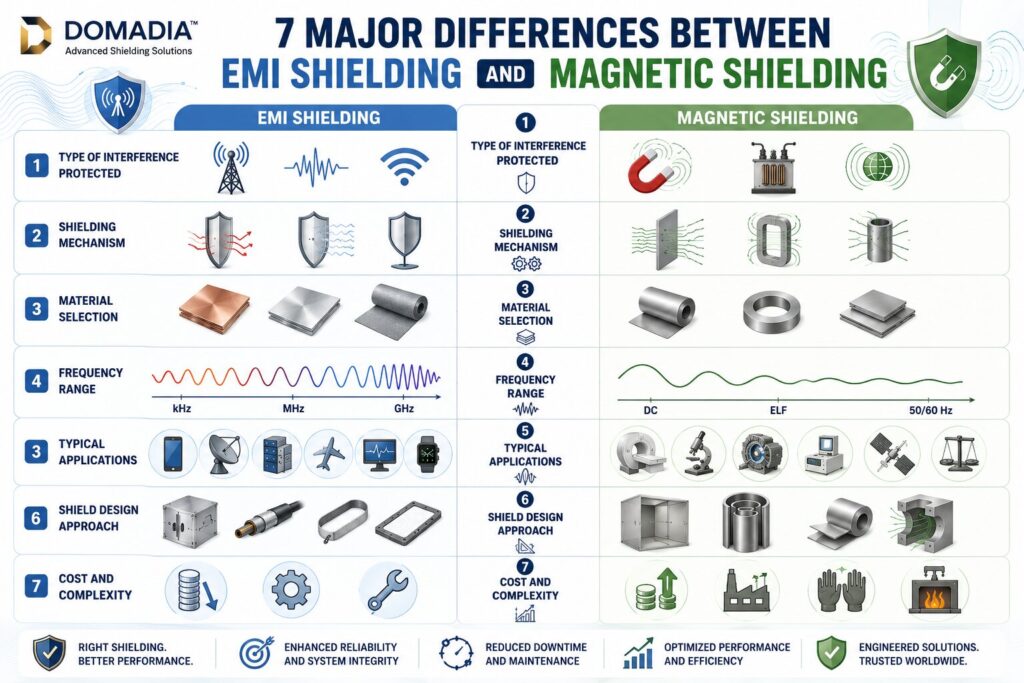
1. Type of Interference Protected
EMI Shielding
Protects against:
- Radio Frequency Interference (RFI)
- High-frequency electromagnetic waves
- Wireless communication interference
Magnetic Shielding
Protects against:
- Static magnetic fields
- Low-frequency magnetic fields
- Stray magnetic flux
2. Shielding Mechanism
EMI Shielding
Works by:
- Reflection
- Absorption
- Conductive grounding
Electromagnetic waves are prevented from entering sensitive systems.
Magnetic Shielding
Works through:
- Flux redirection
- Magnetic field concentration
The shielding material provides an easier path for magnetic field lines.
3. Material Selection
EMI Shielding Materials
Materials require:
- High electrical conductivity
- Corrosion resistance
- Lightweight construction
Popular choices include:
- Copper
- Aluminum
- Conductive textiles
Magnetic Shielding Materials
Materials require:
- Extremely high magnetic permeability
- Low coercivity
- Stable magnetic characteristics
Popular choices include:
- MuMetal
- Permalloy
- Nickel-Iron Alloys
4. Frequency Range
EMI Shielding
Most effective against:
- Medium-frequency interference
- High-frequency interference
- Microwave frequencies
Magnetic Shielding
Most effective against:
- DC magnetic fields
- Extremely low-frequency fields
- Power-frequency magnetic fields (50/60 Hz)
5. Typical Applications
EMI Shielding Applications
- Smartphones
- Telecommunications equipment
- Data centers
- Aerospace electronics
- Medical electronics
- Consumer electronics
Magnetic Shielding Applications
- MRI systems
- Scientific instruments
- Particle detectors
- Laboratory equipment
- Aerospace sensors
- Precision measurement devices
6. Shield Design Approach
EMI Shielding
Design considerations include:
- Conductive enclosures
- Grounding systems
- Shielded cables
- Conductive gaskets
Magnetic Shielding
Design considerations include:
- Enclosed shielding chambers
- Multi-layer shielding structures
- Annealed magnetic alloys
- Flux management geometry
7. Cost and Complexity
EMI Shielding
Generally:
- Lower material cost
- Easier fabrication
- Simpler installation
Magnetic Shielding
Generally:
- Higher material cost
- Specialized manufacturing
- Careful handling requirements
- Precision annealing processes
However, for highly sensitive equipment, magnetic shielding often prevents significantly greater operational losses.
Chemical Composition of Common Shielding Materials
EMI Shielding Materials
Copper
| Element | Composition (%) |
| Copper (Cu) | 99.9+ |
Aluminum
| Element | Composition (%) |
| Aluminum (Al) | 95–99+ |
Magnetic Shielding Materials (MuMetal UNS N14080)
| Element | Composition (%) |
| Nickel (Ni) | 77 |
| Iron (Fe) | Balance |
| Copper (Cu) | 5 |
| Molybdenum (Mo) | 2 |
Key Properties Comparison
| Property | EMI Shielding | Magnetic Shielding |
| Electrical Conductivity | Very High | Moderate |
| Magnetic Permeability | Moderate | Extremely High |
| High Frequency Protection | Excellent | Limited |
| Low Frequency Protection | Moderate | Excellent |
| Static Magnetic Fields | Poor | Excellent |
| Weight | Lower | Higher |
| Cost | Lower | Higher |
Technical Specifications
EMI Shielding
- Shielding Effectiveness: Up to 120 dB
- Frequency Range: kHz to GHz
- Conductivity: High
- Corrosion Resistance: Good to Excellent
Magnetic Shielding
- Permeability: Up to 100,000+
- Effective for DC and Low Frequencies
- Annealed Material Performance
- Long-Term Magnetic Stability
Standards Associated with Shielding Materials
EMI Shielding Standards
- IEEE 299
- MIL-STD-461
- CISPR Standards
- IEC 61000 Series
Magnetic Shielding Standards
- ASTM A753
- ASTM A773
- MIL Magnetic Shielding Specifications
- IEC Magnetic Compatibility Guidelines
Shapes Available
DOMADIA™ supplies shielding materials in various forms:
EMI Shielding Products
- Foils
- Tapes
- Conductive fabrics
- Mesh
- Gaskets
- Enclosures
- Shielded cable wraps
Magnetic Shielding Products
- Sheets
- Foils
- Cylinders
- Enclosures
- Custom fabricated housings
- Magnetic shields
- Precision instrument covers
Applications of EMI Shielding
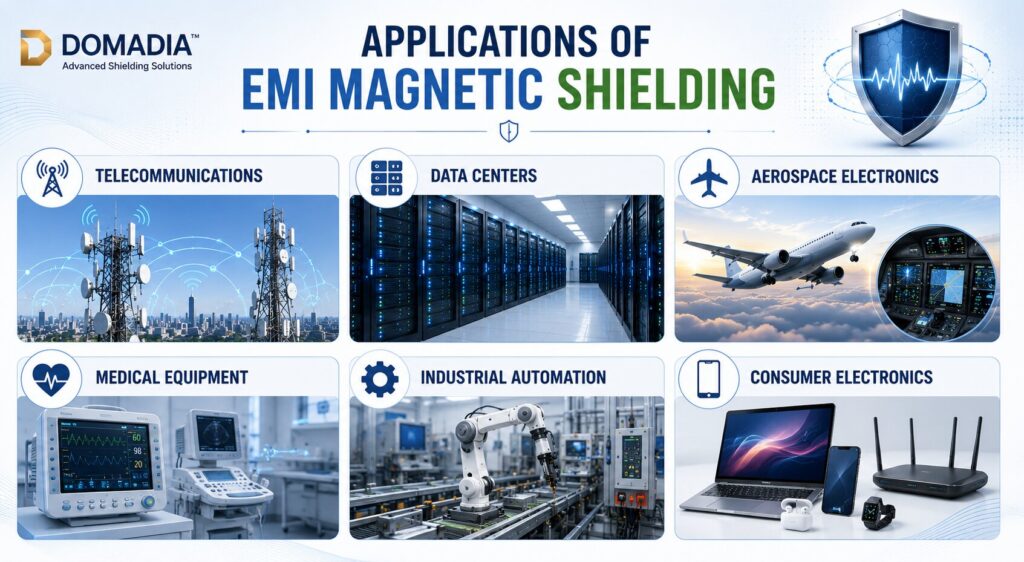
Telecommunications
EMI Magnetic Shielding helps maintain signal integrity in communication systems by reducing electromagnetic interference.
Data Centers
EMI Magnetic Shielding protects servers and networking equipment from interference that can affect data transmission and overall system performance.
Aerospace Electronics
EMI Magnetic Shielding enhances the reliability of mission-critical aerospace electronics operating in complex electromagnetic environments.
Medical Equipment
EMI Magnetic Shielding safeguards sensitive diagnostic and monitoring systems from external electromagnetic disturbances.
Industrial Automation
EMI Magnetic Shielding reduces interference in control systems, helping ensure stable and accurate industrial operations.
Consumer Electronics
EMI Magnetic Shielding supports device performance, electromagnetic compatibility, and regulatory compliance in modern electronic products.
Applications of Magnetic Shielding
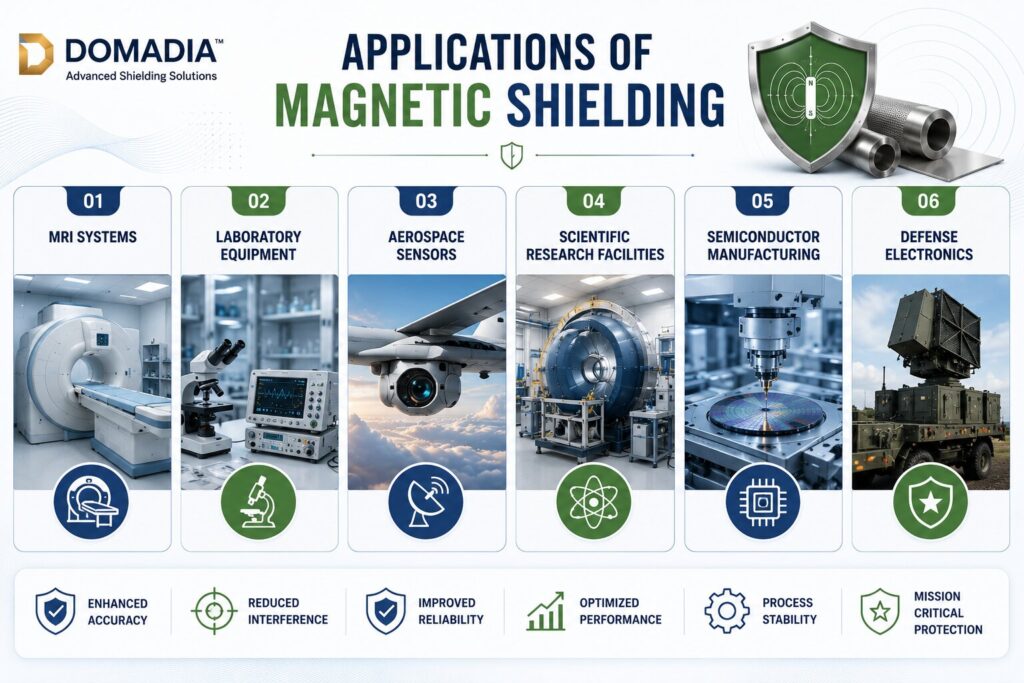
MRI Systems
EMI Magnetic Shielding protects MRI systems from external magnetic fields, helping maintain accurate and reliable imaging results.
Laboratory Equipment
EMI Magnetic Shielding enhances precision measurement performance by minimizing magnetic interference in sensitive laboratory instruments.
Aerospace Sensors
EMI Magnetic Shielding protects navigation and sensing systems from magnetic disturbances that can affect operational accuracy.
Scientific Research Facilities
EMI Magnetic Shielding helps maintain highly controlled magnetic environments required for advanced research and testing.
Semiconductor Manufacturing
EMI Magnetic Shielding improves process stability by reducing electromagnetic and magnetic field interference during production.
Defense Electronics
EMI Magnetic Shielding supports mission-critical system performance by protecting sensitive defense equipment from disruptive interference.
Why DOMADIA™?
DOMADIA™ supplies advanced shielding materials for demanding industrial, aerospace, medical, research, and electronics applications where reliable EMI Magnetic Shielding is critical for system performance and protection.
What Sets DOMADIA™ Apart?
✔ Wide range of EMI and magnetic shielding solutions
✔ High-quality MuMetal (UNS N14080) products
✔ Precision fabricated shielding components
✔ Custom sizes and configurations
✔ Compliance with international standards
✔ Technical material selection support
✔ Reliable global supply capabilities
✔ Solutions for aerospace, defense, medical, telecom, and industrial sectors
Whether your project requires high-conductivity EMI shielding materials or high-permeability magnetic shielding alloys, DOMADIA™ delivers engineered solutions designed for long-term performance. Our expertise in EMI Magnetic Shielding helps customers improve equipment reliability, reduce interference-related issues, and enhance overall system efficiency.
Conclusion
Selecting the correct EMI Magnetic Shielding solution begins with understanding the source of interference.
If the challenge involves high-frequency electromagnetic noise, conductive EMI shielding materials typically provide the best protection. If low-frequency or static magnetic fields threaten sensitive equipment, high-permeability magnetic shielding materials such as MuMetal become essential.
Proper material selection improves equipment reliability, enhances system performance, reduces maintenance costs, and helps prevent costly operational disruptions. By understanding these seven critical differences, engineers can confidently choose the shielding solution best suited to their application.
Protect Your Electronics with the Right Shielding Solution
Partner withDOMADIA™ to enhance equipment reliability, improve signal integrity, and protect critical systems from interference.
Get in touch with DOMADIA™ today to discuss your shielding requirements and request a competitive quote.
Talk to: Er.Pankaj Domadia | Kairav Domadia | Aadil Domadia | Pragati Sanap | Pooja N N
#EMIShielding #MagneticShielding #ElectromagneticInterference #MuMetal #ElectronicsProtection #EngineeringMaterials #DOMADIA #EMC #EMIProtection #IndustrialElectronics
Directly whatsapp us for an Enquiry: https://wa.link/kairav
Our supply network spans Delhi, Noida, Gurugram, Faridabad, and Ghaziabad across Delhi NCR, Haryana, UP, Rajasthan, and Punjab, reaching clients in UAE, Saudi Arabia, Qatar, Oman, and Kuwait.