Blogs
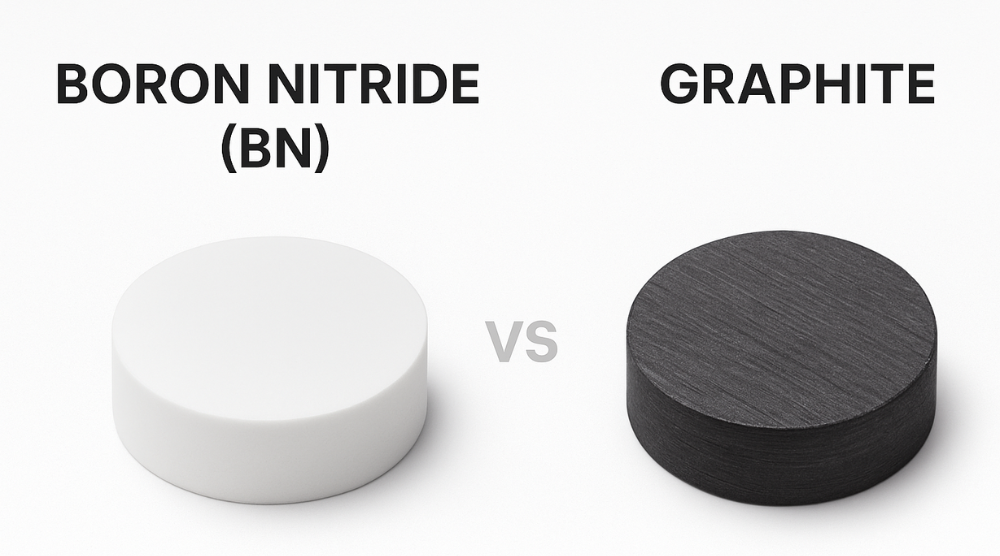
Boron Nitride vs Graphite— Which Is Better for High-Temperature Applications? | DOMADIA™
Introduction — The Failure No One Expected
The furnace was running at 1,600°C, everything stable… until a thin lining on the heat-treatment tool cracked. Production halted. The culprit?
A low-grade graphite component that oxidized faster than anticipated.
This incident raised a question that engineers across aerospace, foundry, semiconductor, and metallurgical industries ask every day:
“Between Boron Nitride and Graphite — which material truly performs better under extreme heat?”
This blog delivers the real answer, backed by technical specs, industrial data, environmental impact, and DOMADIA™ expertise.
Boron Nitride vs Graphite: A Deep Technical Breakdown
1. Chemical Composition
Boron Nitride (BN)
- Composition: Boron + Nitrogen
- Forms: Hexagonal (h-BN), Cubic (c-BN), Pyrolytic (PBN)
- Structurally similar to graphite but far more thermally stable.
- Chemically inert with high oxidation resistance.
Graphite
- Composition: Pure carbon (C) arranged in hexagonal layers
- Highly conductive electrically & thermally
- Reacts with oxygen at high temperatures unless treated
✔ Winner (Stability):Boron Nitride
2. Temperature Endurance
| Material | Max Use Temperature in Air | Max Use Temperature in Vacuum/Inert |
| Boron Nitride | 900–1000°C | 2,000–2,500°C |
| Graphite | 400–500°C (oxidizes) | 3,000°C |
💡 Graphite survives higher temperatures only in oxygen-free environments.
💡 BN survives air, vacuum, and deep thermal cycling — a huge advantage.
✔ Winner (Air): BN
✔ Winner (Vacuum): Graphite
3. Physical & Mechanical Properties
Thermal Conductivity
- Graphite: Excellent thermal conductor
- BN: Moderate; h-BN acts as a thermal insulator, PBN conducts
Electrical Properties
- Graphite: Conductive
- BN:Excellent electrical insulator
Lubrication
- Graphite: Natural solid lubricant
- BN: Performs better at extreme temperatures; non-reactive
✔ Winner (Insulation): BN
✔ Winner (Conduction): Graphite
✔ Winner (High-Temp Lubrication): BN
4. Applications Breakdown
Where DOMADIA™ Boron Nitride Performs Best
- Semiconductor crucibles & diffusion boats
- Plasma-resistant components
- High-temperature lubricants
- Aerospace insulation
- Non-stick coatings for casting
- Evaporation boats
- Hot pressing dies
Where Graphite Dominates
- EDM electrodes
- Refractory bricks
- Furnace linings (in inert atmospheres)
- Anodes, batteries, fuel cells
- Metal casting molds
✔ If your application requires insulation + non-reactivity, choose BN.
✔ If you need high thermal conduction + conductivity, choose graphite.
5. Technical Specifications
DOMADIA™ Boron Nitride (Typical Specs)
- Purity: 99%+
- Density: 1.8–2.1 g/cm³
- Thermal conductivity: 30–70 W/m·K (depending on form)
- Dielectric strength: >5 kV/mm
- Coefficient of friction: 0.15–0.25
Graphite (Typical Specs)
- Purity: 95–99.9%
- Density: 1.6–1.9 g/cm³
- Thermal conductivity: 120–180 W/m·K
- Resistivity: 10–20 µΩ·m
- Coefficient of friction: 0.1–0.2
6. Standards & Grades
Boron Nitride
- ASTM C863
- ISO 9001 manufacturing practices
- Mil-spec BN coatings available
Graphite
- ASTM C749, C781
- Nuclear-grade, isostatic, extruded, and expanded graphite grades
7. Environmental Impact
⚡ A surprising fact:
Graphite components often need frequent replacement due to oxidation at high temperatures. Frequent scrapping increases:
- Waste load
- Carbon emissions from reprocessing
- Energy consumption during re-melting
Boron Nitride lasts significantly longer, meaning:
✔ Less waste
✔ Fewer replacements
✔ Lower energy use
👉 Choosing BN in many applications contributes to long-term environmental sustainability — a value DOMADIA™ strongly upholds.
Which Material Should You Choose?
Here’s the final verdict for Boron Nitride vs Graphite for High-Temperature Applications:
Choose Boron Nitride (BN) if you need:
- High-temperature stability IN AIR
- Electrical insulation
- Non-wetting behavior
- Chemical inertness
- Long lifecycle & fewer replacements
Choose Graphite if you need:
- High thermal conductivity
- High-temperature strength in INERT environments
- Electrical conductivity
- Cost-effective electrodes or heating elements
Conclusion
When engineers compare Boron Nitride vs Graphite for High-Temperature Applications, the winner depends on the environment — but for air-based, multi-cycle, and contamination-sensitive processes, DOMADIA™ Boron Nitride delivers unmatched performance, longevity, and reliability.
If your priority is long-term savings, less downtime, environmental protection, and zero reactivity, BN is the clear choice.
Choose the Right High-Temp Material — BN or Graphite?
Explore DOMADIA™ Solutions
📩 Contact us today to get custom sizes and specifications for your project.
Talk to: Er.Pankaj Domadia | Kairav Domadia | Aadil Domadia | Pragati Sanap | Pooja N N
#BoronNitride #Graphite #HighTemperatureMaterials #DOMADIA #EngineeringMaterials #AerospaceMaterials #ThermalInsulation #IndustrialCeramics #AdvancedMaterials
Directly whatsapp us for an Enquiry: https://wa.link/kairav