Blogs
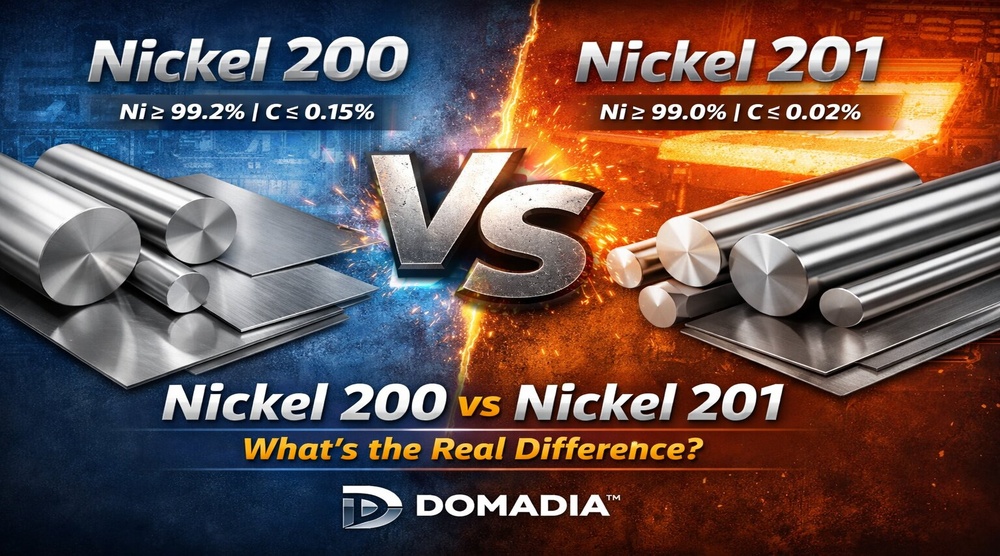
Nickel 200 vs Nickel 201: What’s the Real Difference?
Nickel 200 vs Nickel 201 is one of the most searched comparisons in the pure nickel alloy industry—and for good reason. On paper, both alloys look almost identical. In real-world performance, the difference can define equipment life, safety, and operational cost.
At DOMADIA™, we regularly guide engineers through the Nickel 200 vs Nickel 201 selection process to avoid premature failures in chemical plants, heat exchangers, and electronic components.
Let’s break it down clearly.
Chemical Composition – The Core Difference
When discussing Nickel 200 vs Nickel 201, carbon content is the defining factor.
Nickel 200 (UNS N02200)
- Nickel (Ni): ≥ 99.2%
- Carbon (C): ≤ 0.15%
- Iron (Fe): ≤ 0.40%
- Copper (Cu): ≤ 0.25%
- Manganese (Mn): ≤ 0.35%
Nickel 201 (UNS N02201)
- Nickel (Ni): ≥ 99.0%
- Carbon (C): ≤ 0.02%
- Iron (Fe): ≤ 0.40%
- Copper (Cu): ≤ 0.25%
- Manganese (Mn): ≤ 0.35%
In Nickel 200 vs Nickel 201, Nickel 201 contains significantly lower carbon. This small difference prevents graphite precipitation at elevated temperatures.
Properties Comparison
In the Nickel 200 vs Nickel 201 debate, mechanical properties are similar at room temperature but differ at higher temperatures.
| Property | Nickel 200 | Nickel 201 |
| Density | 8.9 g/cm³ | 8.9 g/cm³ |
| Melting Range | 1435–1446°C | 1435–1446°C |
| Tensile Strength | ~380–550 MPa | ~340–520 MPa |
| Elongation | ≥ 40% | ≥ 40% |
| Electrical Conductivity | Excellent | Excellent |
The real distinction appears above 315 °C, where Nickel 201 performs better due to its lower carbon content.
High-Temperature Performance
In industrial heating systems, Nickel 200 vs Nickel 201 becomes a critical decision.
- Nickel 200 may experience embrittlement above 315°C.
- Nickel 201 resists intergranular attack at elevated temperatures.
That’s why the difference between these two nickel grades matters in furnace internals and chemical reactors.
Applications Comparison
⚙ Nickel 200 Applications
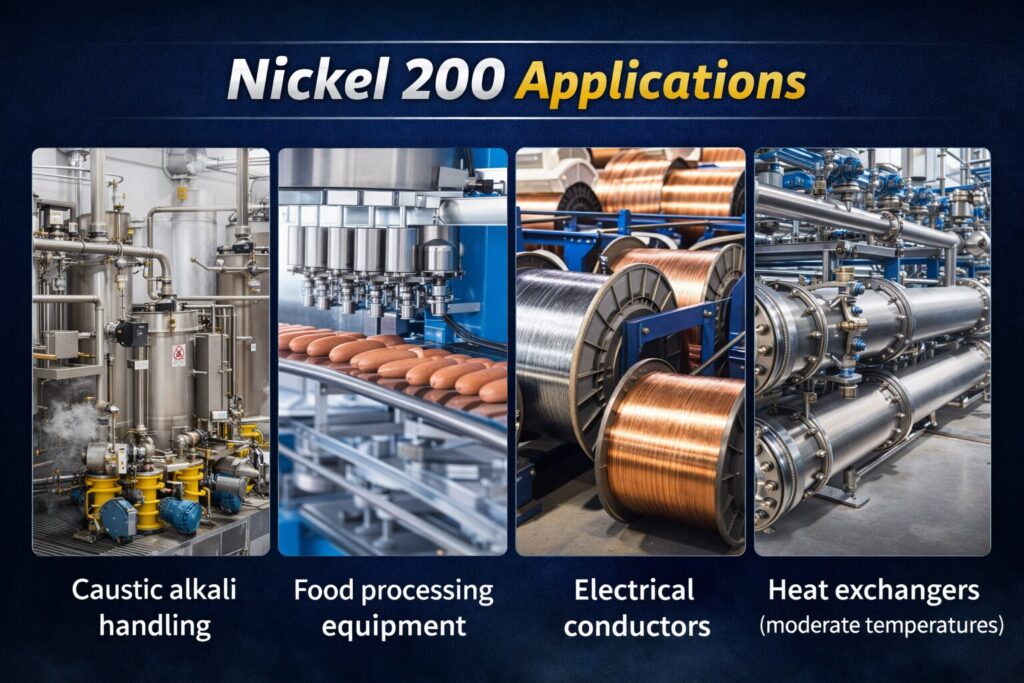
- Caustic alkali handling
- Food processing equipment
- Electrical conductors
- Heat exchangers (moderate temperatures)
⚙ Nickel 201 Applications
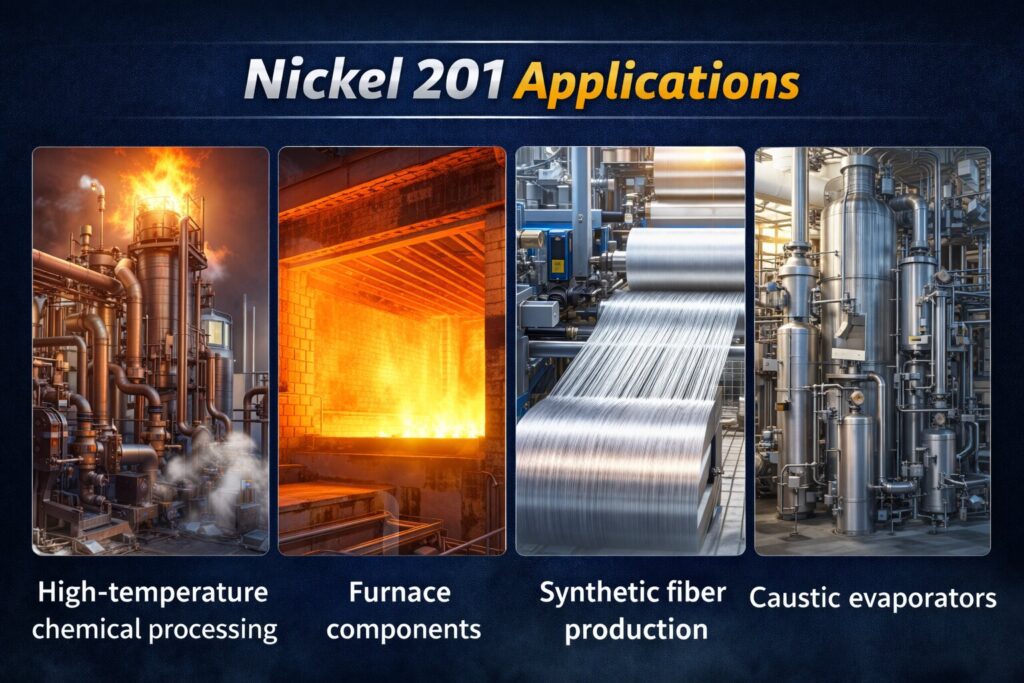
- High-temperature chemical processing
- Furnace components
- Synthetic fiber production
- Caustic evaporators
When evaluating Nickel 200 vs Nickel 201, temperature exposure is the deciding factor.
Standards & Specifications
Understanding standards helps clarify Nickel 200 vs Nickel 201.
Nickel 200
- UNS N02200
- ASTM B162 (Rod/Bar)
- ASTM B160 (Tube/Pipe)
Nickel 201
- UNS N02201
- ASTM B162
- ASTM B161
At DOMADIA™, both grades are supplied in compliance with international standards and strict quality checks.
Technical Specifications
Nickel 200 vs Nickel 201 technical supply formats include:
- Round Bars
- Sheets & Plates
- Pipes & Tubes
- Forgings
- Wire
Surface finish: Bright, Annealed, Pickled
Condition: Hot Rolled / Cold Rolled / Annealed
Shapes Available at DOMADIA™
For clients comparing Nickel 200 vs Nickel 201, we provide:
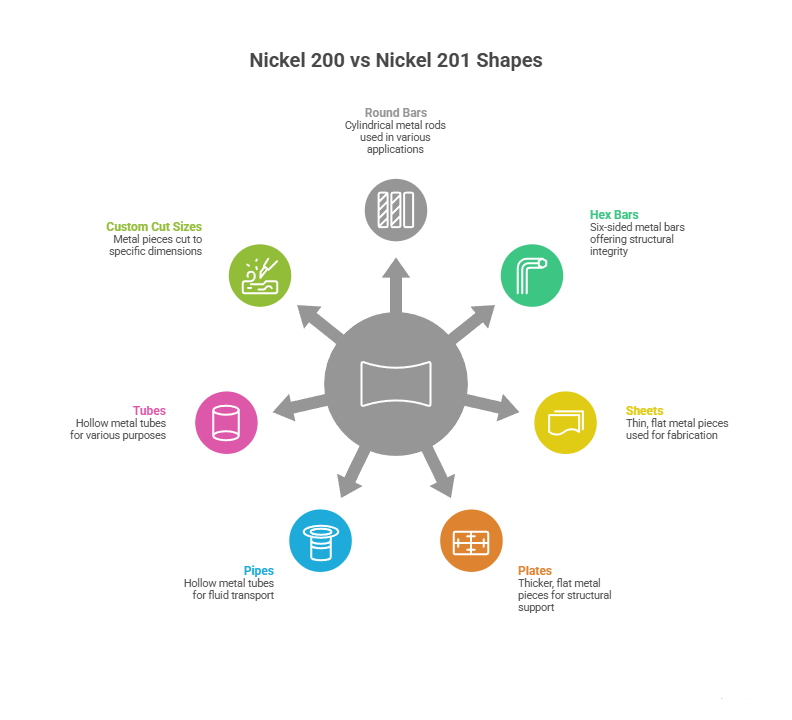
Precision tolerance and traceability are standard with DOMADIA™ supply.
Lifecycle & Cost Insight
Many buyers look only at price in the Nickel 200 vs Nickel 201 decision.
However:
- Downtime costs more than raw material.
- Replacement shutdowns impact production.
- High-temperature failures can be catastrophic.
Choosing the correct alloy reduces recycling frequency and extends service life—supporting sustainability goals. Longer lifecycle means lower environmental impact.
Final Verdict: Nickel 200 vs Nickel 201
Nickel 200 vs Nickel 201 is not about which alloy is better.
It’s about temperature, carbon sensitivity, and application environment.
- Below 315°C → Nickel 200 performs efficiently.
- Above 315°C → Nickel 201 is the safer choice.
At DOMADIA™, we help industries select the right grade—not just the cheaper one.
Conclusion
If your process involves elevated temperatures, the Nickel 200 vs Nickel 201 choice can directly affect performance, safety, and lifecycle cost. Consult material experts before finalizing procurement.
Nickel 200 vs Nickel 201 selection today defines plant reliability tomorrow.
Choose the Right Pure Nickel with Confidence
Don’t let the Nickel 200 vs Nickel 201 decision impact your plant reliability or lifecycle cost.
Partner with DOMADIA™ for expert guidance, certified materials, and precision supply tailored to your temperature and corrosion requirements.
📞 Contact DOMADIA™ today to discuss your application and secure the right grade for long-term performance.
Talk to: Er.Pankaj Domadia | Kairav Domadia | Aadil Domadia | Pragati Sanap | Pooja N N
#Nickel200vsNickel201 #PureNickel #UNSN02200 #UNSN02201 #IndustrialAlloys #CorrosionResistance #HighPerformanceMetals #DOMADIA
Directly whatsapp us for an Enquiry: https://wa.link/kairav
We’ve delivered to Gwalior, Morena, Shivpuri, Datia, and Bhind—supporting MP, Rajasthan, UP, Haryana, and Chhattisgarh, with exports to Peru, Chile, Argentina, Uruguay, and Paraguay.