
Blogs
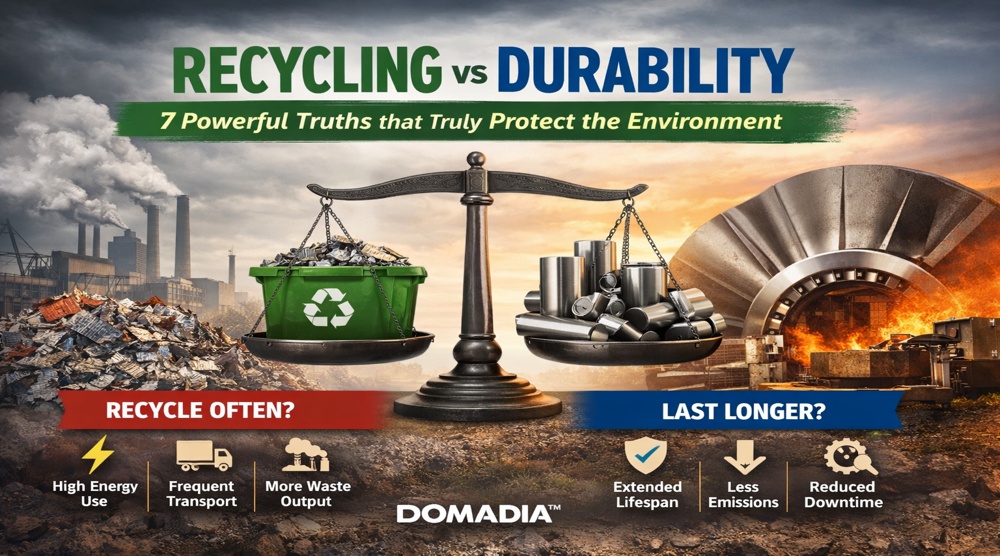
Recycling vs Durability: 7 Powerful Truths That Truly Protect the Environment | DOMADIA™
Recycling vs Durability: The Environmental Debate Industry Must Rethink
Recycling vs Durability is no longer just a sustainability debate — it is a strategic industrial decision that directly affects carbon footprint, energy consumption, and long-term environmental damage.
For decades, recycling has been promoted as the ultimate environmental solution. While recycling metals is undeniably beneficial, the conversation around Recycling vs Durability is incomplete without discussing lifecycle performance.
At DOMADIA™, we work closely with industries that face this exact dilemma:
Should you choose a cheaper metal that gets recycled frequently, or a high-performance alloy that lasts significantly longer?
The answer may surprise many.
The Core of Recycling vs Durability
When evaluating Recycling vs Durability, the real question is:
Does frequent recycling reduce environmental impact — or increase it?
Recycling consumes:
- High electrical energy
- Transportation emissions
- Melting and refining resources
- Reprocessing chemicals
Now consider durability:
- Longer service life
- Fewer replacements
- Reduced downtime
- Lower scrap generation
The Recycling vs Durability balance shifts dramatically when lifecycle is analyzed instead of upfront cost.
Chemical Composition Matters More Than You Think
In the Recycling vs Durability discussion, chemical composition plays a decisive role.
High-durability alloys often contain:
- Nickel (Ni)
- Chromium (Cr)
- Molybdenum (Mo)
- Copper (Cu)
- Aluminum (Al)
- Titanium (Ti)
These elements enhance:
- Corrosion resistance
- Oxidation resistance
- High-temperature stability
- Mechanical strength
Example:
A nickel-chromium alloy used in furnace components may last 5–10 times longer than mild steel.
In Recycling vs Durability, that extended lifecycle drastically reduces total environmental impact.
Environmental Impact: The Hidden Cost of Frequent Recycling
Let’s break down the environmental math behind Recycling vs Durability:
Frequent Recycling Model
- Scrap collection
- Transportation
- High-temperature remelting
- Refining
- Recasting
- Re-machining
Every cycle consumes energy and releases CO₂.
Durable Alloy Model
- Higher upfront production energy
- Long-term operational stability
- Minimal replacement frequency
- Reduced total lifecycle emissions
In many industrial cases, Recycling vs Durability analysis shows that durable metals generate less cumulative carbon footprint over 15–20 years.
Lifecycle Cost & Downtime Impact
Industries often focus on raw material price instead of lifecycle economics.
In the Recycling vs Durability comparison:
| Factor | Low-Durability Metal | High-Durability Alloy |
| Initial Cost | Lower | Higher |
| Replacement Frequency | High | Low |
| Downtime | Frequent | Minimal |
| Maintenance | Repetitive | Reduced |
| Environmental Impact | Higher Over Time | Lower Over Time |
Frequent shutdowns for replacement increase:
- Energy loss
- Labor cost
- Production inefficiency
- Carbon emissions
The Recycling vs Durability shift becomes clear when total ownership cost is calculated.
Applications Where Durability Wins
Recycling vs Durability becomes critical in the following industrial environments:
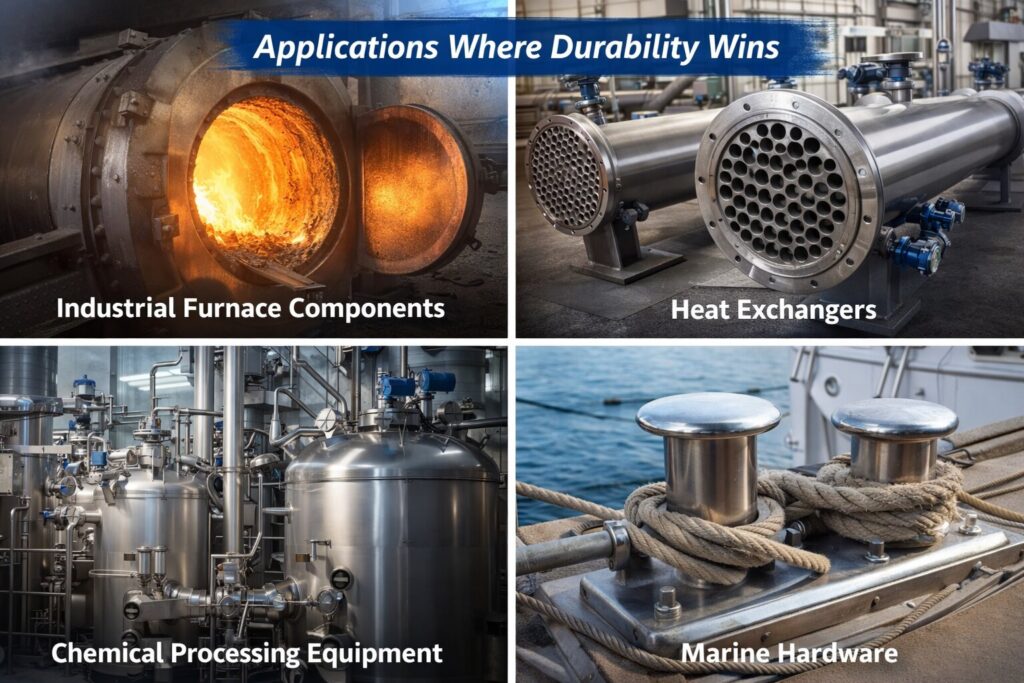
1. Industrial Furnace Components
High-temperature furnace parts require alloys that maintain strength and oxidation resistance for long operating cycles.
2. Heat Exchangers
Durable metals withstand continuous thermal cycling and corrosion, ensuring reliable heat transfer over extended service life.
3. Chemical Processing Equipment
Corrosion-resistant alloys prevent rapid material degradation when exposed to aggressive chemicals and process fluids.
4. Marine Hardware
Saltwater exposure demands metals with superior corrosion resistance to avoid frequent replacements and structural failures.
5. Power Generation Systems
Turbines, boilers, and electrical components require long-lasting materials capable of handling heat, pressure, and mechanical stress.
6. Sputtering Targets
High-purity targets used in semiconductor and coating industries must maintain structural stability during repeated deposition cycles.
7. High-Temperature Heating Elements
Special alloys resist oxidation and thermal fatigue, allowing heating elements to operate efficiently for long production cycles.
In such demanding environments, durable alloys outperform recyclable low-grade metals over the long term.
Standards & Technical Specifications
When evaluating Recycling vs Durability, consider globally recognized standards:
- ASTM
- DIN
- UNS
- ISO
High-performance alloys supplied by DOMADIA™ meet:
- Strict chemical composition control
- High tensile strength benchmarks
- Corrosion resistance certification
- Dimensional accuracy standards
Technical specifications typically include:
- Density
- Thermal conductivity
- Electrical resistivity
- Coefficient of thermal expansion
- Yield strength
- Ultimate tensile strength
Durability is measurable — and verifiable.
Shapes Available for Sustainable Performance
DOMADIA™ supplies durable metals in:
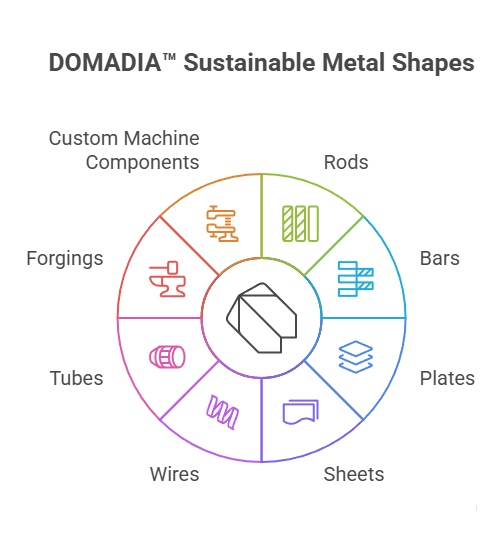
Selecting the correct form also reduces machining waste — a key factor in the Recycling vs Durability sustainability equation.
The Mindset Shift Industry Needs
The real transformation in the Recycling vs Durability conversation is this:
Sustainability is not about how often you recycle.
Sustainability is about how rarely you need to replace.
At DOMADIA™, we promote smarter material selection — not just recyclable materials, but high-performance alloys engineered for longevity.
When metals last longer:
- You recycle less frequently
- You reduce carbon emissions
- You lower industrial waste
- You cut energy consumption
That is meaningful environmental contribution.
Conclusion: Recycling vs Durability — The Smarter Green Strategy
Recycling vs Durability is not a competition — it is a balance.
Recycling is essential.
But durability multiplies sustainability impact.
Industries that choose high-performance, corrosion-resistant, long-life alloys make a stronger environmental statement than those replacing cheaper metals repeatedly.
At DOMADIA™, our approach to Recycling vs Durability supports both performance and planetary responsibility.
Because true sustainability is measured over decades — not production cycles.
Make the Smarter Sustainable Choice with DOMADIA™
Choosing between recycling and durability doesn’t have to be confusing. Let our experts help you select high-performance metals that reduce replacement cycles, lower carbon impact, and improve long-term cost efficiency.
Choose durable metals that reduce environmental impact and industrial waste. Contact Us to discover long-lasting material solutions engineered by DOMADIA™.
To reduce downtime and replacement costs with high-performance alloys, Contact Us and speak with our material specialists.
Talk to: Er.Pankaj Domadia | Kairav Domadia | Aadil Domadia | Pragati Sanap | Pooja N N
#RecyclingVsDurability #SustainableMetals #GreenManufacturing #LifecycleCost #IndustrialAlloys #CorrosionResistant #HighPerformanceMetals #DOMADIA
Directly whatsapp us for an Enquiry: https://wa.link/kairav
We’ve delivered to Gwalior, Morena, Shivpuri, Datia, and Bhind—supporting MP, Rajasthan, UP, Haryana, and Chhattisgarh, with exports to Peru, Chile, Argentina, Uruguay, and Paraguay.