Blogs
Why Are My Current Cables Failing in High Heat Environments?
Electrical cables are often expected to perform quietly in the background. However, once temperatures begin rising inside furnaces, ovens, steel plants, glass factories, power stations, or chemical processing facilities, many standard cables begin to fail much sooner than expected.
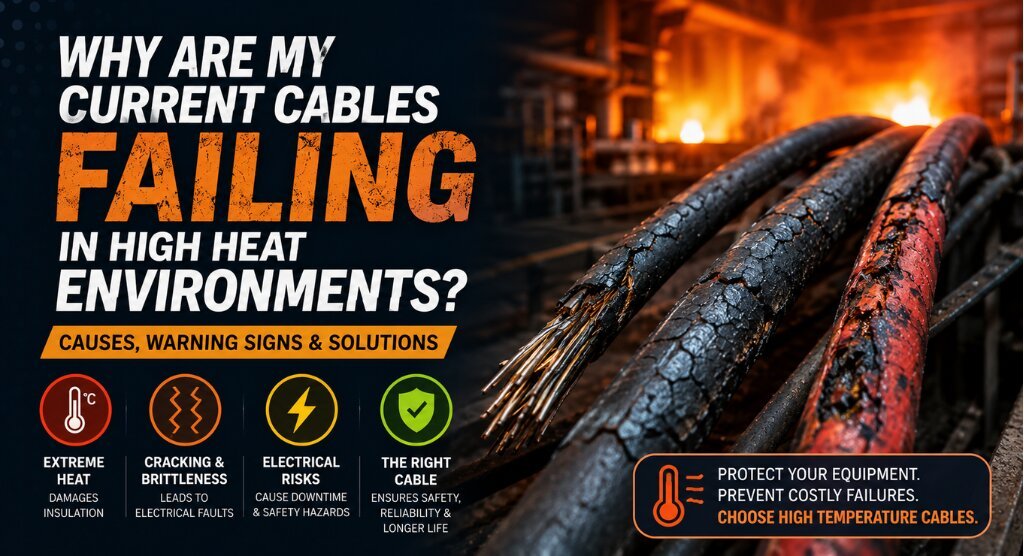
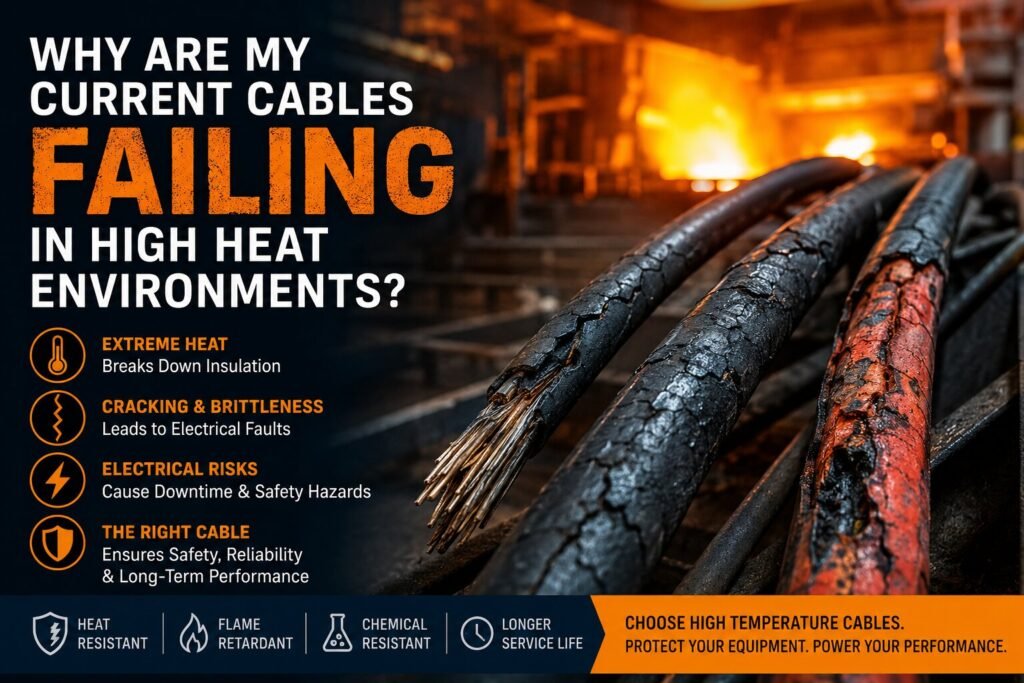
If you’ve noticed cracked insulation, unexpected downtime, electrical faults, or frequent cable replacements, you’re probably dealing with High Heat Cable Failure. Surprisingly, the problem is rarely the electrical system itself. Instead, it is often caused by using cables that were never designed for continuous exposure to extreme temperatures.
Many industries unknowingly install general-purpose electrical cables where specialized high-temperature cables are required. Initially, everything appears to work normally. Nevertheless, as heat builds over weeks or months, insulation gradually deteriorates until complete failure occurs.
Understanding why this happens can help reduce maintenance costs, improve operational safety, and significantly extend equipment life.
What Happens to Ordinary Cables in High Heat?
Most conventional electrical cables use insulation materials such as PVC or polyethylene. These materials perform well under normal operating temperatures but begin degrading rapidly once their temperature limits are exceeded.
As the insulation ages, several problems develop simultaneously.
- Insulation becomes brittle
- Surface cracking appears
- Flexibility decreases
- Dielectric strength reduces
- Conductors become exposed
- Electrical leakage increases
- Short circuits become more likely
Eventually, the cable becomes unsafe and requires replacement.
Common Signs of High Heat Cable Failure
Many facilities ignore early warning signs until complete failure occurs.
Watch for these symptoms:
Cracked or Hardened Insulation
Heat slowly removes flexibility from insulation materials. Small cracks eventually expose the conductor.
Discoloration
Brown, black, or faded insulation often indicates prolonged thermal damage.
Frequent Electrical Trips
Damaged insulation may allow current leakage that repeatedly trips protection systems.
Burnt Smell
A persistent burnt plastic odor usually signals insulation overheating.
Reduced Equipment Reliability
Unexpected shutdowns often originate from damaged power or control cables.
Exposed Conductors
Once insulation deteriorates, the conductor becomes vulnerable to mechanical damage and electrical hazards.
Why Do Cables Fail in High Heat Environments?
Several factors contribute to High Heat Cable Failure.
1. Incorrect Temperature Rating
This is the most common reason.
Standard industrial cables may only tolerate:
- 70°C
- 90°C
- 105°C
Meanwhile, many industrial environments operate at:
- 180°C
- 250°C
- 400°C
- Even above 1000°C near furnaces
Operating beyond the cable’s design temperature dramatically shortens its lifespan.
2. Continuous Thermal Aging
Even if a cable never reaches its maximum rated temperature, continuous exposure to elevated temperatures accelerates insulation aging.
Heat causes:
- Polymer breakdown
- Oxidation
- Loss of elasticity
- Reduced insulation resistance
This gradual deterioration eventually results in High Heat Cable Failure.
3. Thermal Cycling
Industrial equipment rarely remains at one temperature.
Instead, cables repeatedly experience:
- Heating
- Cooling
- Expansion
- Contraction
These constant cycles create internal stress that weakens insulation and conductor strands over time.
4. Chemical Exposure
High-temperature environments frequently contain:
- Oils
- Solvents
- Steam
- Acids
- Alkalis
- Industrial chemicals
Heat accelerates chemical reactions, causing insulation to degrade much faster.
5. Mechanical Stress
Hot cables are often exposed to:
- Vibration
- Abrasion
- Flexing
- Tight bends
When insulation has already weakened from heat, mechanical damage becomes much more severe.
6. Poor Ventilation
Even moderately rated cables can overheat if installed where heat cannot escape.
Examples include:
- Cable trays packed too tightly
- Enclosed control cabinets
- Furnace walls
- Underground conduits
Heat accumulation significantly increases insulation temperature.
7. Wrong Cable Material
Not every insulation material performs equally.
Some materials rapidly deteriorate under heat, while others are specifically engineered for extreme environments.
Industries Most Affected by High Heat Cable Failure
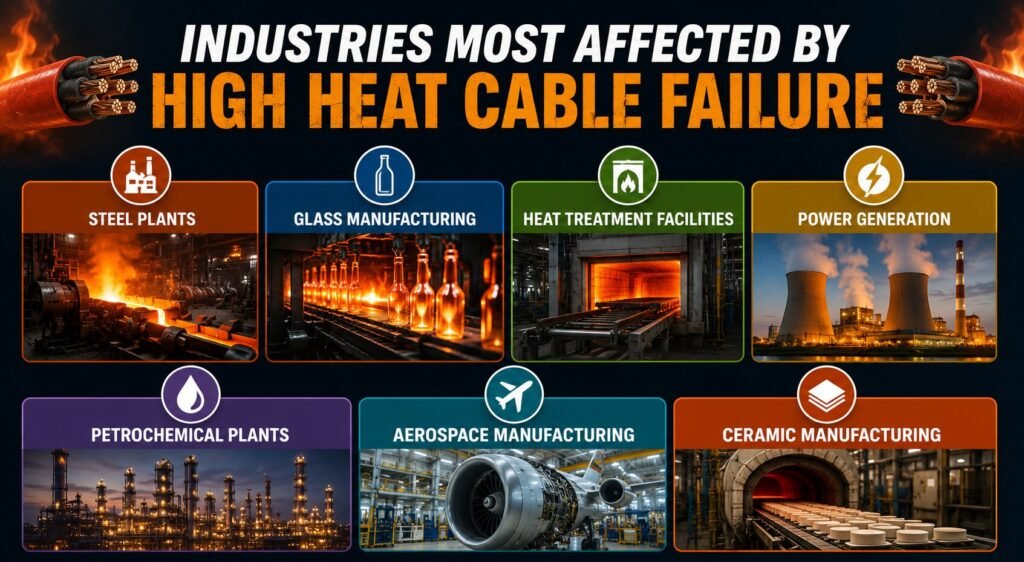
Several industries regularly experience High Heat Cable Failure because their equipment operates continuously under extreme temperatures. Selecting cables specifically engineered to resist heat is essential to minimize High Heat Cable Failure, reduce downtime, and improve operational safety.
Steel Plants
Rolling mills, reheating furnaces, and continuous casting systems generate extremely high temperatures, making High Heat Cable Failure a common cause of unexpected production interruptions.
Glass Manufacturing
Glass furnaces expose nearby electrical systems to continuous radiant heat. Using thermal-resistant cables helps prevent High Heat Cable Failure and ensures reliable plant operation.
Heat Treatment Facilities
Annealing furnaces and industrial ovens require specialized thermal-resistant wiring. Proper cable selection significantly reduces the risk of High Heat Cable Failure during prolonged heating cycles.
Power Generation
Boilers, turbines, and exhaust systems create severe operating temperatures where High Heat Cable Failure can lead to costly outages and maintenance.
Petrochemical Plants
Heat combines with aggressive chemicals, accelerating insulation degradation and increasing the likelihood of High Heat Cable Failure if unsuitable cables are installed.
Aerospace Manufacturing
High-temperature testing equipment demands cables with exceptional thermal stability to avoid High Heat Cable Failure during critical manufacturing and testing processes.
Ceramic Manufacturing
Kilns expose cables to prolonged high-temperature operation. Choosing premium heat-resistant cables minimizes High Heat Cable Failure while improving long-term reliability and equipment performance.
Why High-Temperature Cables Last Longer
Unlike ordinary cables, specialized high-temperature cables use advanced insulation systems designed specifically for harsh environments.
Common insulation materials include:
- Silicone Rubber
- Fiberglass
- PTFE (Teflon)
- FEP
- PFA
- Mica Tape
- Ceramic Fiber
- Mineral Insulation
These materials maintain electrical performance even during prolonged thermal exposure.
Advantages of High-Temperature Cables
Choosing the right cable provides several long-term benefits.
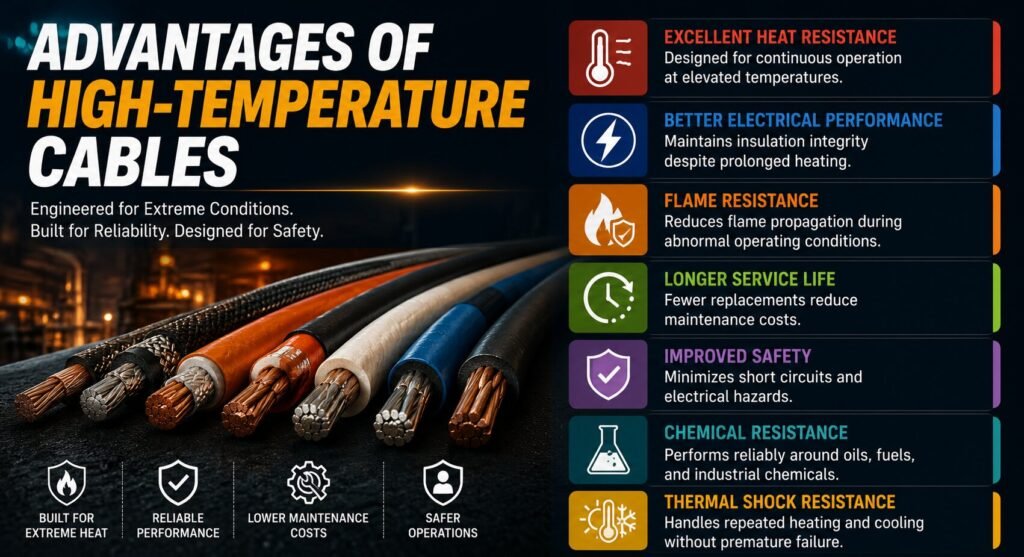
Excellent Heat Resistance
Designed for continuous operation at elevated temperatures.
Better Electrical Performance
Maintains insulation integrity despite prolonged heating.
Flame Resistance
Reduces flame propagation during abnormal operating conditions.
Longer Service Life
Fewer replacements reduce maintenance costs.
Improved Safety
Minimizes short circuits and electrical hazards.
Chemical Resistance
Performs reliably around oils, fuels, and industrial chemicals.
Thermal Shock Resistance
Handles repeated heating and cooling without premature failure.
How to Prevent High Heat Cable Failure
Preventing failures starts with selecting the right cable for the application.
Verify Operating Temperature
Measure actual operating temperatures instead of estimating.
Select the Correct Insulation
Different environments require different insulation technologies.
Examples include:
- Silicone Rubber
- PTFE
- Fiberglass
- Ceramic Fiber
- Mineral Insulated Cable
Consider Environmental Conditions
Evaluate:
- Chemicals
- Moisture
- UV exposure
- Abrasion
- Vibration
- Mechanical movement
Avoid Cable Overloading
Operating beyond current capacity generates additional heat that accelerates insulation aging.
Inspect Regularly
Routine inspections help identify:
- Surface cracks
- Hardening
- Discoloration
- Loose connections
- Burn marks
Early detection prevents unexpected shutdowns.
Improve Cable Routing
Whenever possible:
- Keep cables away from direct radiant heat
- Use protective conduits
- Increase ventilation
- Maintain proper spacing
When Should You Replace Existing Cables?
Immediate replacement should be considered if you observe:
- Cracked insulation
- Burnt odor
- Repeated electrical faults
- Exposed conductors
- Persistent overheating
- Frequent downtime
- Electrical leakage
Waiting until complete failure usually results in higher repair costs and production losses.
Choosing the Right High-Temperature Cable
Before selecting a replacement cable, evaluate:
- Maximum operating temperature
- Continuous temperature rating
- Voltage rating
- Current carrying capacity
- Chemical resistance
- Flexibility requirements
- Mechanical protection
- Flame resistance
- Installation environment
- Expected service life
Selecting the right cable reduces long-term operating costs while improving system reliability.
Conclusion
If your facility experiences repeated insulation damage, unexpected shutdowns, or frequent cable replacements, the issue is often High Heat Cable Failure rather than poor electrical equipment. Standard cables simply are not designed for continuous exposure to extreme industrial temperatures.
By choosing purpose-built high-temperature cables with the correct insulation, temperature rating, and environmental resistance, industries can significantly improve safety, reduce maintenance, extend cable life, and maintain uninterrupted production.
At DOMADIA™, we supply high-performance industrial high-temperature cables engineered for demanding environments including furnaces, steel plants, power generation, glass manufacturing, aerospace, petrochemical processing, and other heat-intensive applications. Our experts can help you select the ideal cable solution for maximum reliability, safety, and long-term performance.
Protect Your Operations from High Heat Cable Failure
Don’t let failing cables cause costly downtime, safety risks, and unexpected maintenance. DOMADIA™ supplies high-performance High Temperature Cables engineered to withstand extreme heat, harsh industrial environments, and continuous operation.
Contact Us Today to find the right high-temperature cable solution and keep your operations running safely, efficiently, and without unexpected downtime.
Talk to: Er.Pankaj Domadia | Kairav Domadia | Aadil Domadia | Pragati Sanap | Pooja N N
#HighHeatCableFailure #HighTemperatureCables #IndustrialCables #ElectricalSafety #HeatResistantCables #IndustrialMaintenance #PowerDistribution #IndustrialAutomation #Engineering #DOMADIA
Directly whatsapp us for an Enquiry: https://wa.link/kairav
We’ve supplied to Ludhiana, Jalandhar, Amritsar, Patiala, and Bathinda, supporting Punjab, Haryana, Himachal Pradesh, Rajasthan, and Delhi, while shipping to USA, Canada, UK, Ireland, and Scotland.