Blogs
High Temperature Cable Range: 9 Essential Facts Every Engineer Should Know
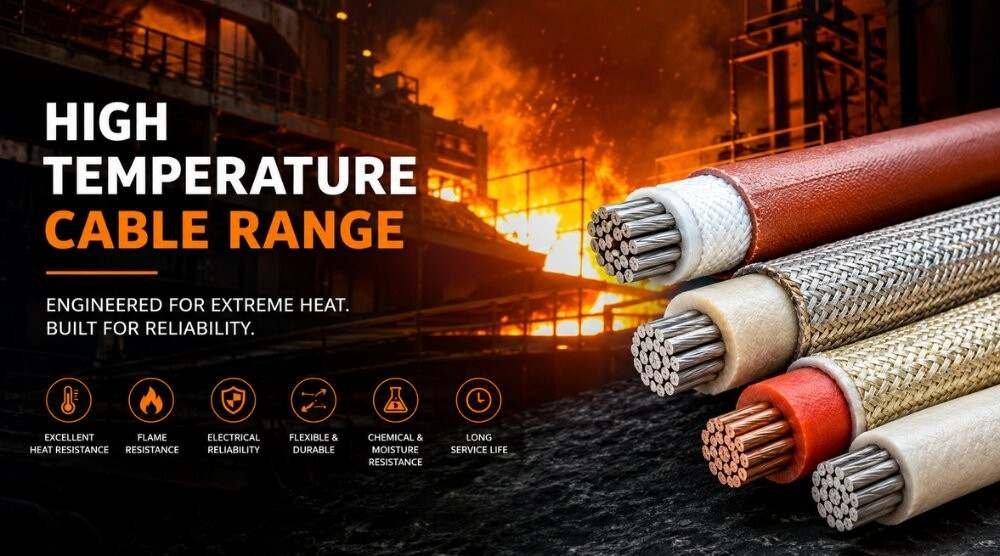
Industrial equipment is becoming hotter, faster, and more demanding than ever before. Furnaces, aerospace engines, steel plants, robotics, electric vehicles, and industrial ovens all expose electrical wiring to temperatures that ordinary cables simply cannot survive. Understanding the High Temperature Cable Range is essential for ensuring safe and reliable operation in these extreme environments.
Choosing the wrong cable can result in insulation failure, production downtime, expensive repairs, or even safety hazards. The correct High Temperature Cable Range helps maintain electrical performance, extend service life, and reduce maintenance costs, making it a critical consideration for engineers, maintenance teams, OEM manufacturers, and procurement professionals.
Different cable constructions are designed to withstand different operating temperatures, so selecting the appropriate High Temperature Cable Range directly impacts equipment reliability, operational efficiency, and workplace safety. At DOMADIA™, we supply premium high-temperature cables engineered for demanding industrial applications where consistent performance matters.
What Is High Temperature Cable Range?
The High Temperature Cable Range refers to the continuous operating temperature that a cable can safely withstand without degradation of its insulation, conductor performance, or electrical properties.
Rather than asking, “How hot can a cable get?”, engineers should ask:

- What is the continuous operating temperature?
- What is the short-term peak temperature?
- Is the cable exposed continuously or intermittently?
- Are chemicals, moisture, vibration, or abrasion also present?
The answers determine the most suitable cable construction.
Why Temperature Ratings Matter
Electrical insulation naturally ages with heat.
As operating temperature increases:
- Insulation becomes brittle.
- Electrical leakage increases.
- Mechanical flexibility decreases.
- Service life shortens.
- Risk of failure rises.
Using a cable rated below the actual operating temperature often results in premature replacement and unexpected downtime.
Common High Temperature Cable Temperature Ranges
Although exact ratings vary by manufacturer and construction, common industrial ranges include:
| Cable Type | Typical Continuous Temperature |
| PVC | Up to 70°C |
| XLPE | Up to 90°C |
| Silicone Rubber | 180°C–200°C |
| PTFE (Teflon) | 260°C |
| Fiberglass Insulated | 400°C–600°C |
| Ceramic Fiber Cables | Up to 1000°C (specialized applications) |
The required High Temperature Cable Range depends entirely on the operating environment.
Factors That Affect Temperature Performance
1. Insulation Material
The insulation largely determines maximum operating temperature.
Examples include:
- Silicone
- PTFE
- Fiberglass
- Ceramic Fiber
- Mica Tape
Each offers different advantages in flexibility, flame resistance, and durability.
2. Conductor Material
Most high-temperature cables use:
- Nickel-plated copper
- Silver-plated copper
- Bare copper
- Nickel conductors (extreme temperatures)
These improve oxidation resistance at elevated temperatures.
3. Continuous vs Peak Temperature
Many cables can tolerate higher temperatures briefly.
For example:
- Continuous: 260°C
- Peak: 300°C
Engineers should always design around continuous operating temperatures.
4. Mechanical Stress
High temperatures combined with:
- vibration
- bending
- movement
can accelerate insulation wear.
5. Chemical Exposure
Oil, acids, solvents, steam, and cleaning chemicals may reduce insulation life even when temperature ratings are acceptable.
Chemical Composition
High-temperature cables vary by application, but commonly include:
Conductors
- Copper
- Nickel-Plated Copper
- Silver-Plated Copper
- Nickel Alloy Conductors
Insulation
- Silicone Rubber
- PTFE (Polytetrafluoroethylene)
- Fiberglass Braiding
- Ceramic Fiber
- Mica Tape
Outer Protection
- Fiberglass Overbraid
- Stainless Steel Braid
- High-Temperature Silicone Jacket
Properties of High Temperature Cables

Excellent Heat Resistance
One of the biggest advantages of the High Temperature Cable Range is its ability to maintain reliable electrical performance even under continuous exposure to elevated temperatures.
Flame Resistance
The High Temperature Cable Range is designed to support safer operation by resisting flame propagation in demanding industrial environments.
Electrical Reliability
Stable insulation properties ensure consistent electrical performance throughout the High Temperature Cable Range, even during prolonged operation.
Excellent Flexibility
Despite being engineered for extreme heat, the High Temperature Cable Range is available in flexible constructions suitable for both fixed and moving installations.
Chemical Resistance
The High Temperature Cable Range performs reliably in harsh industrial environments where exposure to oils, chemicals, and solvents is common.
Moisture Resistance
Designed to withstand humid conditions, these cables maintain dependable performance without compromising insulation integrity.
Long Service Life
The High Temperature Cable Range is engineered for extended industrial service, helping reduce frequent replacements and improve operational reliability.
High Dielectric Strength
Excellent dielectric properties provide dependable electrical insulation and safe operation in high-temperature applications.
Mechanical Durability
Built to withstand vibration, bending, and repeated movement, these cables deliver long-lasting mechanical performance.
Low Maintenance
Thanks to the robust High Temperature Cable Range, maintenance requirements are minimized, reducing production downtime and overall operating costs.
Technical Specifications
Typical specifications include:
- Temperature Rating: 180°C–1000°C (depending on construction)
- Voltage Rating: 300V, 600V, 1kV
- Conductor: Copper, Nickel-Plated Copper, Silver-Plated Copper
- Insulation: Silicone, PTFE, Fiberglass, Ceramic
- Shielding: Optional
- Flame Resistance: Available
- Flexible Construction: Yes
- RoHS Compliance: Available
- Halogen-Free Options: Available
- Custom Sizes: Available
Standards
Quality high-temperature cables are commonly manufactured according to applicable international standards, including:
- IEC Standards
- UL Standards
- RoHS Compliance
- REACH Compliance
- ASTM Specifications (where applicable)
Specific standards depend on cable construction and intended application.
Applications
The High Temperature Cable Range is essential across numerous industries where extreme heat, continuous operation, and reliable electrical performance are critical.

Steel Plants
The High Temperature Cable Range provides reliable wiring for furnaces, rolling mills, and other high-heat production equipment.
Glass Manufacturing
Designed to withstand continuous radiant heat, these cables ensure dependable performance throughout glass production processes.
Aerospace
The High Temperature Cable Range supports aircraft engines, aerospace electronics, and other high-temperature systems requiring exceptional reliability.
Power Generation
Used around boilers, turbines, and heat-intensive equipment, these cables maintain stable electrical performance under demanding operating conditions.
Automotive Testing
Ideal for engine testing facilities where the High Temperature Cable Range ensures reliable operation during prolonged exposure to elevated temperatures.
Industrial Ovens
Engineered to maintain insulation integrity in continuous heating applications, helping improve operational safety and efficiency.
Semiconductor Manufacturing
The High Temperature Cable Range supports precision manufacturing processes where stable performance under controlled high-temperature conditions is essential.
Robotics
Provides dependable wiring for industrial robots operating in heat-intensive manufacturing environments while maintaining flexibility and durability.
Chemical Processing
Resistant to heat and aggressive industrial environments, these cables deliver reliable performance in challenging chemical processing facilities.
Laboratory Equipment
The High Temperature Cable Range is widely used in thermal testing systems, research laboratories, and scientific equipment requiring accurate and dependable electrical connections.
Shapes Available
DOMADIA™ supplies high-temperature cables in multiple configurations, including:
- Single Core Cables
- Multi-Core Cables
- Shielded Cables
- Braided Cables
- Flexible High-Temperature Wires
- Flat Cables
- Round Cables
- Custom Assemblies
- Custom Lengths
- OEM Configurations
How to Select the Correct Temperature Rating
Before selecting a cable, evaluate:
- Maximum continuous operating temperature
- Peak temperature exposure
- Environmental chemicals
- Mechanical movement
- Voltage requirement
- Installation method
- Safety regulations
- Expected service life
Selecting a cable solely on price often results in significantly higher maintenance costs later.
Why DOMADIA™
DOMADIA™ supplies premium industrial high-temperature cables designed for demanding applications.
Our customers benefit from:
- Premium-quality materials
- Reliable temperature performance
- International quality standards
- Multiple insulation options
- Custom cable configurations
- Fast technical support
- Consistent product quality
- Global industrial supply capability
Whether your application requires silicone-insulated cables, PTFE cables, fiberglass-insulated cables, or specialized ultra-high-temperature solutions, DOMADIA™ delivers dependable products built for long-term reliability.
Conclusion
Selecting the right High Temperature Cable Range is far more than checking a temperature number on a datasheet. It requires understanding insulation materials, conductor construction, operating conditions, mechanical stresses, and industry standards. Choosing the appropriate High Temperature Cable Range helps minimize downtime, improve safety, extend equipment life, and reduce long-term maintenance costs.
For industries operating in extreme heat, investing in the correct High Temperature Cable Range ensures reliable electrical performance even under demanding conditions. Choosing high-quality solutions from DOMADIA™ provides dependable performance, consistent reliability, and long service life for the most challenging industrial applications.
Choose the Right High Temperature Cable Range for Reliable Performance
Keep your operations running safely with premium high-temperature cables fromDOMADIA™ —engineered for extreme heat, long service life, and dependable performance.
Contact DOMADIA™ today to find the right High Temperature Cable Range for your application and keep your operations running safely and efficiently.
Talk to: Er.Pankaj Domadia | Kairav Domadia | Aadil Domadia | Pragati Sanap | Pooja N N
#HighTemperatureCableRange #HighTemperatureCable #HeatResistantCable #IndustrialCables #ElectricalEngineering #Manufacturing #IndustrialAutomation #PowerSystems #DOMADIA
Directly whatsapp us for an Enquiry: https://wa.link/kairav
Our deliveries span Solan, Baddi, Nalagarh, Paonta Sahib, and Una across Himachal Pradesh, Punjab, Haryana, Uttarakhand, and J&K, exporting to USA, Canada, Greenland, Iceland, and Bermuda.