Blogs
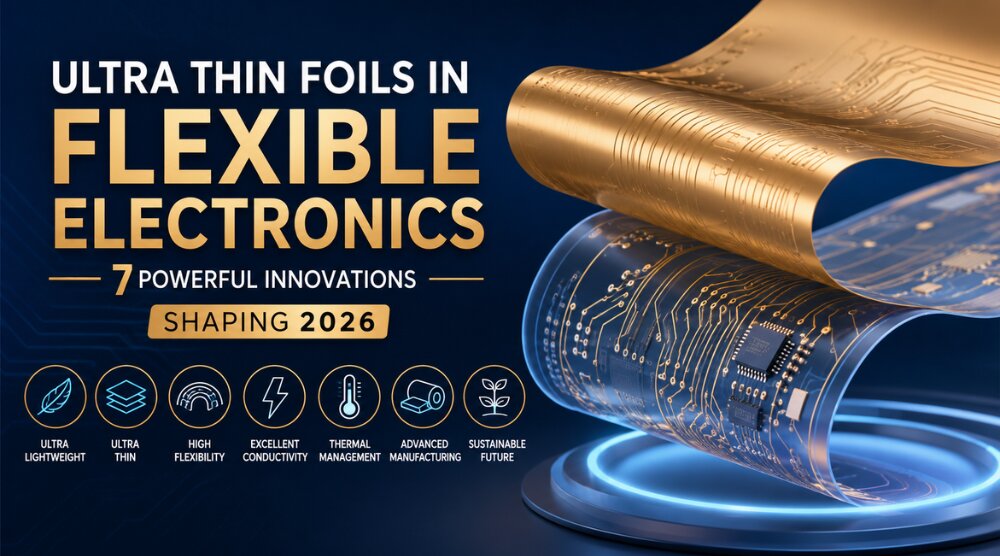
Ultra-Thin Foils in Flexible Electronics 7 Powerful Innovations Shaping 2026
Ultra Thin Foils Flexible Electronics are transforming the way modern devices are designed and manufactured. Electronics are no longer limited to rigid circuit boards and bulky components. Today’s technology is becoming thinner, lighter, bendable, and far more intelligent. Foldable smartphones, wearable health monitors, smart textiles, flexible sensors, and compact medical devices are driving demand for precision-engineered metallic foils that combine exceptional electrical conductivity with outstanding mechanical flexibility. These advanced materials play a critical role in enabling compact, high-performance electronic designs while supporting the next generation of flexible electronic technologies.
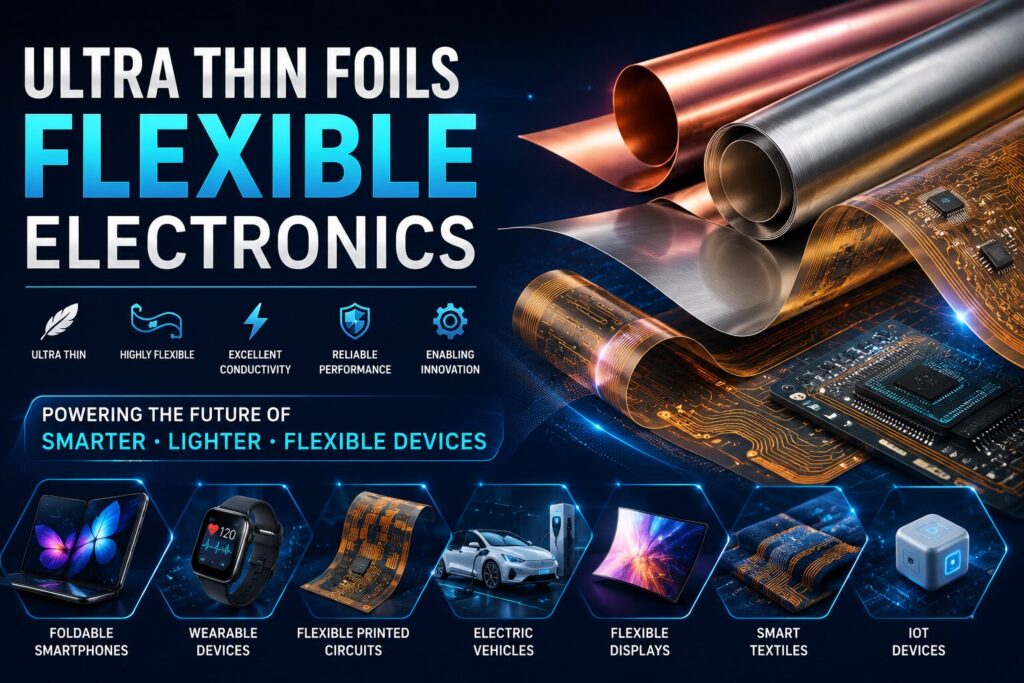
At the heart of these innovations lies Ultra Thin Foils Flexible Electronics. These precision-engineered metallic foils enable manufacturers to design products that can bend, fold, twist, and perform reliably without sacrificing electrical or thermal performance.
As industries move toward miniaturization and higher-performance electronics in 2026, ultra thin foils have become one of the most important enabling materials. At DOMADIA™, we supply precision ultra thin foil solutions that help manufacturers build the next generation of flexible electronic products with consistency and reliability.
What Are Ultra Thin Foils?
Ultra-Thin Foils are precision-rolled metallic sheets manufactured with extremely small thicknesses, often measured in microns rather than millimeters. Despite their ultra-thin profile, these foils retain excellent electrical conductivity, mechanical strength, dimensional stability, and corrosion resistance, making them ideal for Ultra Thin Foils Flexible Electronics applications where reliability and precision are essential.
Depending on the application, manufacturers may choose copper, nickel, stainless steel, titanium, aluminum, or specialty alloy Ultra-Thin Foils. Their ability to withstand repeated bending while maintaining consistent electrical performance makes them indispensable for wearable devices, foldable displays, and next-generation electronic systems. As demand for Ultra Thin Foils Flexible Electronics continues to grow, these advanced materials are becoming the foundation of innovative, lightweight, and flexible technologies.
Chemical Composition
The composition depends on the selected material. Common ultra thin foil materials include:
Copper Foils
- Copper (Cu): ≥99.9%
Nickel Foils
- Nickel (Ni): ≥99.6%
Stainless Steel Foils
Typical composition:
- Chromium (Cr): 16–18%
- Nickel (Ni): 8–14%
- Iron (Fe): Balance
- Molybdenum (Mo): Grade dependent
Titanium Foils
- Titanium (Ti): Balance
- Oxygen, Iron, Carbon, Nitrogen: Controlled according to grade
7 Powerful Innovations Shaping Flexible Electronics in 2026
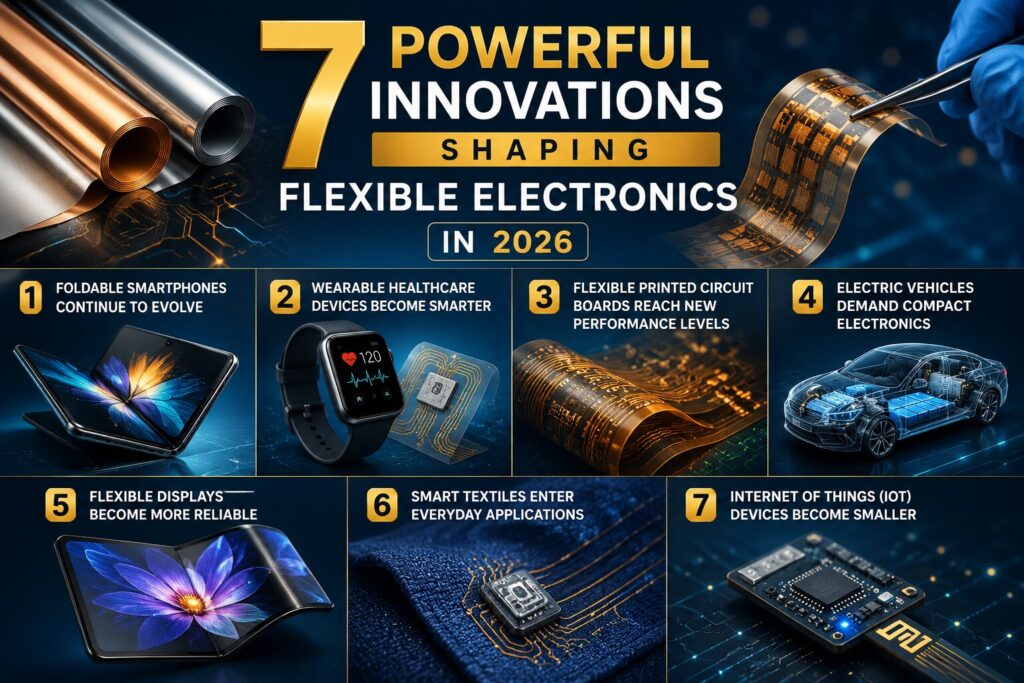
1. Foldable Smartphones Continue to Evolve
Foldable consumer electronics demand materials capable of surviving thousands of bending cycles.
Ultra thin metallic foils provide:
- Flexible electrical pathways
- Excellent fatigue resistance
- Stable signal transmission
- Compact internal packaging
These characteristics allow manufacturers to reduce device thickness while improving reliability.
2. Wearable Healthcare Devices Become Smarter
Medical wearables now monitor heart rate, blood oxygen, glucose levels, temperature, sleep quality, and physical activity continuously.
Ultra thin foils support these devices by providing:
- Lightweight construction
- High electrical conductivity
- Excellent flexibility
- Reliable sensor connections
Their low profile significantly improves user comfort during extended wear.
3. Flexible Printed Circuit Boards Reach New Performance Levels
Flexible PCBs are replacing traditional rigid boards across numerous industries.
Benefits include:
- Reduced assembly space
- Lower product weight
- Higher circuit density
- Improved vibration resistance
Precision metallic foils enable engineers to create increasingly complex electronic designs while maintaining manufacturing accuracy.
4. Electric Vehicles Demand Compact Electronics
Electric vehicles incorporate hundreds of electronic control systems.
Ultra thin foils are increasingly used in:
- Battery management systems
- Flexible sensors
- Power electronics
- Charging modules
- Advanced driver assistance systems
Reducing weight while maintaining electrical efficiency contributes directly to improved vehicle performance and energy efficiency.
5. Flexible Displays Become More Reliable
OLED and next-generation flexible displays rely on materials capable of repeated movement.
Ultra thin metallic foils help by offering:
- Dimensional stability
- Excellent thermal conductivity
- Reliable electrical pathways
- Long operational life
These properties support thinner displays with improved durability.
6. Smart Textiles Enter Everyday Applications
Conductive fabrics are moving beyond research laboratories into commercial products.
Applications include:
- Smart clothing
- Sports monitoring systems
- Military communication garments
- Industrial safety wear
- Healthcare monitoring textiles
Ultra thin foils integrate conductive pathways without significantly affecting fabric flexibility.
7. Internet of Things (IoT) Devices Become Smaller
Billions of IoT sensors require compact, lightweight electronic components.
Ultra thin foils enable:
- Miniaturized circuitry
- Improved battery efficiency
- Better heat dissipation
- Reduced manufacturing footprint
These advantages support the growing demand for connected devices across homes, industries, and healthcare.
Properties
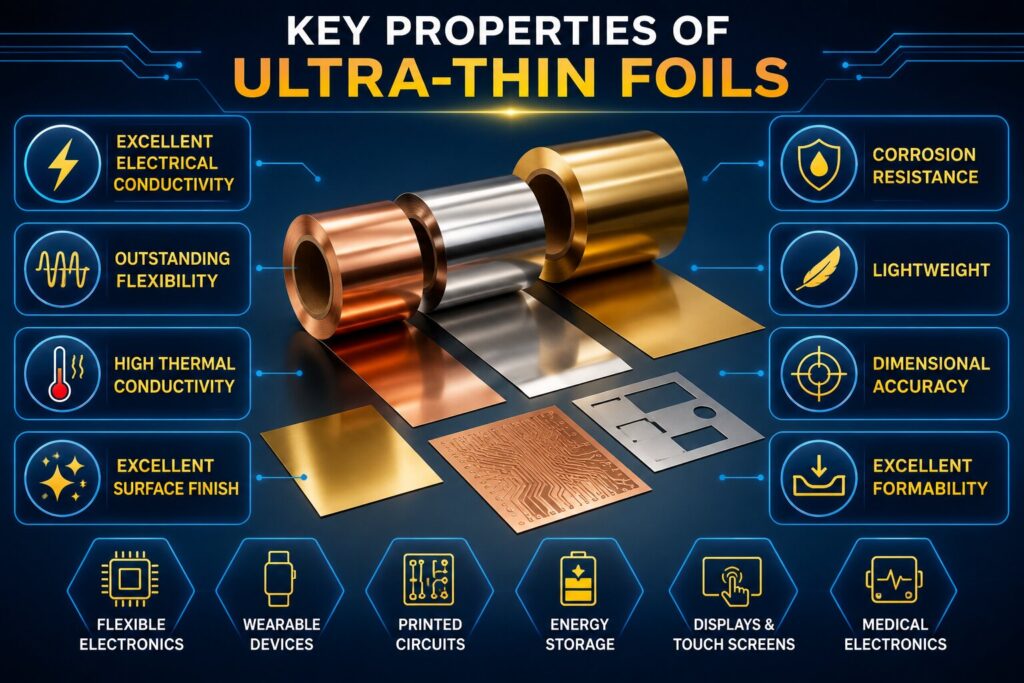
Excellent Electrical Conductivity
Many metallic foils provide outstanding electrical performance, making them suitable for Ultra Thin Foils Flexible Electronics, including high-speed electronic circuits, flexible printed circuits, and advanced wearable devices.
Outstanding Flexibility
Their extremely small thickness allows repeated bending without significant degradation, making them ideal for Ultra Thin Foils Flexible Electronics used in foldable displays, wearable devices, and flexible circuit applications.
High Thermal Conductivity
Efficient heat transfer helps maintain stable operating temperatures in compact electronic assemblies.
Excellent Surface Finish
Precision rolling creates smooth surfaces ideal for electronic manufacturing and thin-film applications, ensuring superior performance in Ultra Thin Foils Flexible Electronics requiring high precision and consistent conductivity.
Corrosion Resistance
Carefully selected materials provide long-term durability in demanding operating environments, making them highly reliable for Ultra Thin Foils Flexible Electronics exposed to moisture, chemicals, and varying temperatures.
Lightweight
Reducing material thickness contributes to lower product weight without sacrificing functionality.
Dimensional Accuracy
Tight manufacturing tolerances support highly precise electronic fabrication, ensuring consistent performance in Ultra Thin Foils Flexible Electronics for advanced circuits, sensors, and miniaturized components.
Excellent Formability
Ultra-thin foils can be stamped, etched, laser cut, laminated, and formed into complex geometries, making them ideal for Ultra Thin Foils Flexible Electronics requiring precision, flexibility, and intricate component designs.
Technical Specifications
Typical specifications include:
- Thickness: 5–200 microns
- Width: Custom manufactured
- Surface Finish: Bright, matte, rolled, annealed
- Hardness: Annealed to full hard
- Electrical Conductivity: Material dependent
- Thermal Conductivity: Material dependent
- Tensile Strength: Grade dependent
- Precision Thickness Tolerance
- Excellent Flatness
- Custom Slitting Available
Standards
Ultra thin foils may be manufactured according to various international standards, including:
- ASTM Standards
- EN Standards
- JIS Standards
- DIN Standards
- ISO Manufacturing Systems
- RoHS Compliance (application dependent)
- REACH Compliance (where applicable)
Material-specific standards vary according to alloy selection and customer requirements.
Shapes Available
DOMADIA™ supplies ultra thin foils in multiple forms including:
- Coil Rolls
- Precision Slit Coils
- Sheets
- Custom Blanks
- Laser Cut Parts
- Precision Strips
- Etched Components
- Customer-Specific Dimensions
Applications
Ultra thin foils support numerous advanced industries.

Flexible Printed Circuits
Used in smartphones, tablets, wearable devices, foldable electronics, and compact consumer products.
Medical Electronics
Applied in biosensors, diagnostic equipment, implantable devices, and patient monitoring systems.
Electric Vehicles
Suitable for battery systems, power electronics, flexible connectors, and sensing technologies.
Aerospace
Supports lightweight electronic assemblies, satellite components, avionics, and precision instrumentation.
Semiconductor Manufacturing
Used for advanced packaging, precision electronic fabrication, and wafer processing, Ultra Thin Foils Flexible Electronics enable highly reliable semiconductor devices and next-generation microelectronic technologies.
Renewable Energy
Applied in battery technology, energy storage systems, and high-performance electronic components, Ultra Thin Foils Flexible Electronics improve conductivity, efficiency, and reliability in advanced energy applications.
Telecommunications
Supports high-speed communication equipment and compact RF devices.
Industrial Automation
Used in flexible sensors, robotics, automation controls, and intelligent manufacturing systems, Ultra Thin Foils Flexible Electronics enable precise performance, durability, and seamless integration in advanced industrial applications.
Why DOMADIA™?
Selecting the right supplier is as important as selecting the right material.
DOMADIA™ provides:
- Premium-quality ultra thin foils
- Precision thickness control
- Multiple alloy options
- Custom dimensions
- Consistent surface quality
- Reliable global supply chain
- Technical support for material selection
- Fast response for industrial requirements
- Strict quality assurance
- Solutions tailored for demanding electronic applications
Our commitment is to deliver materials that help manufacturers improve product reliability, manufacturing efficiency, and long-term performance.
Conclusion
The future of electronics is becoming increasingly flexible, lightweight, and intelligent. From foldable displays and wearable healthcare devices to electric vehicles and advanced IoT systems, Ultra Thin Foils Flexible Electronics continues to play a vital role in enabling innovation across industries by delivering exceptional conductivity, flexibility, and reliability.
As manufacturers pursue thinner designs, greater reliability, and improved efficiency, demand for precision-engineered ultra-thin foils for Ultra Thin Foils Flexible Electronics will continue to grow well beyond 2026. Partnering with DOMADIA™ ensures access to high-quality materials designed to support Ultra Thin Foils Flexible Electronics, advanced manufacturing, and next-generation electronic technologies.
Discover Premium Ultra-Thin Foils for Flexible Electronics
Upgrade Your Flexible Electronics with DOMADIA™ Ultra-Thin Foils—Get in Touch with Us for precision-engineered solutions today.
Looking for reliable Ultra-Thin Foils? Get in Touch with DOMADIA™ and discover materials built for next-generation innovation.
#UltraThinFoils #FlexibleElectronics #PrecisionFoils #CopperFoils #NickelFoils #WearableTechnology #FoldableElectronics #EVTechnology #Semiconductor #IndustrialMaterials #AdvancedManufacturing #DOMADIA
Directly whatsapp us for an Enquiry: https://wa.link/kairav
We’ve supplied to Mumbai, Pune, Indore, Jaipur, and Surat—serving industries across Maharashtra, Madhya Pradesh, Rajasthan, Gujarat, and Goa, with exports to Germany, USA, Japan, South Korea, and Italy.