Blogs

Hafnium Wire Aerospace – 5 Powerful High-Temperature Applications Engineers Should Know | DOMADIA™
Hafnium Wire Aerospace: Why Engineers Depend on This Extreme-Temperature Metal
A propulsion engineer once described a recurring problem during high-temperature testing: the core components endured the heat, but the electrical leads failed long before the system could reach full performance.
This challenge pushed aerospace manufacturers toward advanced hafnium-based wire solutions, especially in applications where traditional metals like copper or nickel cannot survive. With outstanding resistance to extreme heat, oxidation, and plasma exposure, this material has become a dependable choice for aerospace electronics and propulsion systems.
Today, Hafnium Wire Aerospace plays a critical role in spacecraft components, plasma systems, and jet engine technologies operating beyond 2000°C.
The mindset shift is simple:
Instead of designing around metal limitations, engineers now choose materials that are built for extreme environments.
DOMADIA™ supplies precision-grade hafnium wire materials engineered for reliability in the harshest conditions.
What is Hafnium Wire Aerospace Material?
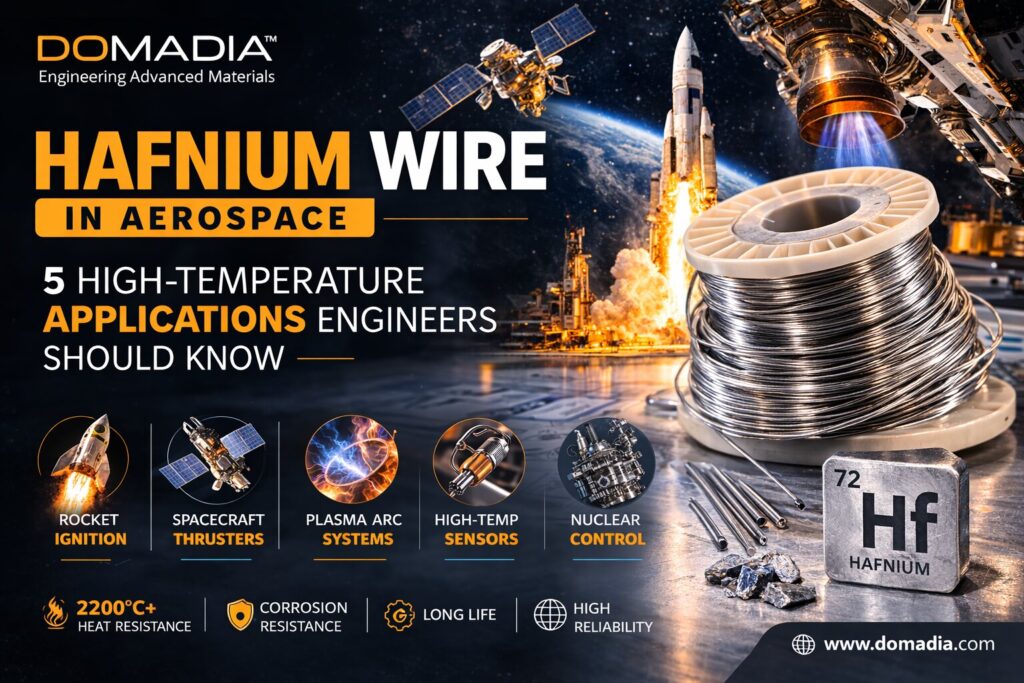
Hafnium is a refractory transition metal known for its ability to withstand extreme heat, high energy radiation, and aggressive chemical environments.
Because of these properties, Hafnium Wire Aerospace components are widely used in:
- Rocket propulsion systems
- Plasma arc equipment
- Aerospace ignition systems
- Nuclear control rods
- High-temperature sensors
The melting point of hafnium (~2233°C) makes it one of the most reliable metals for aerospace thermal systems.
Chemical Composition of Hafnium Wire
Typical aerospace-grade Hafnium Wire Aerospace composition includes:
| Element | Percentage |
| Hafnium (Hf) | ≥ 99.2% |
| Zirconium (Zr) | ≤ 0.5% |
| Oxygen (O) | ≤ 0.05% |
| Iron (Fe) | ≤ 0.02% |
| Nitrogen (N) | ≤ 0.01% |
High purity ensures stable electrical conductivity and oxidation resistance under extreme aerospace operating conditions.
Key Properties of Hafnium Wire Aerospace Alloys
The engineering value of Hafnium Wire Aerospace materials lies in their exceptional thermal and structural stability.
| Property | Value |
| Melting Point | ~2233°C |
| Density | 13.31 g/cm³ |
| Electrical Resistivity | ~35 µΩ·cm |
| Thermal Expansion | 5.9 µm/m·K |
| Thermal Conductivity | 23 W/m·K |
| Oxidation Resistance | Excellent |
These properties allow Hafnium Wire Aerospace systems to operate in environments where conventional alloys fail rapidly.
Technical Specifications – Hafnium Wire
DOMADIA™ provides aerospace-grade Hafnium Wire Aerospace products manufactured to strict quality control standards.
| Specification | Details |
| UNS Number | UNS R54810 |
| Purity | 99% – 99.95% |
| Diameter Range | 0.10 mm – 6 mm |
| Form | Straight / Coil |
| Surface Finish | Bright / Polished |
| Tolerance | ±0.01 mm |
| Supply Condition | Annealed |
Each Hafnium Wire Aerospace batch includes traceable certification and testing reports.
Industry Standards for Hafnium Wire
High-temperature aerospace materials must follow strict international standards.
Common specifications for Hafnium Wire Aerospace production include:
- ASTM B776 – Hafnium metal standards
- AMS aerospace material specifications
- ISO certified manufacturing processes
- RoHS compliance
DOMADIA™ ensures Hafnium Wire Aerospace materials meet aerospace and defense manufacturing requirements.
Shapes Available at DOMADIA™
For engineering projects requiring specialized refractory metals, DOMADIA™ supplies hafnium wire materials in multiple forms:
✔ Hafnium Wire
✔ Hafnium Rods
✔ Hafnium Foils
✔ Hafnium Plates
✔ Hafnium Sputtering Targets
✔ Custom Fabricated Components
Precision manufacturing ensures compatibility with aerospace ignition systems and high-temperature assemblies.
5 High-Temperature Applications of Hafnium Wire in Aerospace
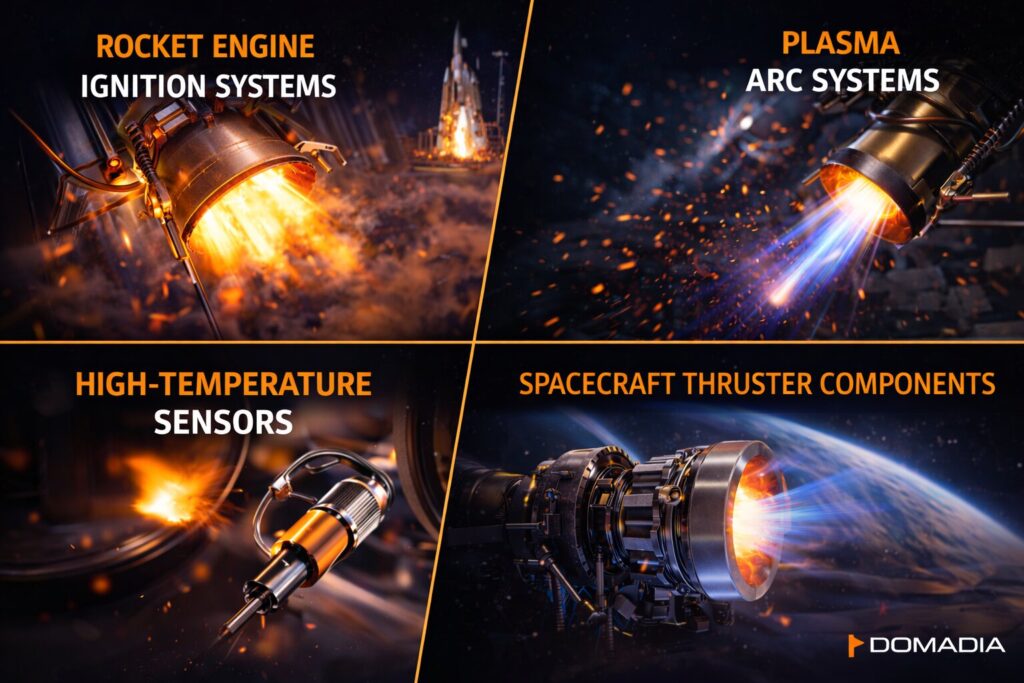
1. Rocket Engine Ignition Systems
Rocket ignition devices rely on Hafnium Wire Aerospace conductors because the metal resists oxidation during rapid high-temperature ignition cycles.
2. Plasma Arc Systems
Plasma torches used in aerospace manufacturing use Hafnium Wire Aerospace electrodes that maintain stability under extreme plasma temperatures.
3. High-Temperature Sensors
Temperature monitoring inside propulsion chambers requires Hafnium Wire Aerospace sensor leads that remain stable above 2000°C.
4. Spacecraft Thruster Components
Electric propulsion systems often integrate hafnium wire conductors due to their resistance to ionized plasma environments.
5. Nuclear Control Systems in Space Reactors
Advanced space reactors rely on Hafnium Wire Aerospace materials because hafnium absorbs neutrons efficiently while remaining structurally stable.
Why Aerospace Engineers Choose Hafnium Wire
Many metals melt or degrade under prolonged high-temperature exposure.
However, Hafnium Wire Aerospace materials provide:
• Extreme heat resistance
• Excellent corrosion resistance
• Plasma stability
• Long operational lifespan
• High reliability in critical aerospace systems
This reduces component failure risk and improves mission safety and engineering reliability.
A Practical Engineering Lesson
An aerospace startup once attempted to use tungsten wiring for plasma ignition electrodes.
Initial tests looked promising, but after several cycles, oxidation damage appeared. Replacing the system with Hafnium Wire Aerospace components increased operational life by over 4×, eliminating repeated maintenance interruptions.
The lesson:
Material selection directly determines system reliability.
Conclusion
The aerospace industry constantly pushes materials to their limits. Extreme heat, radiation exposure, and plasma environments demand metals that can survive beyond traditional engineering boundaries.
This is where Hafnium Wire Aerospace technology proves essential.
From rocket engines to spacecraft thrusters, Hafnium Wire Aerospace applications ensure stable performance in conditions where most metals fail.
With precision manufacturing and global supply capability, DOMADIA™ delivers high-performance refractory metals engineered for next-generation aerospace innovation.
Build Aerospace Systems That Survive Extreme Temperatures
Contact Us to discuss high-temperature metal solutions for your aerospace systems.
DOMADIA™ – Engineering reliable materials for the future of aerospace technology.
Talk to: Er.Pankaj Domadia | Kairav Domadia | Aadil Domadia | Pragati Sanap | Pooja N N
#HafniumWire #AerospaceMaterials #RefractoryMetals #HighTemperatureAlloys #SpaceEngineering #AerospaceManufacturing #DOMADIA #SpecialMetals #AdvancedMaterials
Directly whatsapp us for an Enquiry: https://wa.link/kairav
Our materials reach Bengaluru, Mysuru, Mangaluru, Hubballi, and Belagavi, supporting manufacturing industries across Karnataka, Telangana, Tamil Nadu, Kerala, and Andhra Pradesh, while exporting to Australia, New Zealand, Singapore, Malaysia, and Indonesia.