Blogs

Conductive Fabrics Shielding: 7 Powerful Insights vs Metal Shielding
A Small EMI Problem That Became a Big Production Issue
A manufacturer of advanced electronic devices faced recurring signal interference problems. The design team initially selected traditional metal shielding because it had been the industry standard for years. While the shielding performance was excellent, assembly challenges, additional weight, and limited flexibility created new engineering obstacles.
After evaluating alternative solutions, Conductive Fabrics Shielding was introduced in specific areas of the design. The result was improved flexibility, reduced weight, easier assembly, and effective EMI protection.
This scenario highlights an important engineering reality: the best shielding solution is not always the most rigid one. In many modern applications, Conductive Fabrics Shielding provides the ideal balance of electromagnetic protection, lightweight construction, and design flexibility, helping engineers overcome challenges that conventional metal shielding may create.
Understanding EMI Shielding Requirements
Electromagnetic interference (EMI) can disrupt electronic systems, reduce signal integrity, and affect overall product reliability.
Industries that rely heavily on shielding include:
- Aerospace
- Telecommunications
- Medical equipment
- Automotive electronics
- Defense systems
- Consumer electronics
- Industrial automation
Choosing between conductive fabrics and metal shielding requires understanding performance requirements, environmental conditions, durability expectations, and lifecycle costs.
What Are Conductive Fabrics?
Conductive Fabrics Shielding uses specially engineered textile materials containing conductive metals or coatings that provide effective EMI and RFI protection. These fabrics combine electrical conductivity with lightweight flexibility, making them ideal for modern electronics, aerospace systems, medical devices, and telecommunications equipment where traditional metal shielding may be less practical.
Typical Chemical Composition
Depending on the application, conductive fabrics may contain:
- Silver-coated fibers
- Nickel-coated fibers
- Copper-coated fibers
- Stainless steel fibers
- Conductive polymer coatings
- Carbon-based conductive materials
The specific composition influences conductivity, shielding effectiveness, flexibility, and corrosion resistance.
What Is Metal Shielding?
Metal shielding uses conductive metallic materials to block or redirect electromagnetic energy.
Common shielding metals include:
- Copper
- Aluminum
- Stainless Steel
- Nickel alloys
- MuMetal® for magnetic shielding applications
Metal shielding remains widely used in high-performance industrial and defense systems.
Typical Chemical Composition
Copper Shielding
- Copper (Cu): 99%+
Aluminum Shielding
- Aluminum (Al): 95–99%
Stainless Steel Shielding
- Iron (Fe)
- Chromium (Cr)
- Nickel (Ni)
Nickel-Based Shielding Alloys
- Nickel-rich compositions with controlled magnetic properties
Conductive Fabrics vs Metal Shielding: Key Comparison
| Property | Conductive Fabrics | Metal Shielding |
| Weight | Extremely lightweight | Heavier |
| Flexibility | Excellent | Limited |
| EMI Shielding | Good to excellent | Excellent |
| Durability | Moderate to high | Very high |
| Corrosion Resistance | Depends on coating | Generally high |
| Installation | Easier | More complex |
| Cost | Often lower for flexible systems | Higher for complex assemblies |
| Formability | Outstanding | Moderate |
Properties of Conductive Fabrics
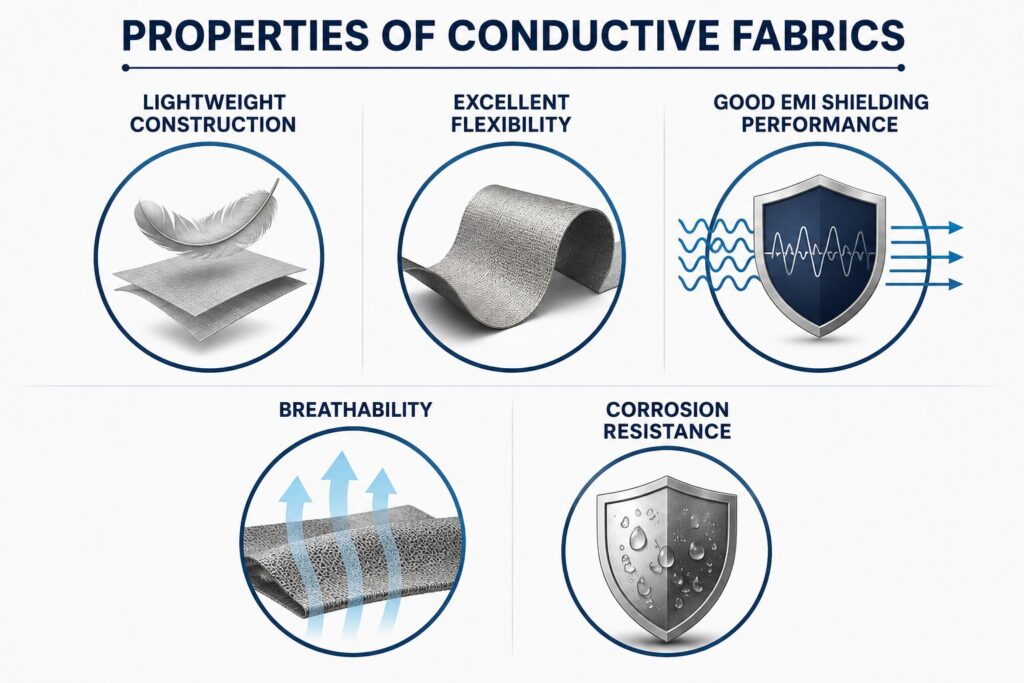
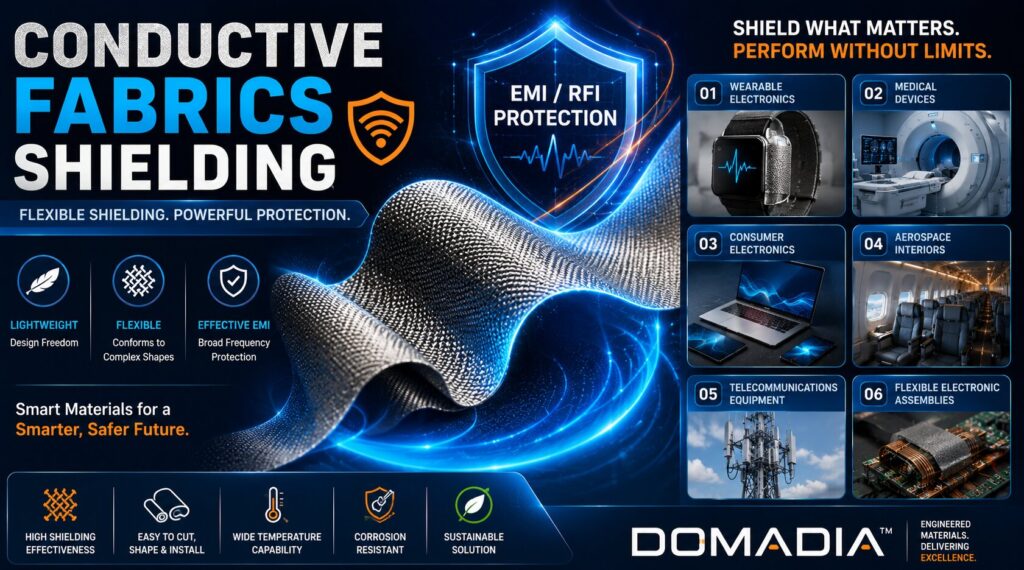
Lightweight Construction
Conductive Fabrics Shielding helps significantly reduce overall system weight while maintaining effective electromagnetic protection. This advantage is particularly valuable in aerospace systems, portable electronics, and wearable technologies, where minimizing weight improves performance, comfort, energy efficiency, and design flexibility.
Excellent Flexibility
The flexible structure of Conductive Fabrics Shielding allows the material to conform easily to complex geometries, curved surfaces, and compact electronic assemblies. This adaptability simplifies installation, reduces manufacturing complexity, and provides engineers with greater design freedom when developing advanced electronic systems.
Good EMI Shielding Performance
Modern conductive fabrics provide effective protection across a broad frequency range.
Breathability
Unlike rigid metals, certain conductive fabrics allow airflow while maintaining shielding performance.
Corrosion Resistance
Advanced coatings improve long-term environmental durability.
Properties of Metal Shielding
Superior Shielding Effectiveness
Metal enclosures provide outstanding attenuation across a wide frequency range, making them highly effective for EMI control in demanding Conductive Fabrics Shielding applications.
Mechanical Strength
Metals contribute structural integrity in demanding environments.
Long Service Life
When properly selected and engineered, Conductive Fabrics Shielding materials can deliver decades of reliable performance while maintaining consistent EMI protection. Their durability, flexibility, and resistance to environmental factors make them suitable for long-term use in demanding electronic and industrial applications.
High Temperature Resistance
Many metal shielding materials perform effectively in elevated-temperature applications.
Enhanced Environmental Resistance
Metal shielding can withstand harsh industrial conditions.
Applications of Conductive Fabrics
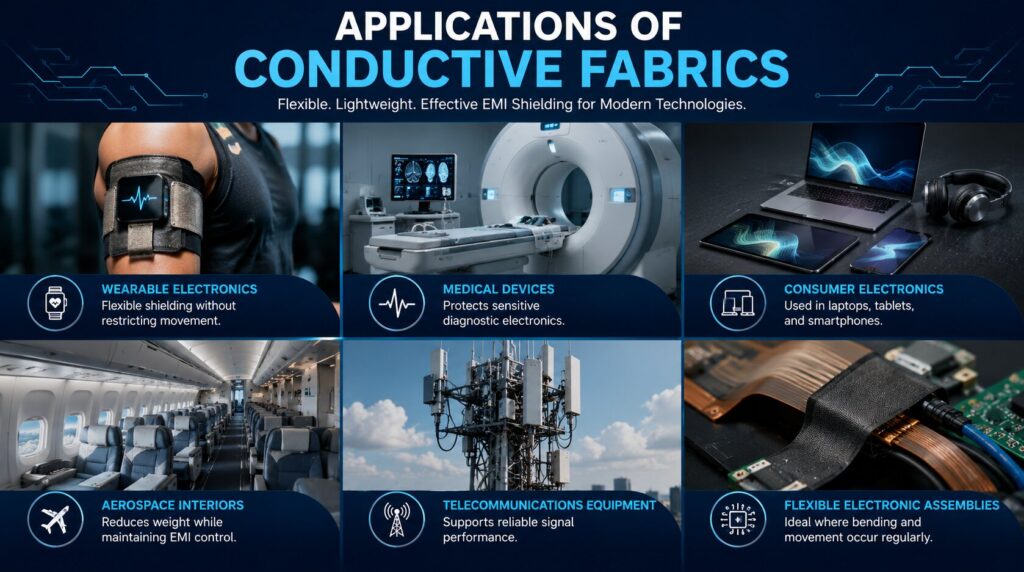
Wearable Electronics
Flexible shielding without restricting movement.
Medical Devices
Protects sensitive diagnostic electronics.
Consumer Electronics
Conductive Fabrics Shielding is widely used in laptops, tablets, and smartphones to reduce electromagnetic interference while supporting lightweight, compact, and high-performance device designs.
Aerospace Interiors
Conductive Fabrics Shielding reduces overall system weight while maintaining effective EMI control, making it an excellent solution for aerospace, portable electronics, and advanced communication systems.
Telecommunications Equipment
Supports reliable signal performance.
Flexible Electronic Assemblies
Conductive Fabrics Shielding is ideal for applications where bending, flexing, and continuous movement occur regularly, helping maintain reliable EMI protection without compromising flexibility or durability.
Applications of Metal Shielding
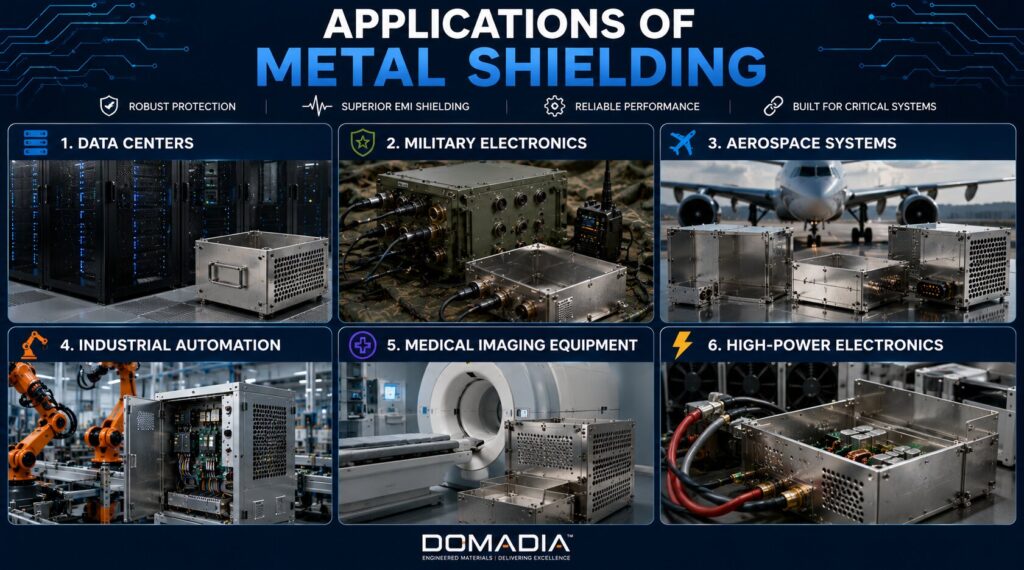
Data Centers
Conductive Fabrics Shielding helps protect servers and communication systems from electromagnetic interference, supporting stable performance, reliable data transmission, and enhanced operational efficiency.
Military Electronics
Provides robust EMI protection.
Aerospace Systems
Conductive Fabrics Shielding is widely used in mission-critical electronic assemblies where dependable EMI protection, signal integrity, and long-term operational reliability are essential.
Industrial Automation
Protects control systems from interference.
Medical Imaging Equipment
Supports stable operation of highly sensitive devices.
High-Power Electronics
Conductive Fabrics Shielding effectively handles demanding electrical environments by providing reliable EMI protection, signal integrity, and consistent performance across a wide range of operating conditions.
Industry Standards
Both conductive fabrics and metal shielding are commonly evaluated against:
- MIL-STD-461
- IEEE EMC Standards
- IEC EMC Standards
- CISPR Requirements
- RoHS Compliance
- REACH Compliance
- ISO Quality Standards
The appropriate standard depends on the application and regulatory requirements.
Technical Specifications
Conductive Fabrics
- Shielding Effectiveness: 30–100 dB
- Surface Resistivity: Low resistance coatings
- Operating Temperature: Application-dependent
- Thickness: Typically thin and lightweight
- Flexibility: Excellent
Metal Shielding
- Shielding Effectiveness: 60–120+ dB
- Electrical Conductivity: High
- Mechanical Strength: Excellent
- Operating Temperature: Broad range
- Durability: Outstanding
Shapes Available
Conductive Fabrics
- Sheets
- Rolls
- Tapes
- Gaskets
- Sleeves
- Custom die-cut parts
Metal Shielding
- Foils
- Sheets
- Meshes
- Enclosures
- Panels
- Custom fabricated components
Lifecycle and Cost Considerations
Many engineers focus only on initial purchase price.
A better approach considers:
- Maintenance costs
- Downtime risk
- Replacement frequency
- Installation complexity
- Product lifespan
Metal shielding often carries a higher upfront cost but can provide exceptional durability in demanding environments.
Conductive fabrics may reduce assembly costs and improve design flexibility, particularly in lightweight applications.
The correct choice depends on the total lifecycle value rather than material cost alone.
Environmental Impact
Sustainability is becoming a major factor in material selection.
Frequent replacement generates:
- Additional waste
- Increased recycling requirements
- Higher energy consumption
- Greater environmental impact
Long-lasting shielding materials can help reduce overall resource consumption throughout the product lifecycle.
Organizations increasingly evaluate both performance and sustainability when selecting shielding solutions.
Why DOMADIA™?
DOMADIA™ supplies advanced EMI shielding materials for demanding industrial, aerospace, defense, medical, and electronic applications.
What Sets DOMADIA™ Apart?
✔ Extensive material expertise
✔ High-performance shielding solutions
✔ Technical material selection support
✔ Custom fabrication capabilities
✔ International quality compliance
✔ Reliable industrial supply network
✔ Solutions tailored to modern electronic systems
Whether the application requires flexible conductive fabrics or robust metal shielding, DOMADIA™ helps engineers identify the most suitable solution for performance, reliability, and lifecycle value.
Conclusion
Conductive Fabrics Shielding has transformed how engineers approach EMI protection in lightweight and flexible electronic systems. Meanwhile, traditional metal shielding continues to deliver unmatched durability and shielding performance for demanding environments.
The ideal solution depends on your application’s mechanical requirements, environmental conditions, cost objectives, and long-term reliability goals.
By evaluating both technologies carefully, organizations can achieve optimal EMI protection while improving product performance, sustainability, and lifecycle value.
Need Expert Guidance on EMI Shielding Materials?
DOMADIA™ offers technical support, material recommendations, and custom shielding solutions tailored to your application.
Get in touch with our team to find the right shielding material for your next design.
Talk to: Er.Pankaj Domadia | Kairav Domadia | Aadil Domadia | Pragati Sanap | Pooja N N
#ConductiveFabrics #MetalShielding #EMIShielding #EMC #Electronics #IndustrialMaterials #DOMADIA
Directly whatsapp us for an Enquiry: https://wa.link/kairav
We’ve supplied to Mumbai, Pune, Indore, Jaipur, and Surat—serving industries across Maharashtra, Madhya Pradesh, Rajasthan, Gujarat, and Goa, with exports to Germany, USA, Japan, South Korea, and Italy.