Blogs
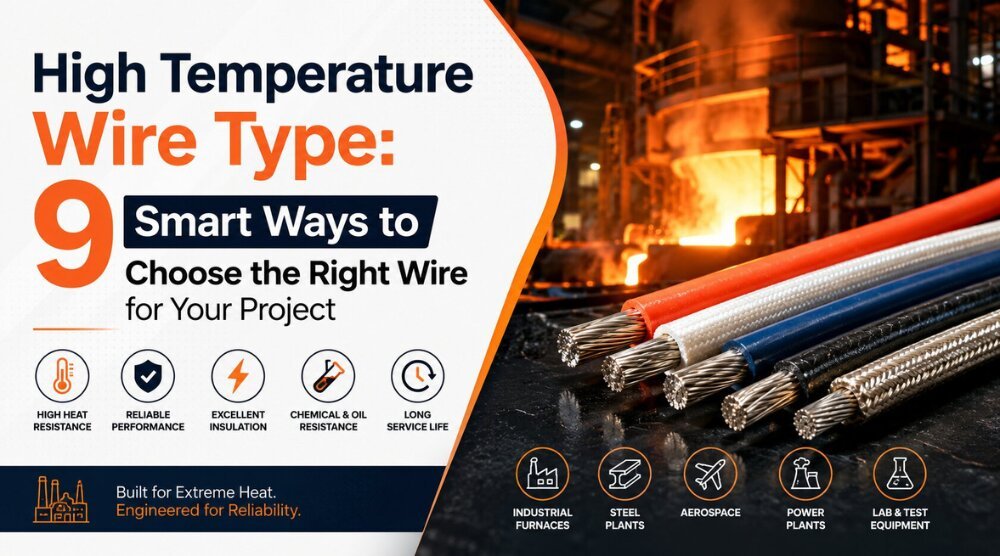
High Temperature Wire Type: 9 Smart Ways to Choose the Right Wire for Your Project
High Temperature Wire Type
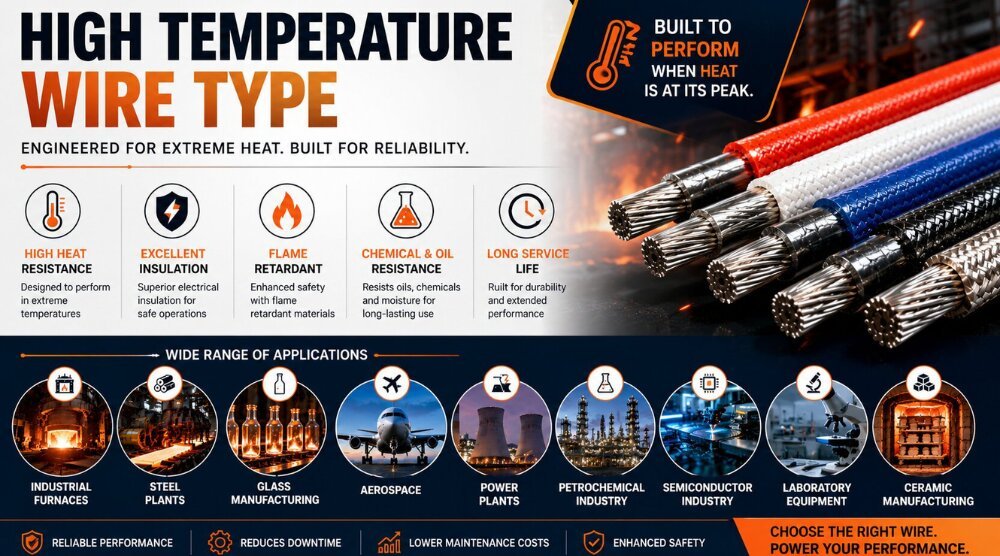
A wire failure inside a high-temperature environment can stop an entire production line, damage expensive equipment, and create unexpected maintenance costs. Whether you’re designing industrial machinery, furnaces, aerospace systems, laboratory equipment, or power plants, selecting the correct High Temperature Wire Type is one of the most important engineering decisions you’ll make.
Choosing the right High Temperature Wire Type involves much more than matching voltage and conductor size. Many engineers overlook critical factors such as insulation material, environmental exposure, flexibility, and continuous operating temperature. These elements determine whether a cable delivers reliable performance for years—or fails within months under demanding conditions.
This comprehensive guide explains everything you need to know before selecting the ideal High Temperature Wire Type for your application, helping you improve equipment reliability, reduce maintenance costs, and ensure long-term operational safety.
Why Does Wire Selection Matter?
Every application experiences different operating conditions.
Some equipment faces:
- Continuous temperatures above 200°C
- Chemical exposure
- Oil contamination
- Mechanical movement
- Abrasion
- Moisture
- UV radiation
- Flame exposure
Choosing the wrong wire insulation can lead to insulation cracking, electrical leakage, production downtime, and costly replacements.
9 Smart Factors to Choose the Right High Temperature Wire Type
1. Know the Maximum Operating Temperature
Always select a wire rated above your equipment’s actual operating temperature.
Typical temperature ratings include:
- 150°C
- 200°C
- 250°C
- 300°C
- 450°C
- 600°C
- 1000°C (special mineral-insulated constructions)
Never operate continuously near the maximum limit.
2. Choose the Correct Insulation Material
Different insulation materials perform differently.
Silicone Rubber
Best for:
- Flexible applications
- Electrical panels
- Heating equipment
Temperature:
Up to 200°C
PTFE (Teflon®)
Excellent for:
- Chemical resistance
- High voltage
- Aerospace
- Laboratories
Temperature:
260°C
Fiberglass
Suitable for:
- Furnaces
- Ovens
- Steel plants
Temperature:
Up to 450°C
Ceramic Fiber
Used where extreme temperatures exist.
Applications include:
- Kilns
- Heat treatment plants
- Glass manufacturing
Temperature:
600°C
Mineral Insulated Cable
Ideal for:
- Nuclear plants
- Fire safety systems
- Emergency circuits
Temperature:
Up to 1000°C
3. Consider Chemical Exposure
Industrial environments often expose wiring to:
- Acids
- Alkalis
- Solvents
- Oils
- Fuels
- Cleaning chemicals
PTFE insulation provides outstanding chemical resistance compared to conventional rubber insulation.
4. Check Mechanical Flexibility
Moving machinery requires flexible cable.
Examples include:
- Robotics
- Automation
- Conveyor systems
- Moving heating elements
Rigid insulation may crack after repeated movement.
5. Evaluate Abrasion Resistance
In manufacturing plants, wires often rub against:
- Metal surfaces
- Rollers
- Cable trays
- Machinery frames
High abrasion resistance increases cable life significantly.
6. Verify Flame Resistance
Many industries require flame-retardant wiring.
Common industries include:
- Railways
- Marine
- Aerospace
- Industrial automation
- Building safety systems
Always verify applicable fire standards.
7. Match Voltage Requirements
Temperature alone isn’t enough.
Select wire insulation that meets:
- Voltage rating
- Dielectric strength
- Current carrying capacity
Electrical safety depends on proper insulation thickness.
8. Consider Installation Environment
Ask these questions:
- Indoor or outdoor?
- Wet or dry?
- UV exposure?
- Continuous vibration?
- Mechanical stress?
- Oil contamination?
The answers help determine the correct insulation and protective construction.
9. Choose a Reliable Manufacturer
High-quality wire delivers:
- Consistent insulation thickness
- Better conductor purity
- Longer service life
- Better electrical performance
- Greater safety
- Lower maintenance cost
A reliable supplier also provides technical guidance to ensure the right product selection.
Chemical Composition
The exact composition depends on the insulation material and conductor selected.
Typical conductor materials include:
- Electrolytic Copper
- Tinned Copper
- Nickel-Plated Copper
- Silver-Plated Copper
- Nickel Conductors (for extreme temperatures)
Common insulation materials:
- Silicone Rubber
- PTFE
- FEP
- Fiberglass Braid
- Ceramic Fiber
- Mica Tape
- Mineral Insulation
Technical Properties
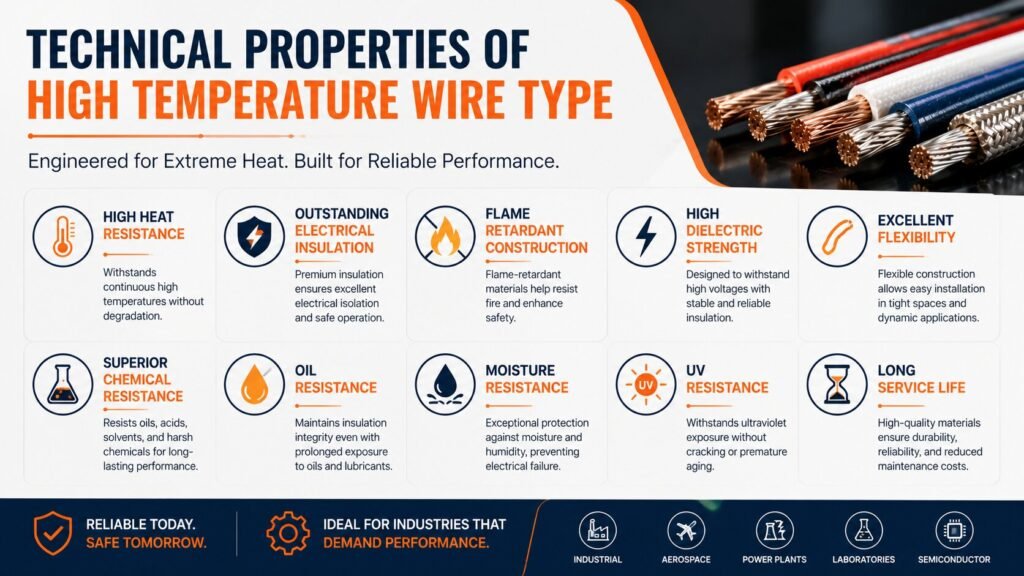
Excellent Heat Resistance
The High Temperature Wire Type is engineered to withstand continuous exposure to extreme temperatures, ensuring reliable electrical performance without insulation degradation.
Outstanding Electrical Insulation
Designed with premium insulation materials, the High Temperature Wire Type provides excellent electrical isolation, minimizing leakage and enhancing operational safety.
Flame Retardant Construction
The High Temperature Wire Type features flame-retardant insulation that helps prevent fire propagation, making it ideal for safety-critical industrial applications.
High Dielectric Strength
With superior dielectric properties, the High Temperature Wire Type withstands high voltages while maintaining stable and dependable electrical insulation.
Excellent Flexibility
Even in demanding environments, the High Temperature Wire Type remains flexible, allowing easy installation in tight spaces and moving equipment.
Superior Chemical Resistance
The High Temperature Wire Type resists oils, solvents, acids, and industrial chemicals, ensuring long-lasting performance in harsh processing environments.
Oil Resistance
Built for industrial conditions, the High Temperature Wire Type maintains its insulation integrity even after prolonged exposure to lubricants and petroleum-based oils.
Moisture Resistance
The High Temperature Wire Type offers excellent protection against humidity and moisture, reducing the risk of electrical failure in wet environments.
UV Resistance
Suitable for both indoor and outdoor installations, the High Temperature Wire Type withstands prolonged ultraviolet exposure without premature aging or cracking.
Long Service Life
Manufactured using high-quality materials, the High Temperature Wire Type delivers exceptional durability, reducing maintenance costs and extending equipment operating life.
Technical Specifications
Typical specifications include:
| Property | Typical Value |
| Temperature Range | -60°C to +1000°C |
| Voltage Rating | 300V–15kV |
| Conductor | Copper / Tinned Copper / Nickel-Plated Copper |
| Insulation | Silicone / PTFE / Fiberglass / Ceramic |
| Flame Rating | IEC / UL compliant |
| Flexibility | High |
| Chemical Resistance | Excellent |
| Abrasion Resistance | Excellent |
International Standards
Quality high-temperature wires are manufactured according to various international standards such as:
- UL Standards
- CSA Standards
- IEC Standards
- RoHS Compliance
- REACH Compliance
- ASTM Specifications
- MIL Specifications (Defense & Aerospace)
Applications
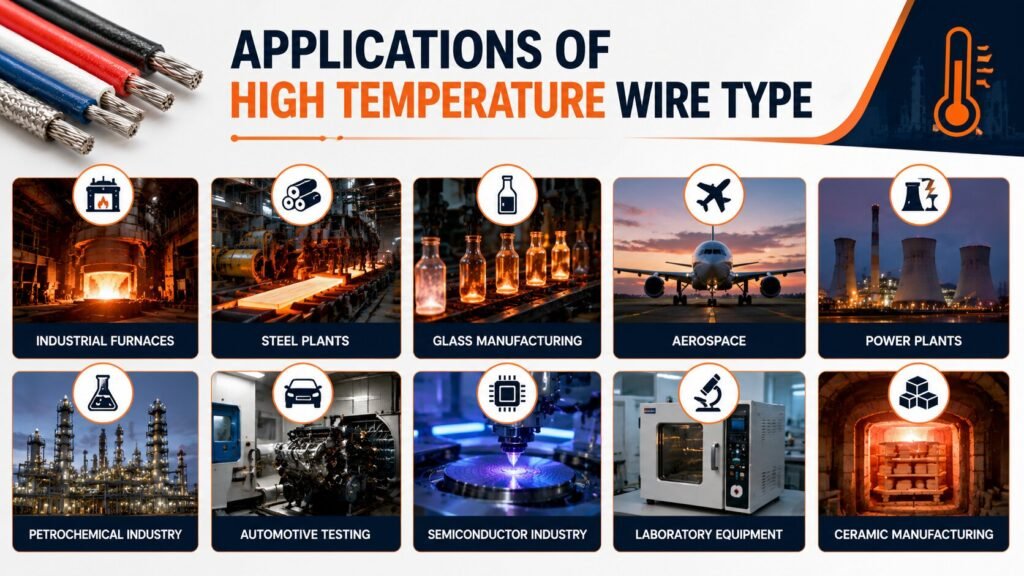
Industrial Furnaces
High Temperature Wire Type ensures reliable power delivery inside continuous high-temperature production environments, maintaining safe and consistent operation under extreme heat.
Steel Plants
Rolling mills, reheating furnaces, and heat treatment systems rely on the High Temperature Wire Type for dependable electrical performance in demanding industrial conditions.
Glass Manufacturing
The High Temperature Wire Type withstands continuous radiant heat around glass melting and processing equipment, delivering long-lasting reliability.
Aerospace
Aircraft electrical systems benefit from the High Temperature Wire Type, providing stable performance under elevated temperatures and harsh operating environments.
Power Plants
Boilers, turbines, and generators require durable wiring, making the High Temperature Wire Type an excellent choice for continuous high-heat operation.
Petrochemical Industry
With outstanding resistance to heat and aggressive chemicals, the High Temperature Wire Type performs reliably in refineries and chemical processing plants.
Automotive Testing
Engine testing facilities and high-temperature test chambers depend on High Temperature Wire Type for accurate, safe, and uninterrupted electrical connectivity.
Semiconductor Industry
Precision manufacturing equipment uses High Temperature Wire Type to ensure stable electrical performance and long service life in controlled high-temperature processes.
Laboratory Equipment
Laboratory ovens, testing chambers, and scientific instruments require heat-resistant wiring, making the High Temperature Wire Type an ideal solution.
Ceramic Manufacturing
Kilns and firing equipment operate efficiently with durable High Temperature Wire Type, ensuring reliable electrical performance throughout prolonged high-temperature production cycles.
Shapes Available
DOMADIA™ supplies high-temperature wire in multiple forms including:
- Single Core Wire
- Multi-Core Cable
- Shielded Cable
- Braided Cable
- Twisted Pair
- Ribbon Cable
- Custom Assemblies
- High Temperature Leads
Why DOMADIA™
Choosing DOMADIA™ means choosing technical expertise along with premium-quality materials.
Our advantages include:
- Wide range of high-temperature wire solutions
- Premium quality raw materials
- International manufacturing standards
- Custom sizes available
- Fast delivery
- Technical application support
- Competitive pricing
- Reliable industrial supply chain
- Bulk supply capability
- Global export experience
DOMADIA™ works closely with OEMs, manufacturers, research laboratories, aerospace companies, automotive industries, and engineering firms to provide dependable high-temperature wiring solutions.
Conclusion
Selecting the correct High Temperature Wire Type is far more than choosing a cable with a higher temperature rating. Engineers should carefully evaluate insulation material, operating temperature, flexibility, voltage, chemical resistance, mechanical durability, and compliance with industry standards before selecting the most suitable High Temperature Wire Type for their application.
Investing in the right High Temperature Wire Type significantly improves equipment reliability, reduces downtime, lowers maintenance costs, and enhances operational safety. With extensive industry expertise and a broad range of high-performance wire solutions, DOMADIA™ helps customers choose products that deliver dependable performance even in the harshest industrial environments, ensuring every High Temperature Wire Type is matched to the exact needs of the project.
Choose the Right High Temperature Wire Type for Maximum Reliability
At DOMADIA™, we provide high temperature wire solutions engineered for superior heat resistance, safety, reliability, and long-lasting industrial performance.
Get expert guidance, request a customized solution, or connect with our technical team to find the perfect high temperature wire for your project.
Talk to: Er.Pankaj Domadia | Kairav Domadia | Aadil Domadia | Pragati Sanap | Pooja N N
#HighTemperatureWireType #HighTemperatureWire #HeatResistantWire #IndustrialCables #ElectricalEngineering #Manufacturing #IndustrialAutomation #PowerSystems #DOMADIA
Directly whatsapp us for an Enquiry: https://wa.link/kairav
We’ve supplied to Mumbai, Pune, Indore, Jaipur, and Surat—serving industries across Maharashtra, Madhya Pradesh, Rajasthan, Gujarat, and Goa, with exports to Germany, USA, Japan, South Korea, and Italy.