Blogs
Thermal Aging Cables: 7 Powerful Effects on High Temperature Cable Life
A manufacturing facility experienced repeated signal failures in a furnace monitoring system. Initial inspections found no mechanical damage, no moisture intrusion, and no electrical overloads. Yet the cables continued to fail prematurely.
The root cause was Thermal Aging Cables behavior caused by prolonged exposure to elevated temperatures. Over time, the cable insulation gradually lost flexibility, developed cracks, and eventually compromised electrical performance.
As industries continue pushing equipment to higher operating temperatures, understanding thermal aging becomes essential for ensuring reliability, safety, and long service life.
What Is Thermal Aging in High Temperature Cables?
Thermal aging refers to the gradual degradation of cable insulation and jacket materials caused by continuous exposure to elevated temperatures over extended periods.
Even when operating below the maximum temperature rating, prolonged heat exposure can trigger:
- Polymer oxidation
- Molecular chain breakdown
- Hardening of insulation
- Reduced flexibility
- Surface cracking
- Electrical property deterioration
The process is typically slow and often remains unnoticed until cable performance begins to decline.
Why Thermal Aging Occurs
High-temperature environments accelerate chemical reactions within insulation materials.
Common causes include:
Continuous Heat Exposure
Industrial furnaces, kilns, ovens, and power systems expose cables to sustained elevated temperatures.
Oxidation
Oxygen reacts with insulation materials, causing molecular degradation over time.
Thermal Cycling
Repeated heating and cooling create internal stresses that accelerate material fatigue.
Electrical Loading
Current flowing through conductors generates heat that contributes to aging.
Environmental Conditions
Chemicals, moisture, UV exposure, and contaminants can accelerate thermal degradation.
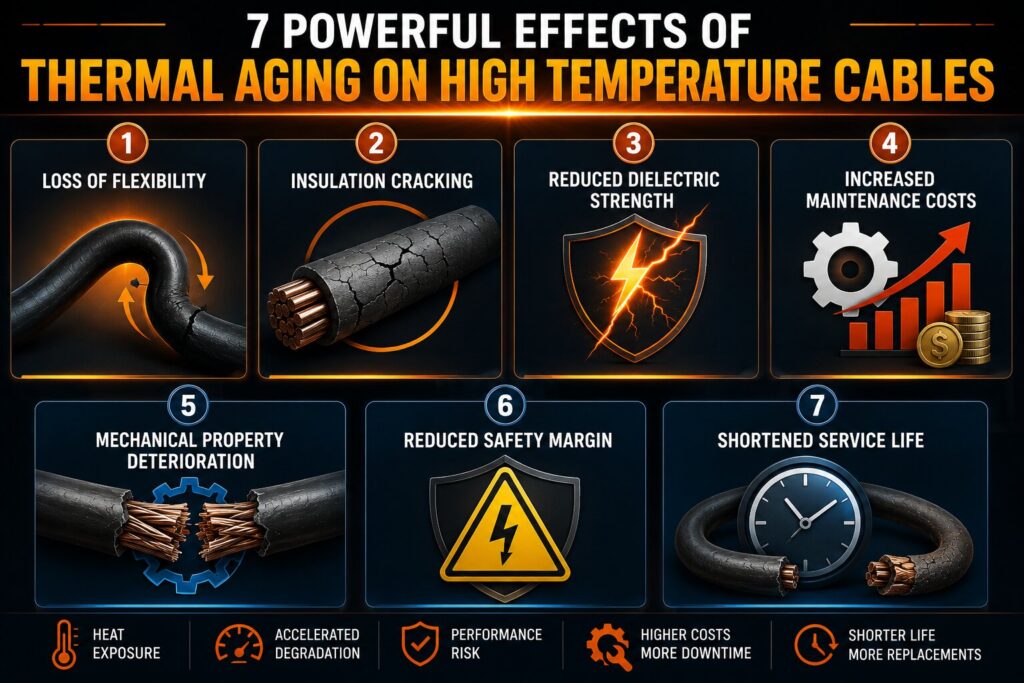
7 Powerful Effects of Thermal Aging on High Temperature Cables
1. Loss of Flexibility
As Thermal Aging Cables are exposed to elevated temperatures over extended periods, insulation materials gradually lose flexibility and become rigid or brittle. This aging process can make installation more difficult, increase the risk of cracking during handling or operation, and reduce the overall mechanical durability of the cable. Over time, these effects may contribute to premature cable failure in demanding industrial environments.
2. Insulation Cracking
As Thermal Aging Cables experience prolonged exposure to high temperatures, micro-cracks can gradually develop within the insulation layer. These small defects weaken the insulation structure and may expand over time under mechanical or thermal stress. Eventually, the cracks can expose conductors, create electrical failure points, and increase the risk of short circuits or system downtime.
3. Reduced Dielectric Strength
Thermal degradation weakens insulation’s ability to withstand voltage stress.
Potential risks include:
- Electrical leakage
- Short circuits
- System failures
4. Increased Maintenance Costs
Aged cables require more frequent inspections and replacements.
This leads to:
- Higher maintenance budgets
- Increased downtime
- Reduced operational efficiency
5. Mechanical Property Deterioration
Thermal aging can reduce:
- Tensile strength
- Elongation
- Abrasion resistance
Mechanical damage becomes more likely during operation.
6. Reduced Safety Margin
Aging insulation increases the risk of electrical faults and unexpected failures.
Safety-critical systems become particularly vulnerable.
7. Shortened Service Life
Thermal Aging Cables subjected to continuous high-temperature exposure undergo accelerated material degradation, which gradually shortens their operational lifespan. As insulation and jacket materials lose their original properties, the risk of performance issues and failures increases. This accelerated thermal degradation often leads to more frequent cable replacements, higher maintenance costs, and greater system downtime in demanding industrial applications.
Common Cable Materials and Thermal Aging Resistance
Different insulation materials respond differently to elevated temperatures.
| Material | Typical Temperature Rating |
| PVC | Up to 105°C |
| Silicone Rubber | Up to 200°C |
| PTFE | Up to 260°C |
| Fiberglass | Up to 450°C |
| Ceramic Fiber | Up to 1000°C+ |
| Mica-Based Systems | Fire survival applications |
Higher temperature-rated materials generally offer superior resistance to thermal aging.
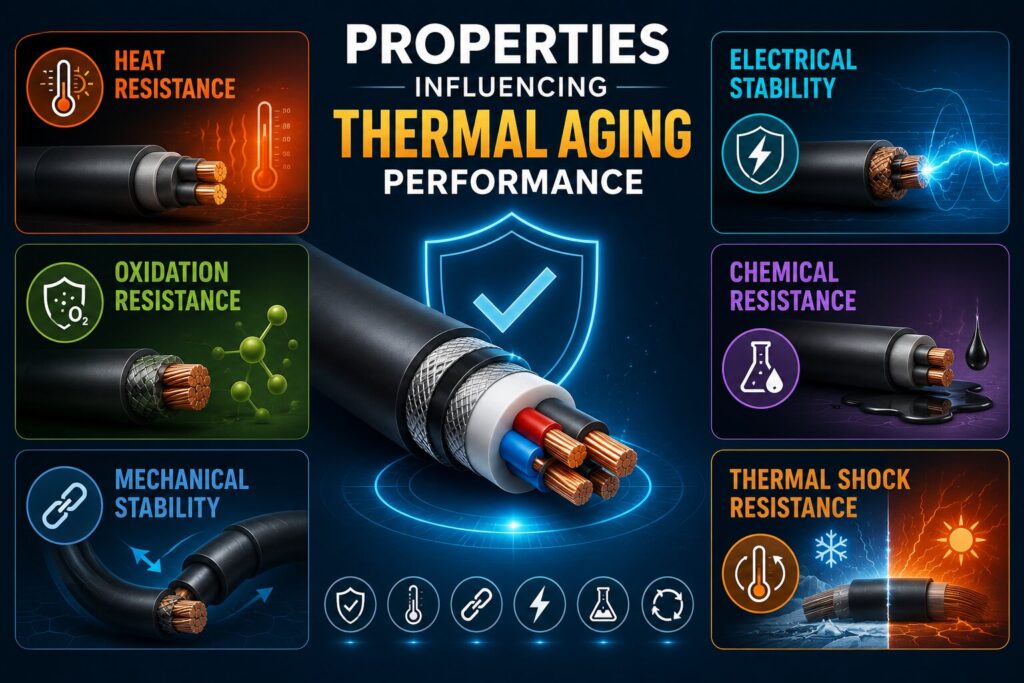
Properties Influencing Thermal Aging Performance
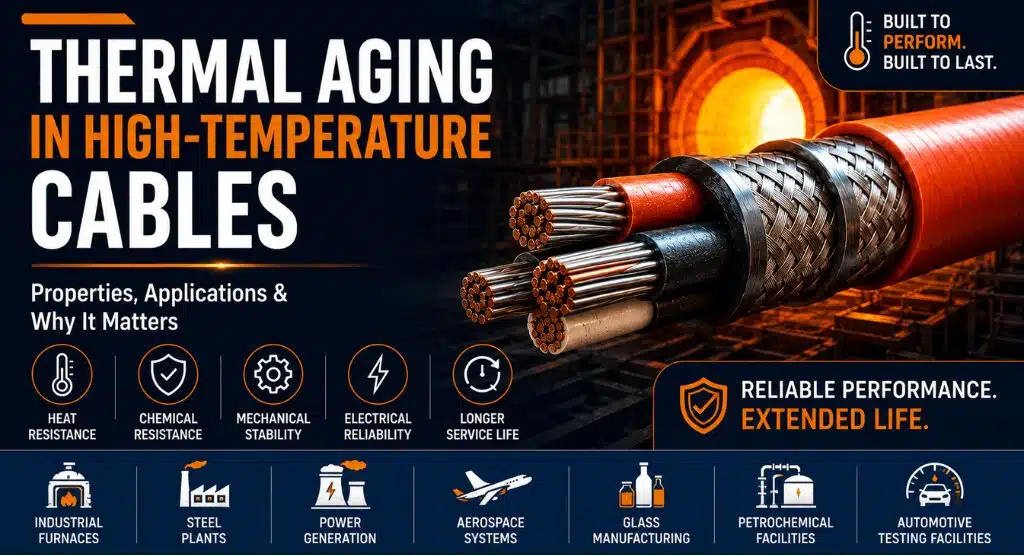
Heat Resistance
Heat resistance determines a cable’s ability to maintain insulation integrity and electrical performance during continuous exposure to elevated temperatures. Superior heat resistance helps maximize service life and minimize unexpected failures.
Oxidation Resistance
Exposure to oxygen at high temperatures can gradually degrade insulation materials. Strong oxidation resistance slows this process, helping cables retain their physical and electrical properties for longer periods.
Mechanical Stability
Long-term thermal exposure can weaken insulation and reduce flexibility. Excellent mechanical stability allows cables to maintain strength, durability, and resistance to cracking throughout their operational lifespan.
Electrical Stability
Reliable cable performance depends on consistent insulation resistance and dielectric strength. High electrical stability ensures safe power transmission and signal integrity even in demanding thermal environments.
Chemical Resistance
Industrial environments often expose cables to oils, solvents, fuels, and other contaminants. Strong chemical resistance protects insulation materials from deterioration, supporting long-term reliability.
Thermal Shock Resistance
Rapid temperature changes can create stress within cable materials. Effective thermal shock resistance helps prevent cracking, deformation, and insulation damage caused by sudden heating and cooling cycles.
Thermal Aging Testing Standards
Manufacturers evaluate Thermal Aging Cables performance using internationally recognized standards to verify durability, safety, and long-term reliability under elevated operating temperatures. These standards help ensure Thermal Aging Cables can withstand demanding industrial environments while maintaining consistent electrical and mechanical performance throughout their service life.
IEC Standards
- IEC 60216 – Thermal endurance properties
- IEC 60811 – Insulation aging tests
UL Standards
- UL 1581 – Reference standards for cable aging tests
- UL 2556 – Wire and cable test procedures
ASTM Standards
- ASTM D3045 – Heat aging of plastics
- ASTM D573 – Rubber aging tests
BS Standards
- BS EN cable performance standards for industrial applications
These standards help verify long-term reliability under elevated temperature conditions.
Technical Specifications Evaluated During Thermal Aging Tests
Common parameters include:
| Parameter | Typical Evaluation |
| Aging Temperature | 100°C – 300°C+ |
| Aging Duration | 168 – 5000 Hours |
| Tensile Strength Retention | % Remaining |
| Elongation Retention | % Remaining |
| Dielectric Strength | kV/mm |
| Insulation Resistance | MΩ/km |
| Crack Resistance | Visual Inspection |
| Flexibility | Bend Testing |
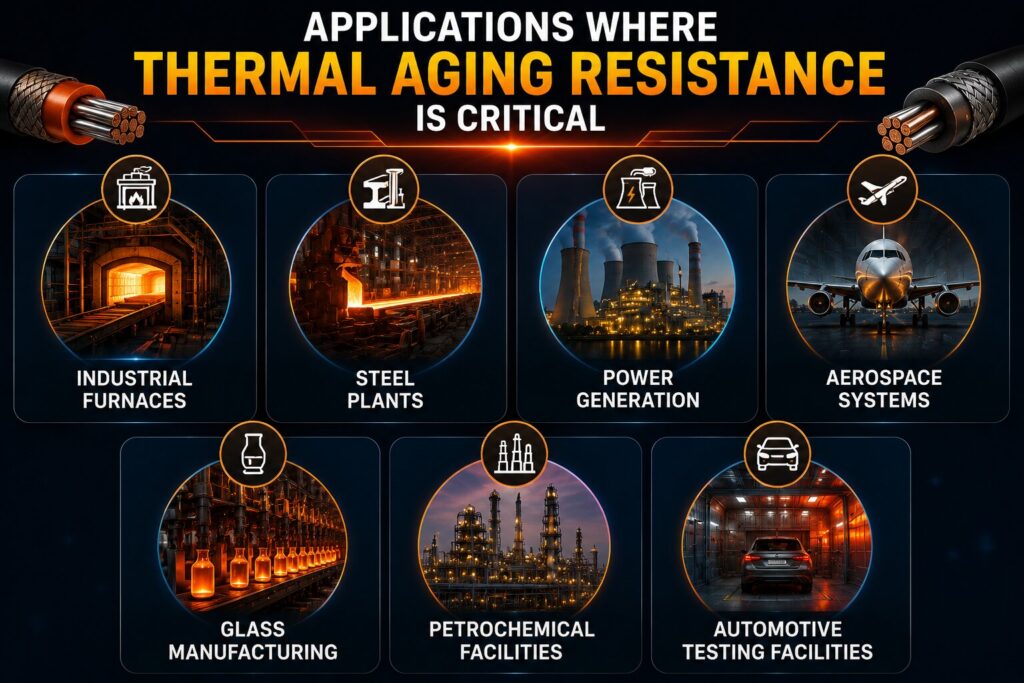
Applications Where Thermal Aging Resistance Is Critical
Industrial Furnaces
Industrial furnaces operate continuously at elevated temperatures, making Thermal Aging Cables resistance essential for maintaining reliable power and control system performance.
Steel Plants
Steel manufacturing environments expose cables to extreme heat and harsh operating conditions, where Thermal Aging Cables performance helps extend service life and reduce failures.
Power Generation
Power plants rely on durable cabling around turbines, boilers, and auxiliary equipment, making Thermal Aging Cables resistance critical for long-term operational reliability.
Aerospace Systems
Aircraft and aerospace equipment often encounter high-temperature zones where Thermal Aging Cables characteristics help ensure consistent electrical performance and safety.
Glass Manufacturing
Glass production furnaces generate sustained heat that can accelerate insulation degradation, making Thermal Aging Cables resistance an important selection factor.
Petrochemical Facilities
Petrochemical plants combine elevated temperatures with aggressive chemicals, requiring Thermal Aging Cables capabilities to maintain dependable operation.
Automotive Testing Facilities
Thermal chambers and engine testing systems subject cables to prolonged heat exposure, where Thermal Aging Cables performance supports accurate testing and equipment reliability.
Shapes and Configurations Available
High-temperature cables are available in multiple constructions:
Single Core Cables
Suitable for control and power applications.
Multi-Core Cables
Used in instrumentation and automation systems.
Shielded Cables
Provide EMI protection alongside temperature resistance.
Braided Cables
Offer enhanced mechanical protection.
Flat Cables
Used where space optimization is important.
Custom Assemblies
Engineered for specialized industrial environments.
How to Minimize Thermal Aging
Several strategies can significantly extend cable service life:
- Select appropriate temperature-rated insulation
- Reduce unnecessary thermal loading
- Improve ventilation and cooling
- Avoid excessive bending stress
- Conduct routine inspections
- Follow manufacturer installation guidelines
- Replace aging cables before failure occurs
Why DOMADIA™
DOMADIA™ supplies advanced high-temperature cable solutions designed for demanding industrial environments where thermal aging resistance is critical.
What Makes DOMADIA™ Different?
✔ High-temperature cable expertise
✔ Industrial-grade insulation materials
✔ Solutions for temperatures up to 1000°C+
✔ Compliance with international standards
✔ Custom cable configurations
✔ Technical application support
✔ Fast and dependable supply
✔ Solutions for steel, furnace, aerospace, power, glass, and manufacturing industries
DOMADIA™ helps industries select cable systems that deliver long-term reliability while minimizing the impact of thermal aging.
Conclusion
Thermal Aging Cables performance plays a major role in determining the reliability, safety, and service life of electrical systems operating in elevated-temperature environments.
Understanding the causes, effects, material properties, and testing standards associated with thermal aging enables engineers to make better cable selection decisions. Proper evaluation of Thermal Aging Cables helps identify long-term performance characteristics and potential degradation risks under continuous heat exposure. Choosing the correct high-temperature cable can significantly reduce downtime, maintenance costs, and unexpected failures while ensuring consistent long-term performance. Furthermore, selecting cables designed to withstand Thermal Aging Cables conditions supports greater operational reliability and extended service life in demanding industrial applications.
Protect Your Systems from Thermal Aging Before Failures Occur
Power your critical applications with advanced high-temperature solutions from DOMADIA™.
Contact us today and discover solutions engineered for extreme temperatures and critical applications.
Talk to: Er.Pankaj Domadia | Kairav Domadia | Aadil Domadia | Pragati Sanap | Pooja N N
#ThermalAgingCables #HighTemperatureCables #CableInsulation #IndustrialCables #HeatResistantCables #ElectricalEngineering #DOMADIA #CablePerformance #Manufacturing #IndustrialSafety
Directly whatsapp us for an Enquiry: https://wa.link/kairav
From Ahmedabad, Vadodara, Rajkot, Bhavnagar, and Jamnagar, we serve Gujarat’s industrial belt and nearby Maharashtra, Rajasthan, MP, and Daman, with global supply to Canada, Mexico, Brazil, Chile, and Argentina.