Blogs
Faraday Fabric Cost: 7 Powerful Factors That Influence the Price
Faraday Fabric Cost – Understanding the Real Value
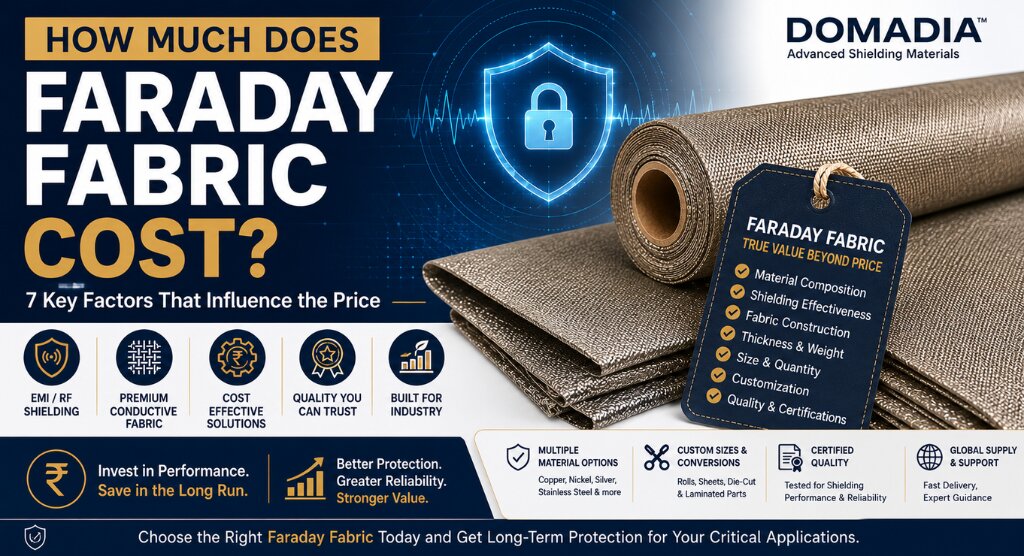
A common question from engineers, procurement teams, and electronics manufacturers is: How much does Faraday fabric cost? The answer depends on much more than the price per square meter.
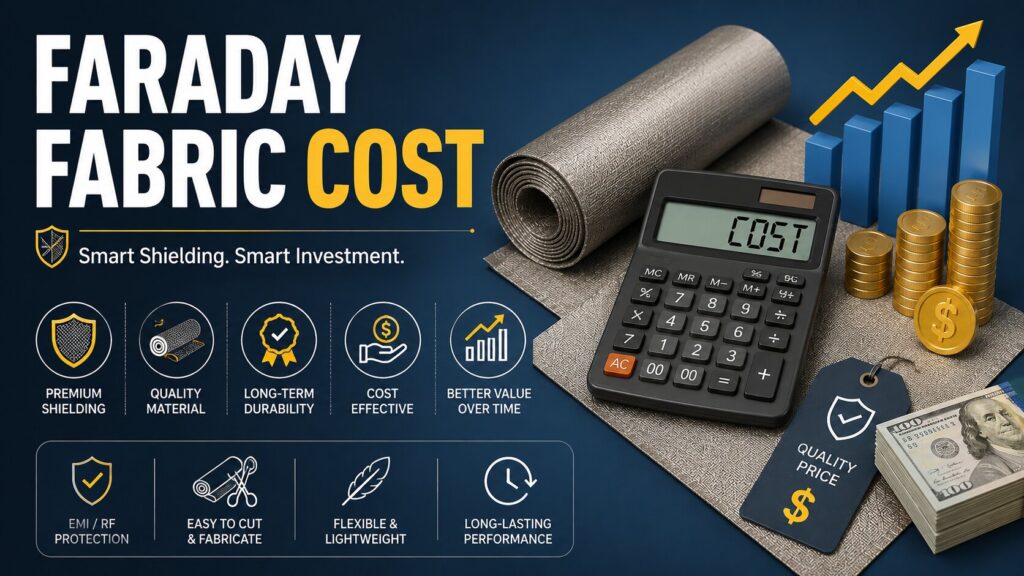
Faraday Fabric Cost varies according to the conductive materials used, shielding effectiveness, fabric construction, dimensions, durability, and application requirements. While lower-cost fabrics may appear attractive initially, they often provide lower shielding performance, shorter service life, and higher replacement costs.
Choosing a premium-quality Faraday fabric from DOMADIA™ helps ensure reliable electromagnetic shielding, long-term durability, and consistent performance in demanding industrial environments.
What Is Faraday Fabric?
Faraday fabric is a conductive textile designed to block or attenuate electromagnetic interference (EMI), radio frequency (RF) signals, and static electricity. It functions by creating a conductive barrier that redistributes electromagnetic energy, similar to a Faraday cage.
These fabrics are widely used wherever electronic equipment requires protection from unwanted electromagnetic emissions or external interference.
7 Factors That Affect Faraday Fabric Cost
1. Material Composition
The base material significantly influences pricing.
Common conductive materials include:
- Nickel-coated copper
- Silver-plated fibers
- Stainless steel fibers
- Nickel-coated polyester
- Copper-nickel blended fabrics
Silver-based fabrics generally cost more because of their excellent conductivity and superior shielding performance.
2. Shielding Effectiveness
Higher shielding performance requires advanced manufacturing techniques and premium conductive coatings.
Typical shielding performance ranges include:
- 40 dB
- 60 dB
- 80 dB
- 100 dB or higher
Higher attenuation levels generally increase the overall material cost.
3. Fabric Construction
Construction methods directly impact both durability and shielding quality.
Available constructions include:
- Woven conductive fabrics
- Knitted conductive fabrics
- Non-woven conductive textiles
- Multi-layer composite shielding fabrics
Complex multi-layer constructions naturally command higher prices.
4. Thickness and Weight
Heavier conductive fabrics usually contain more shielding material and provide greater mechanical strength.
Very lightweight fabrics designed for wearable electronics or aerospace applications often require specialized manufacturing, which may also increase cost.
5. Size and Quantity
Like most industrial materials, bulk purchasing significantly reduces the unit price.
Manufacturers purchasing full rolls generally receive more economical pricing than customers ordering small custom-cut pieces.
6. Customization
Additional processing increases manufacturing costs.
Examples include:
- Custom widths
- Adhesive backing
- Fire-retardant coatings
- Water-resistant treatments
- Laser cutting
- Die cutting
- Custom conductivity requirements
7. Certification and Quality Control
Certified materials manufactured under strict quality standards undergo extensive testing for:
- Surface resistivity
- Shielding effectiveness
- Mechanical strength
- Durability
- Environmental resistance
Although certified materials may cost more initially, they provide greater long-term reliability.
Chemical Composition
The composition depends on the shielding grade and intended application.
Typical conductive combinations include:
- Copper (Cu)
- Nickel (Ni)
- Silver (Ag)
- Stainless Steel (Fe-Cr alloys)
- Polyester carrier fabrics
- Nylon conductive fibers
Different combinations are selected to balance conductivity, corrosion resistance, flexibility, weight, and cost.
Properties
Faraday fabrics offer numerous performance advantages across demanding industrial applications.
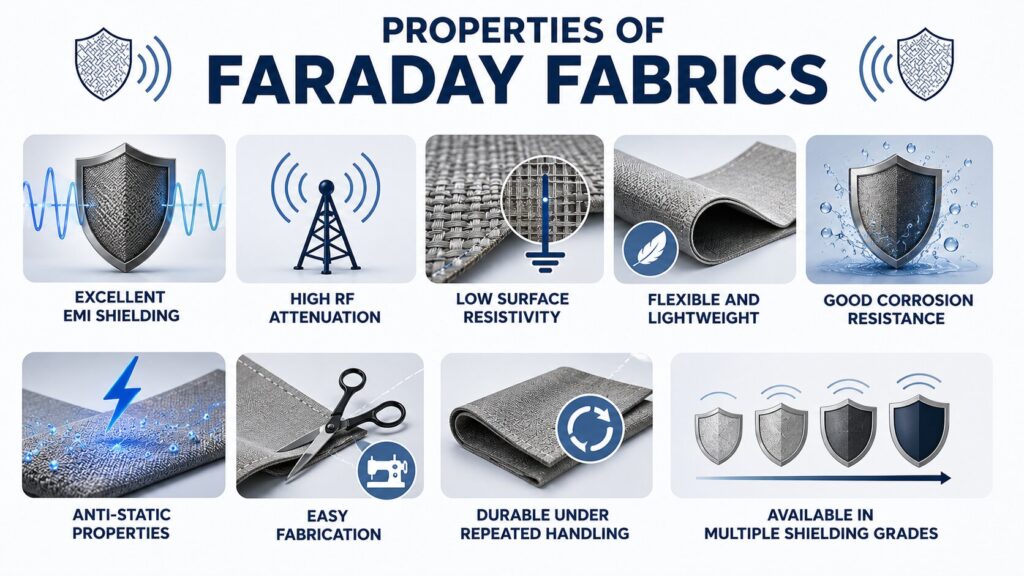
Excellent EMI Shielding
Provides outstanding protection against electromagnetic interference, making Faraday Fabric Cost worthwhile for sensitive electronic systems.
High RF Attenuation
Effectively reduces unwanted radio frequency signals, allowing Faraday Fabric Cost to deliver long-term shielding performance.
Low Surface Resistivity
Ensures efficient electrical conductivity for reliable EMI control, increasing the overall value of Faraday Fabric Cost.
Flexible and Lightweight
Combines excellent flexibility with low weight for easy integration into complex designs, maximizing Faraday Fabric Cost efficiency.
Good Corrosion Resistance
Resists oxidation and environmental degradation, helping justify Faraday Fabric Cost through extended service life.
Anti-Static Properties
Safely dissipates static electricity to protect sensitive electronic components, enhancing the benefits of Faraday Fabric Cost.
Easy Fabrication
Can be cut, sewn, laminated, and converted into custom shapes, making Faraday Fabric Cost suitable for diverse applications.
Durable Under Repeated Handling
Maintains shielding performance after repeated folding and installation, improving the long-term return on Faraday Fabric Cost.
Available in Multiple Shielding Grades
Offered in various shielding effectiveness levels to match specific application needs while optimizing Faraday Fabric Cost.
Technical Specifications
Typical industrial specifications include:
- Shielding effectiveness: 40–100+ dB
- Surface resistivity: less than 0.05 Ω/sq (grade dependent)
- Operating temperature: depends on fabric construction
- Roll widths: custom available
- Thickness: varies by application
- Conductive coating: Nickel, Copper, Silver, Stainless Steel
- Compliance: Application-specific industrial standards
Standards
Depending on the application, Faraday fabrics may be manufactured or tested according to:
- ASTM standards
- MIL-STD shielding requirements
- IEC EMC standards
- RoHS compliance
- REACH compliance
- ISO quality management systems
Applications
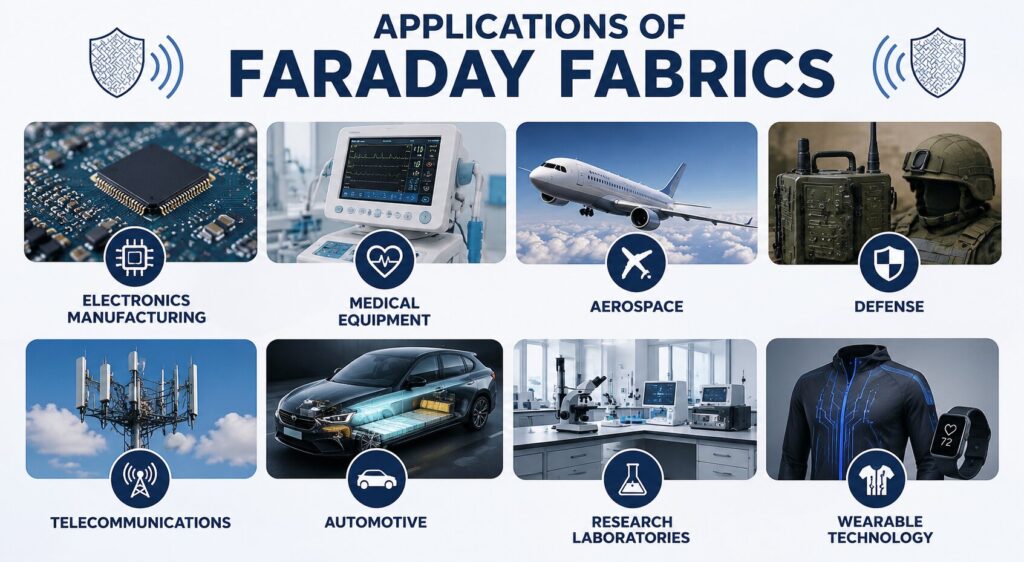
Electronics Manufacturing
Faraday fabrics shield sensitive electronic assemblies, circuit boards, and precision equipment from electromagnetic interference, helping manufacturers maximize performance while optimizing Faraday Fabric Cost through long-term reliability.
Medical Equipment
Used in MRI systems, diagnostic instruments, and laboratory equipment to minimize EMI and ensure accurate operation, making Faraday Fabric Cost a worthwhile investment for critical healthcare applications.
Aerospace
Aircraft avionics, satellites, and communication systems rely on Faraday fabrics to provide dependable EMI protection in harsh environments where Faraday Fabric Cost is justified by superior performance.
Defense
Faraday fabrics protect military communication equipment, secure enclosures, and tactical electronics from electromagnetic threats, delivering exceptional value despite Faraday Fabric Cost considerations.
Telecommunications
Applied in antennas, RF equipment, and shielded communication cabinets to maintain signal integrity and reduce interference, demonstrating the long-term benefits of Faraday Fabric Cost.
Automotive
Electric vehicles, battery packs, ADAS modules, and electronic control units use Faraday fabrics to improve electromagnetic compatibility while reducing lifecycle expenses beyond the initial Faraday Fabric Cost.
Research Laboratories
Scientific instruments, EMI test chambers, and precision measuring equipment depend on Faraday fabrics for accurate experimental results, making Faraday Fabric Cost a smart investment in research reliability.
Wearable Technology
Smart clothing, flexible electronics, and conductive textiles incorporate Faraday fabrics to provide lightweight EMI shielding, where Faraday Fabric Cost supports advanced product performance and durability.
Shapes Available
DOMADIA™ can supply Faraday fabric in various forms, including:
- Rolls
- Sheets
- Custom-cut pieces
- Adhesive-backed fabric
- Die-cut components
- Laser-cut shapes
- Laminated shielding assemblies
Why Choose DOMADIA™?
Selecting the right supplier is just as important as selecting the right material.
DOMADIA™ offers:
- Premium-quality shielding fabrics
- Multiple conductive material options
- Custom dimensions
- Precision converting services
- Consistent shielding performance
- Competitive pricing
- Technical application support
- Reliable global supply network
- Strict quality control
Whether your project involves electronics, aerospace, defense, telecommunications, or medical equipment, DOMADIA™ delivers dependable Faraday fabric solutions tailored to demanding industrial applications.
Conclusion
Understanding Faraday Fabric Cost requires looking beyond the initial purchase price. Material composition, shielding effectiveness, certifications, customization, and long-term durability all influence the true value of the product.
Investing in premium-quality Faraday Fabric Cost solutions from DOMADIA™ often reduces maintenance, minimizes replacement frequency, and delivers superior EMI protection throughout the product lifecycle, making it a smart long-term investment for critical industrial applications.
Need High-Performance Faraday Fabric for Your Application?
At DOMADIA™, we supply premium-quality Faraday fabrics engineered for electronics, aerospace, defense, medical equipment, telecommunications, automotive, and research applications.
📞 Contact DOMADIA™ today for expert assistance, technical recommendations, and a customized quotation tailored to your shielding requirements.
Talk to: Er.Pankaj Domadia | Kairav Domadia | Aadil Domadia | Pragati Sanap | Pooja N N
#FaradayFabric #EMIShielding #RFShielding #ConductiveFabric #ElectromagneticShielding #ShieldingMaterials #IndustrialMaterials #DOMADIA
Directly whatsapp us for an Enquiry: https://wa.link/kairav
We’ve supplied to Mumbai, Pune, Indore, Jaipur, and Surat—serving industries across Maharashtra, Madhya Pradesh, Rajasthan, Gujarat, and Goa, with exports to Germany, USA, Japan, South Korea, and Italy.