Blogs
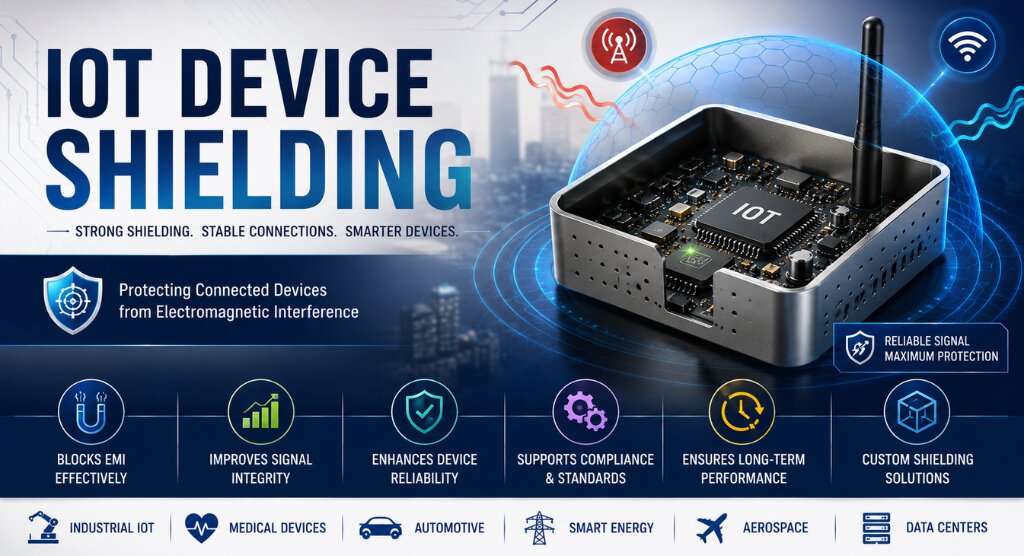
IoT Device Shielding: 7 Powerful Challenges Using UNS N14080
A smart manufacturing facility recently deployed hundreds of IoT sensors to monitor equipment health, temperature, and energy consumption. Everything appeared to function perfectly during testing. However, once the production lines reached full capacity, unexpected communication failures started appearing across multiple devices.
The root cause was not faulty hardware or software. It was electromagnetic interference (EMI) generated by nearby motors, power systems, and industrial electronics.
As IoT adoption continues expanding across industries, effective shielding has become a critical design requirement. Without proper protection, sensitive electronics may experience signal degradation, data corruption, communication failures, and reduced operational reliability.
This is why IoT Device Shielding has become one of the most important considerations for engineers developing connected devices in industrial, medical, automotive, aerospace, and smart infrastructure applications.
Effective IoT Device Shielding helps protect sensitive circuits from electromagnetic interference, ensuring stable communication, reliable data transmission, and consistent device performance even in demanding operating environments.
As connected technologies become increasingly integrated into critical systems, investing in advanced IoT Device Shielding solutions is essential for achieving long-term reliability, regulatory compliance, and uninterrupted operational performance.
Why Shielding Matters in IoT Devices
Modern IoT devices operate in increasingly crowded electromagnetic environments.
Common interference sources include:
- Wireless communication systems
- High-frequency switching power supplies
- Industrial motors
- Electric vehicles
- Cellular networks
- Radar systems
- Medical equipment
- Data centers
As devices become smaller and more powerful, the challenge of maintaining signal integrity becomes increasingly complex.
7 Major IoT Device Shielding Challenges
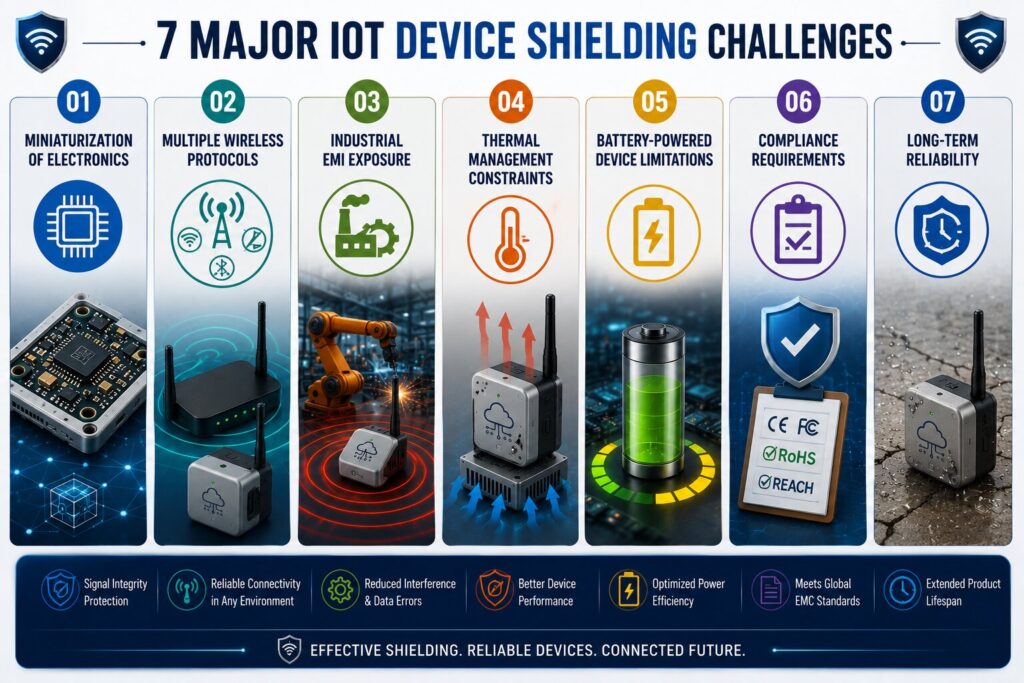
1. Miniaturization of Electronics
Modern IoT products continue shrinking in size while incorporating more functionality.
Challenges include:
- Limited shielding space
- Higher component density
- Increased electromagnetic coupling
- Complex PCB layouts
Compact devices require advanced shielding materials that provide maximum protection within minimal space.
2. Multiple Wireless Communication Protocols
Many IoT devices simultaneously support:
- Wi-Fi
- Bluetooth
- Zigbee
- LoRaWAN
- Cellular connectivity
- GPS
Shielding must reduce unwanted interference while allowing intended wireless signals to function efficiently.
3. Industrial EMI Exposure
Factories contain numerous EMI-generating systems:
- Variable frequency drives
- Welding equipment
- Transformers
- High-current busbars
- Automated machinery
Industrial environments place significant demands on shielding performance.
4. Thermal Management Constraints
Electronic devices generate heat during operation.
Designers must balance:
- Shielding effectiveness
- Thermal conductivity
- Ventilation requirements
- Device reliability
Poor thermal management may negatively affect long-term performance.
5. Battery-Powered Device Limitations
Portable IoT systems require:
- Low power consumption
- Lightweight construction
- Compact form factors
Shielding solutions must deliver protection without increasing energy consumption or overall device weight.
6. Compliance Requirements
Manufacturers must comply with numerous EMC regulations before commercial deployment.
Failure to meet standards can result in:
- Product redesign
- Delayed launches
- Increased certification costs
- Market access restrictions
7. Long-Term Reliability
IoT devices often operate continuously for years.
Shielding materials must resist:
- Corrosion
- Mechanical stress
- Thermal cycling
- Environmental degradation
Reliable performance throughout the product lifecycle is essential.
Why UNS N14080 Is Used for Advanced Shielding
UNS N14080 (MuMetal) is a high-permeability nickel-iron alloy specifically engineered for magnetic shielding applications.
Its exceptional ability to redirect magnetic flux makes it highly effective for protecting sensitive electronics from external magnetic interference.
Chemical Composition of UNS N14080
Typical composition:
| Element | Percentage (%) |
| Nickel (Ni) | 75–80 |
| Iron (Fe) | Balance |
| Copper (Cu) | 4–5 |
| Molybdenum (Mo) | 2–5 |
| Other Elements | Trace |
The high nickel content contributes significantly to magnetic permeability and shielding effectiveness.
Key Properties of UNS N14080
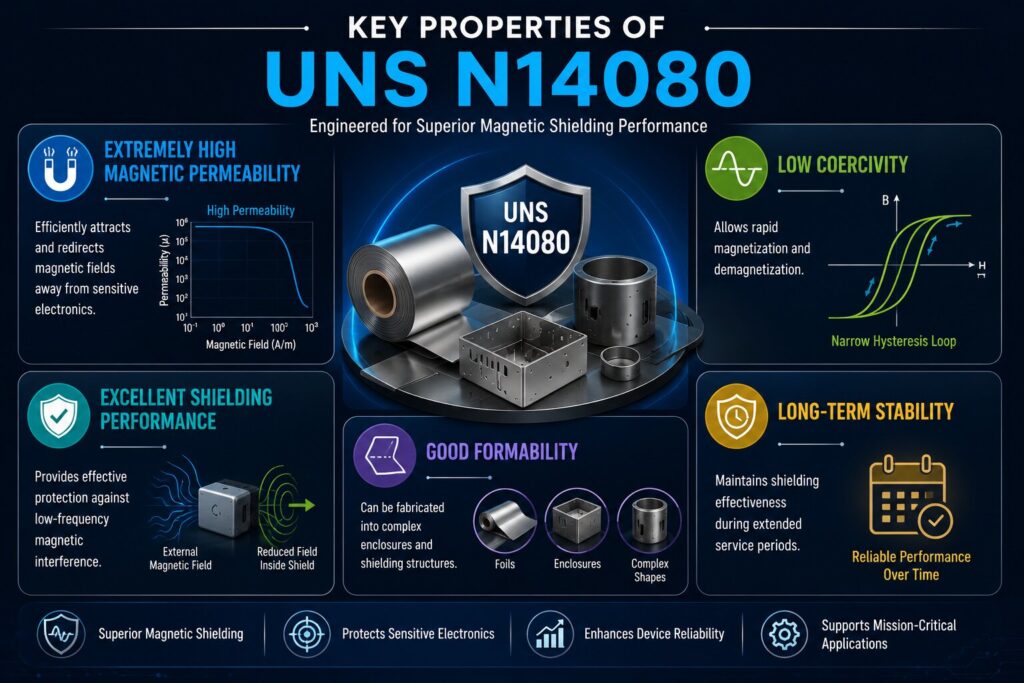
Extremely High Magnetic Permeability
High-permeability materials used in IoT Device Shielding efficiently attract and redirect magnetic fields away from sensitive electronics, helping maintain signal integrity and reliable device performance.
Low Coercivity
For effective IoT Device Shielding, low coercivity is an important property because it allows rapid magnetization and demagnetization, helping the material respond efficiently to changing magnetic fields and reducing unwanted interference.
Excellent Shielding Performance
High-performance IoT Device Shielding materials provide effective protection against low-frequency magnetic interference, helping maintain signal integrity, device reliability, and stable communication in sensitive electronic systems.
Good Formability
IoT Device Shielding solutions often require materials that can be fabricated into complex enclosures, housings, and shielding structures while maintaining consistent protection against electromagnetic interference.
Long-Term Stability
Reliable IoT Device Shielding materials maintain their shielding effectiveness during extended service periods, helping ensure consistent protection, long-term performance, and reduced maintenance requirements.
Technical Specifications
| Property | Typical Value |
| UNS Number | N14080 |
| Density | ~8.7 g/cm³ |
| Magnetic Permeability | Extremely High |
| Curie Temperature | Approx. 400°C |
| Electrical Resistivity | ~55 µΩ-cm |
| Operating Environment | Industrial & Electronic Applications |
Standards Associated with Shielding Materials
Common industry standards include:
- ASTM A753
- MIL-N-14411
- IEC 61000 Series
- CISPR Standards
- FCC EMC Regulations
- EN 55032
- ISO EMC Testing Standards
Compliance with these standards helps ensure reliable device performance and regulatory approval.
Applications of IoT Shielding Solutions
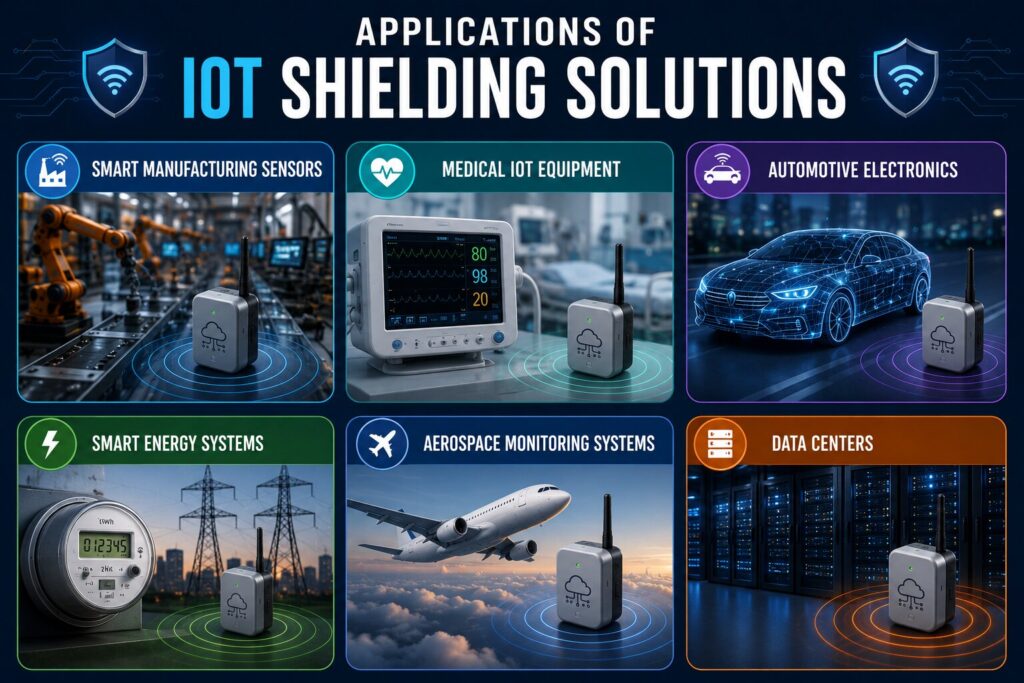
Smart Manufacturing Sensors
Protects industrial monitoring devices from electromagnetic disturbances.
Medical IoT Equipment
Supports stable operation of patient monitoring and diagnostic systems.
Automotive Electronics
Advanced IoT Device Shielding solutions help reduce electromagnetic interference that can affect vehicle communication networks, supporting reliable data transmission and stable electronic system performance.
Smart Energy Systems
Effective IoT Device Shielding improves the reliability of smart meters and grid monitoring equipment by reducing electromagnetic interference that can affect data accuracy and communication performance.
Aerospace Monitoring Systems
Protects mission-critical electronics from electromagnetic disruption.
Data Centers
Advanced IoT Device Shielding enhances communication stability for connected monitoring infrastructure by minimizing electromagnetic interference that can disrupt data transmission and system performance.
Shapes Available
DOMADIA™ supplies shielding materials in various forms, including:
- Foils
- Sheets
- Plates
- Strips
- Precision Components
- Shielding Enclosures
- Custom Fabricated Parts
- Laminated Shielding Assemblies
These options allow engineers to optimize shielding solutions for specific IoT applications.
Why DOMADIA™
Selecting the right material partner is as important as selecting the right shielding alloy.
DOMADIA™ supports industries with:
✔ High-performance shielding materials
✔ Technical material guidance
✔ Precision fabrication capabilities
✔ Custom dimensions and specifications
✔ International quality standards
✔ Reliable supply chain support
✔ Solutions for industrial, medical, aerospace, defense, and electronics sectors
As connected devices become increasingly integrated into critical infrastructure, DOMADIA™ continues helping manufacturers improve reliability through advanced shielding solutions.
Conclusion
The rapid expansion of connected technologies has made IoT Device Shielding a fundamental engineering requirement rather than an optional design consideration.
From industrial automation and healthcare systems to automotive electronics and smart infrastructure, shielding directly impacts reliability, communication quality, compliance, and operational performance.
By understanding electromagnetic challenges and selecting proven materials such as UNS N14080, engineers can significantly improve device stability and long-term success. DOMADIA™ remains committed to supplying advanced shielding solutions that support the next generation of connected technologies.
Looking for reliable shielding materials for your IoT and electronic applications?
Reach out toDOMADIA™ for application-specific solutions designed to meet demanding IoT, medical, aerospace, and industrial requirements.
Contact our expertstoday to discuss your application requirements and receive tailored material recommendations.
Talk to: Er.Pankaj Domadia | Kairav Domadia | Aadil Domadia | Pragati Sanap | Pooja N N
#IoTDeviceShielding #EMIShielding #UNSN14080 #MuMetal #IoTDevices #ElectronicsDesign #ElectromagneticInterference #DOMADIA #IndustrialIoT #SmartDevices
Directly whatsapp us for an Enquiry: https://wa.link/kairav
We’ve supplied to Mumbai, Pune, Indore, Jaipur, and Surat—serving industries across Maharashtra, Madhya Pradesh, Rajasthan, Gujarat, and Goa, with exports to Germany, USA, Japan, South Korea, and Italy.