Blogs
Rare Earth Supply Chain Challenges 2026: 7 Critical Risks Reshaping Global Industries
Rare Earth Supply Chain Challenges 2026: Why the World Is Paying Attention
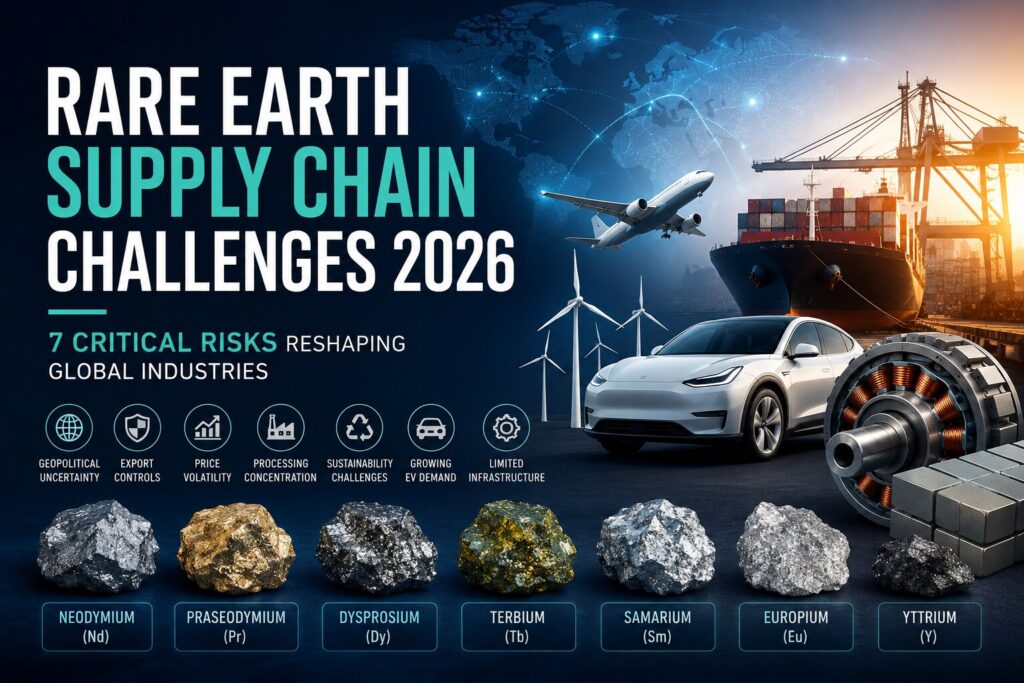
A major electric vehicle manufacturer recently experienced unexpected production delays. The issue was not related to battery shortages, labor constraints, manufacturing capacity, or declining demand. Instead, the disruption stemmed from difficulties in securing critical rare earth magnet materials required for motor production, highlighting growing concerns across the Rare Earth Supply Chain.
This situation reflects a growing reality across global industries. In 2026, access to rare earth elements has evolved from a procurement concern into a strategic business challenge. Governments, manufacturers, and technology companies are increasingly recognizing that a resilient Rare Earth Supply Chain is essential for long-term competitiveness, innovation, and operational stability.
The Rare Earth Supply Chain supports a wide range of industries, including electric vehicles, renewable energy systems, defense technologies, robotics, semiconductors, aerospace equipment, and advanced medical devices. A disruption at any point in the supply chain can affect multiple sectors simultaneously, making rare earth materials some of the most strategically important resources in the modern economy.
What Are Rare Earth Elements?
Rare earth elements (REEs) are a group of 17 metallic elements widely used in advanced technological applications and play a vital role in the Rare Earth Supply Chain. Despite their name, many rare earths are relatively abundant in the Earth’s crust. The challenge lies in economically extracting, separating, refining, and processing them into usable forms.
Common rare earth elements include:
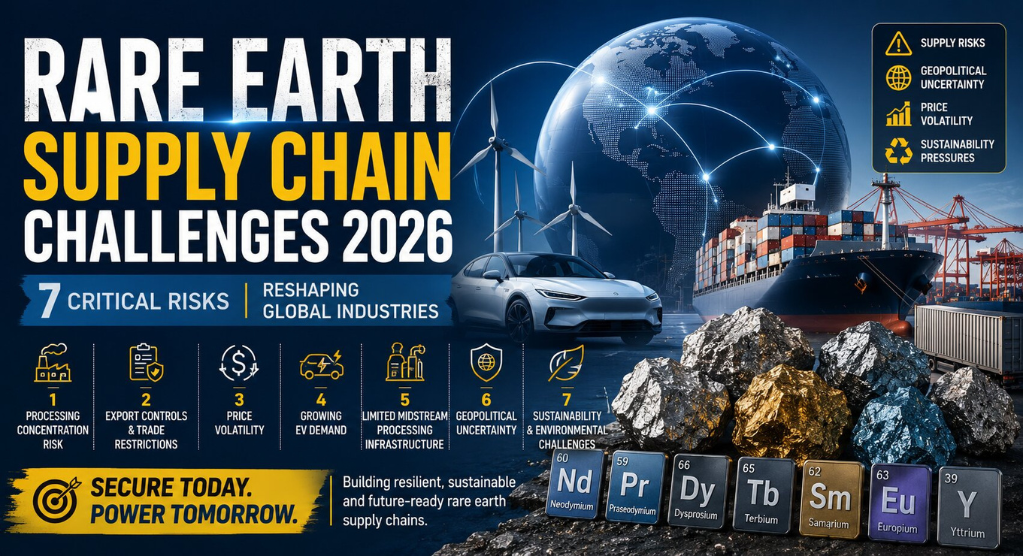
- Neodymium (Nd)
- Praseodymium (Pr)
- Dysprosium (Dy)
- Terbium (Tb)
- Samarium (Sm)
- Europium (Eu)
- Yttrium (Y)
These materials enable numerous high-performance applications, including:
- Permanent magnets
- Electric vehicle motors
- Wind turbine generators
- Aerospace systems
- Advanced electronics
- Defense technologies
- Medical imaging equipment
- Industrial automation systems
Without rare earth elements, many of the technologies driving global innovation would struggle to achieve current levels of efficiency and performance.
Why Rare Earths Matter More Than Ever in 2026
The world is undergoing a rapid transition toward electrification, automation, and renewable energy. These trends are dramatically increasing demand for rare earth materials.
Major demand drivers include:
- Electric vehicles
- Energy storage systems
- Wind power installations
- Artificial intelligence infrastructure
- Semiconductor manufacturing
- Defense modernization programs
- Robotics and automation equipment
As governments pursue carbon reduction goals and industries invest in next-generation technologies, consumption of rare earth materials continues rising. However, supply chain development has not always kept pace with demand growth, creating vulnerabilities throughout the global market.
7 Critical Rare Earth Supply Chain Challenges in 2026
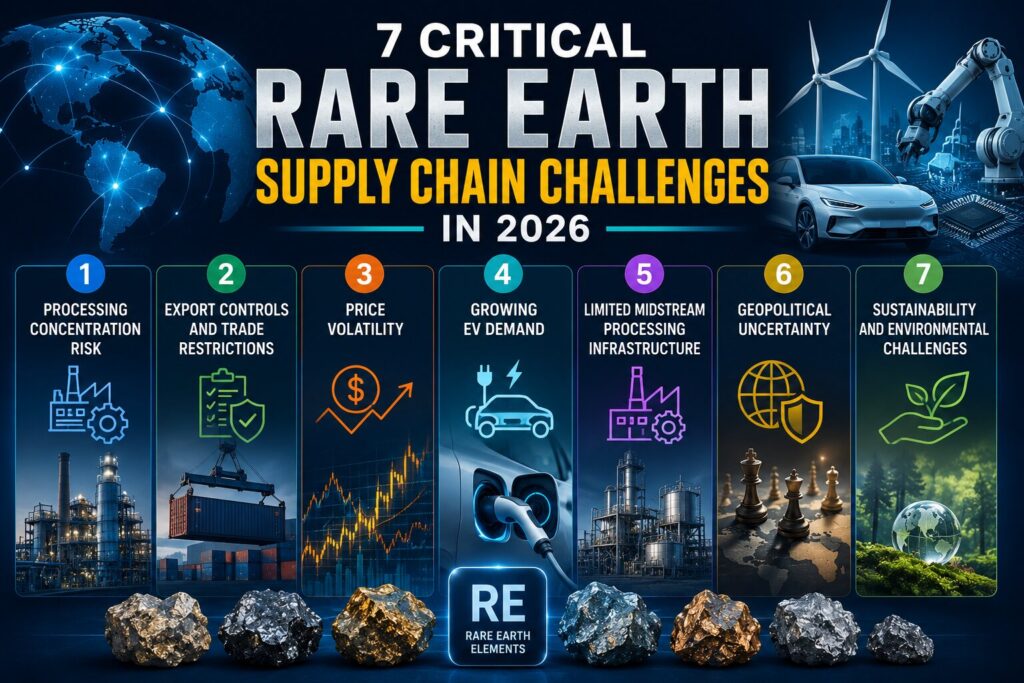
1. Processing Concentration Risk
Although rare earth deposits exist in many countries, refining and processing capacity remains highly concentrated, creating a major vulnerability within the Rare Earth Supply Chain.
Mining is only the first step in the supply chain. Rare earth ores must undergo complex separation and purification processes before they can be transformed into usable materials for advanced industrial applications.
A significant percentage of global refining capacity remains concentrated within a limited number of regions. This concentration creates supply chain risks because disruptions affecting processing facilities can impact manufacturers worldwide and weaken the stability of the Rare Earth Supply Chain.
For industries dependent on rare earth magnets and advanced materials, processing concentration remains one of the most significant challenges facing the market today.
2. Export Controls and Trade Restrictions
Governments increasingly recognize rare earth elements as strategic resources.
As a result, export controls, licensing requirements, and trade restrictions have become more common. These policies are often designed to protect domestic industries, strengthen national security, or secure long-term access to critical minerals.
While such measures may benefit local industries, they can create uncertainty for global manufacturers.
Challenges include:
- Reduced supply visibility
- Longer procurement timelines
- Increased compliance requirements
- Unpredictable material availability
For multinational companies, managing geopolitical risks has become a critical component of supply chain strategy.
3. Price Volatility
Rare earth markets are highly sensitive to supply disruptions and policy changes.
When supply becomes constrained or uncertainty increases, prices can rise rapidly. Conversely, new production capacity or changing demand conditions can lead to price declines.
Manufacturers face several challenges due to price volatility:
- Budget forecasting difficulties
- Inventory planning uncertainty
- Increased procurement risks
- Long-term contract challenges
Industries that depend heavily on rare earth materials must continuously monitor market conditions to maintain stable operations and control costs.
4. Growing EV Demand
Electric vehicles remain one of the fastest-growing consumers of rare earth materials, making them a major driver of demand across the Rare Earth Supply Chain.
High-performance permanent magnets used in EV motors often contain neodymium, praseodymium, dysprosium, and terbium. These materials enable compact motor designs, improved efficiency, and greater power density.
As global EV adoption continues expanding, competition for rare earth resources intensifies, placing additional pressure on the Rare Earth Supply Chain.
The result is increased pressure on:
- Mining operations
- Refining facilities
- Magnet manufacturers
- Material suppliers
Meeting future EV production targets will require substantial investment throughout the rare earth value chain to ensure a stable and resilient supply network.
5. Limited Midstream Processing Infrastructure
Many countries possess significant mineral reserves but lack sufficient processing infrastructure.
The rare earth supply chain depends on several critical stages:
- Ore separation
- Chemical refining
- Alloy production
- Magnet manufacturing
Without these intermediate processing capabilities, mineral-rich regions remain dependent on external suppliers for value-added production.
Building processing infrastructure requires:
- Significant capital investment
- Technical expertise
- Environmental compliance systems
- Long-term policy support
Expanding midstream capacity is becoming a priority for many nations seeking greater supply chain independence.
6. Geopolitical Uncertainty
Rare earth materials are increasingly viewed as strategic assets, making the Rare Earth Supply Chain a critical focus for governments and industries worldwide.
Governments around the world recognize that critical minerals play a vital role in:
- National security
- Defense readiness
- Energy independence
- Industrial competitiveness
- Technology leadership
Geopolitical tensions can influence trade relationships, investment decisions, and material availability, creating uncertainty across the Rare Earth Supply Chain.
For manufacturers, geopolitical developments are no longer distant political events. They directly affect sourcing strategies, procurement planning, and long-term business decisions.
As a result, strengthening supply chain resilience has become a major strategic objective across numerous industries that depend on secure access to critical materials.
7. Sustainability and Environmental Challenges
Rare earth extraction and processing require responsible environmental management, making sustainability an increasingly important consideration throughout the Rare Earth Supply Chain.
Key sustainability challenges include:
- Waste treatment
- Water consumption
- Land rehabilitation
- Emissions control
- Energy usage
Governments, investors, and customers increasingly expect manufacturers to demonstrate responsible sourcing practices and greater transparency across the Rare Earth Supply Chain.
Sustainability is no longer viewed solely as a regulatory requirement. It has become an important competitive factor that influences supplier selection, investment decisions, and brand reputation.
Companies capable of combining supply security with environmental responsibility are likely to gain significant advantages in the years ahead while helping build a more resilient and sustainable global materials ecosystem.
How Industries Are Responding
To reduce supply chain risks, organizations are adopting several proactive strategies.
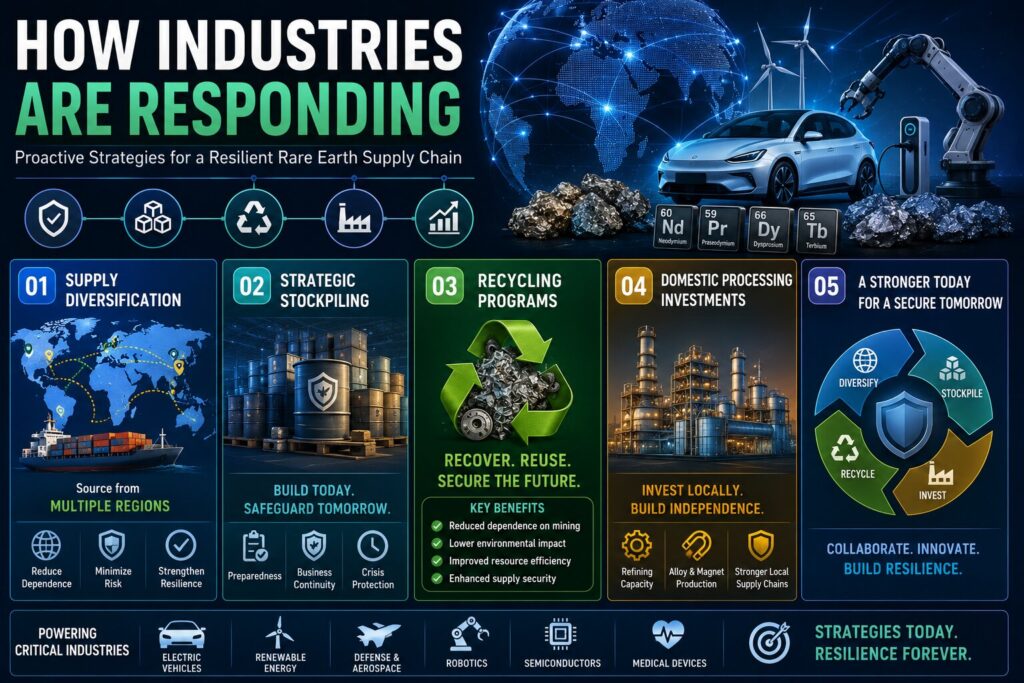
Supply Diversification
Manufacturers are increasingly sourcing materials from multiple regions rather than relying on a single supplier or country.
Strategic Stockpiling
Governments and companies are building inventories of critical materials to improve resilience during supply disruptions.
Recycling Programs
Rare earth recovery from end-of-life products is gaining momentum.
Benefits include:
- Reduced dependence on mining
- Lower environmental impact
- Improved resource efficiency
- Enhanced supply security
Domestic Processing Investments
Many nations are investing heavily in refining, alloy production, and magnet manufacturing facilities to strengthen local supply chains and reduce external dependencies.
Market Outlook for 2026 and Beyond
The rare earth industry is entering a period of significant transformation.
Several key trends are expected to shape future development:
- Increased regional processing capacity
- Greater supply diversification
- Strategic mineral partnerships
- Expansion of recycling technologies
- Long-term infrastructure investment
- Improved processing efficiency
- Enhanced sustainability initiatives
The challenge facing the industry is no longer simply discovering new mineral deposits.
The greater challenge is building resilient, reliable, and sustainable supply chains capable of supporting future industrial growth.
Organizations that invest today in supply security, processing capabilities, and strategic partnerships will be better positioned for long-term success.
Why DOMADIA™
DOMADIA™ supports industries requiring advanced metals, alloys, shielding materials, thermal management solutions, and strategic engineering materials.
What Sets DOMADIA™ Apart?
- Global sourcing expertise
- Reliable industrial supply network
- Technical material guidance
- Support for advanced manufacturing industries
- Focus on quality, consistency, and long-term partnerships
Industries Served
- Aerospace
- Defense
- Electronics
- Renewable Energy
- Electric Vehicles
- Semiconductor Manufacturing
- Industrial Automation
DOMADIA™ remains committed to helping customers navigate evolving material challenges while supporting innovation and industrial growth.
Conclusion
The Rare Earth Supply Chain has become one of the most strategically important industrial ecosystems in the world. From electric vehicles and renewable energy systems to defense technologies and semiconductor manufacturing, nearly every advanced industry depends on reliable access to rare earth materials.
As governments and industries continue investing in diversification, recycling technologies, refining capacity, and strategic partnerships, the future of the Rare Earth Supply Chain will be defined by resilience, sustainability, and geopolitical adaptability.
Organizations that proactively secure material availability today will be better positioned to compete in tomorrow’s technology-driven economy.
Looking for reliable industrial materials and strategic sourcing solutions?
Connect withDOMADIA™ today to discuss your requirements for rare earth materials, advanced alloys, shielding solutions, and high-performance engineering materials.
Contact DOMADIA™ to explore customized material solutions for your industry.
Talk to: Er.Pankaj Domadia | Kairav Domadia | Aadil Domadia | Pragati Sanap | Pooja N N
#RareEarthSupplyChain #RareEarthElements #CriticalMinerals #EVIndustry #CleanEnergy #SupplyChainManagement #IndustrialMaterials #DOMADIA
Directly whatsapp us for an Enquiry: https://wa.link/kairav
Our supply network spans Delhi, Noida, Gurugram, Faridabad, and Ghaziabad across Delhi NCR, Haryana, UP, Rajasthan, and Punjab, reaching clients in UAE, Saudi Arabia, Qatar, Oman, and Kuwait.