Blogs
US China Rare Earth: 7 Powerful Reasons Behind America’s Supply Chain Dependence
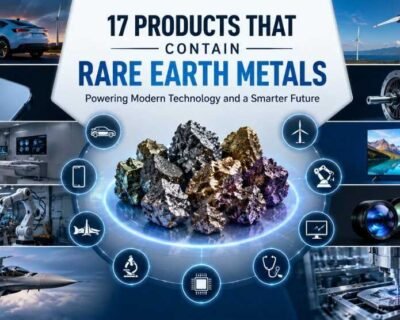
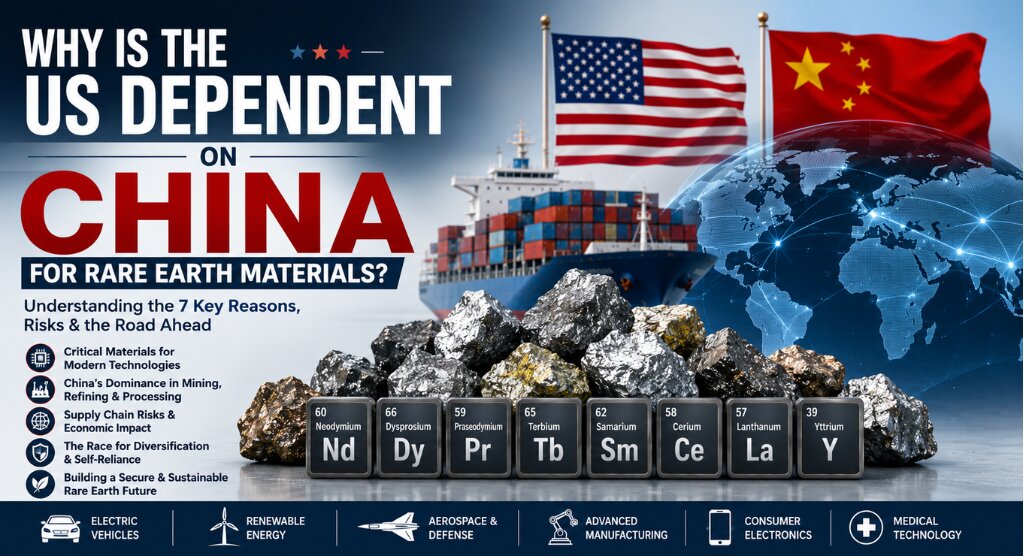
Modern technology depends on materials that many people rarely hear about. Smartphones, electric vehicles, wind turbines, fighter aircraft, MRI machines, satellites, robotics, and advanced defense systems all rely on the US China Rare Earth supply chain to function efficiently.
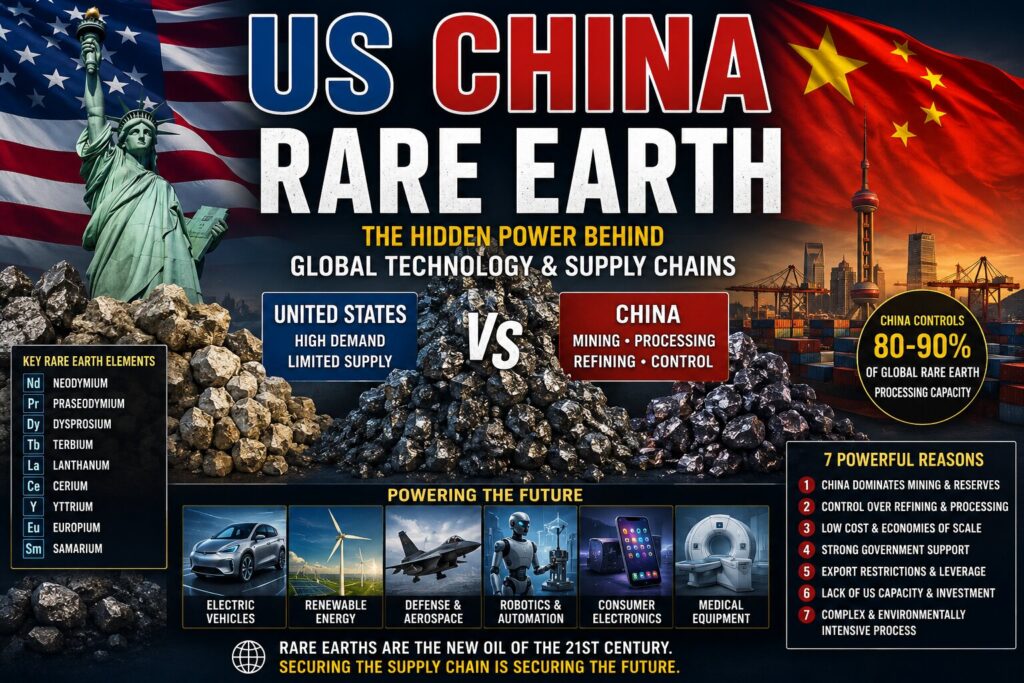
Although rare earth elements are not actually rare in the Earth’s crust, producing high-purity rare earth materials requires complex mining, separation, refining, and processing technologies. Over the past three decades, China has built an integrated ecosystem that dominates nearly every stage of this value chain, making many countries—including the United States—dependent on Chinese production. This growing US China Rare Earth dependency has become a strategic concern for governments and manufacturers worldwide.
This dependency is not simply about mining. It is about refining expertise, processing infrastructure, manufacturing capacity, environmental regulations, and decades of industrial investment. Understanding the US China Rare Earth relationship is essential for businesses and policymakers seeking resilient, diversified supply chains for future technologies.
What Are Rare Earth Materials?
Rare earth materials are a group of 17 metallic elements consisting of:
- 15 Lanthanides
- Scandium
- Yttrium
Some of the most commercially important rare earth elements include:
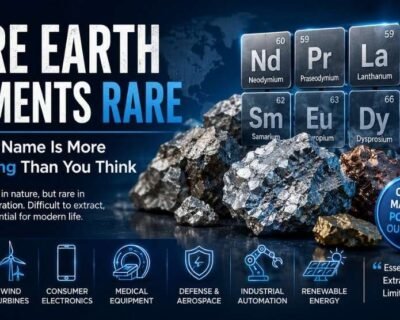
- Neodymium (Nd)
- Praseodymium (Pr)
- Dysprosium (Dy)
- Terbium (Tb)
- Samarium (Sm)
- Cerium (Ce)
- Lanthanum (La)
- Yttrium (Y)
These materials enable powerful permanent magnets, catalysts, polishing compounds, lasers, batteries, defense electronics, semiconductors, and numerous advanced industrial applications.
Why Does China Dominate the Rare Earth Industry?
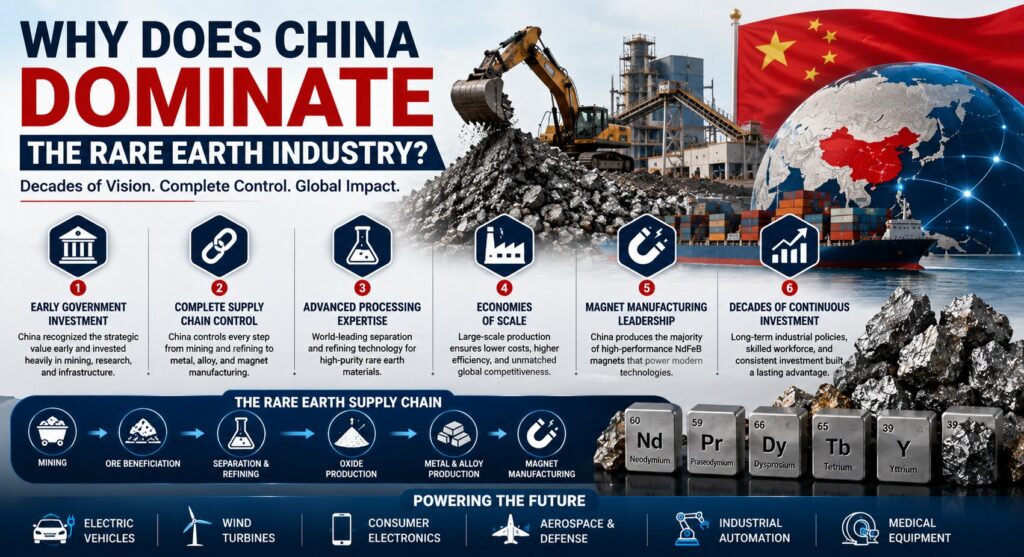
1. Early Government Investment
China recognized the strategic value of rare earths decades ago.
Beginning in the 1980s and 1990s, significant investments were made in:
- Mining operations
- Separation technology
- Refining plants
- Research laboratories
- Magnet manufacturing
While many countries reduced domestic production due to cost and environmental concerns, China continued expanding capacity.
2. Complete Supply Chain Integration
Mining is only the first step.
Producing usable rare earth materials involves:
- Ore beneficiation
- Chemical separation
- Solvent extraction
- Oxide production
- Metal production
- Alloy manufacturing
- Magnet fabrication
China controls a substantial portion of this complete value chain, making it difficult for competitors to quickly establish alternative production.
3. Advanced Processing Expertise
Separating individual rare earth elements is one of the most technically demanding metallurgical processes.
Even countries with significant rare earth deposits often send concentrates overseas because they lack:
- Refining facilities
- High-purity separation capability
- Specialized chemical processing
- Industrial-scale production experience
This processing expertise has become one of China’s greatest competitive advantages.
4. Economies of Scale
China operates large production facilities capable of manufacturing enormous quantities of rare earth oxides, metals, alloys, and magnets.
Large-scale production provides:
- Lower manufacturing costs
- Higher efficiency
- Stable commercial supply
- Better pricing competitiveness
These economies of scale make it difficult for smaller producers to compete.
5. Magnet Manufacturing Leadership
Most demand for rare earth elements comes from permanent magnets.
China manufactures a significant share of:
- NdFeB magnets
- SmCo magnets
- High-performance magnetic assemblies
These magnets are essential for:
- Electric vehicles
- Wind turbines
- Robotics
- Industrial motors
- Aerospace
- Consumer electronics
6. Environmental and Regulatory Challenges
Rare earth processing generates chemical waste and requires careful environmental management.
Many Western countries reduced domestic refining because of:
- Strict environmental regulations
- Higher operating costs
- Complex permitting
- Community opposition
China continued investing while improving industrial capabilities over time.
7. Decades of Continuous Investment
Building a competitive rare earth industry cannot happen overnight.
It requires:
- Mining infrastructure
- Chemical processing plants
- Skilled engineers
- Research institutions
- Long-term capital investment
- Stable industrial policy
China has spent decades developing these capabilities.
Why Does This Matter to the United States?
The US China Rare Earth supply chain has become a strategic concern because rare earth materials are essential for national security, advanced manufacturing, and industrial competitiveness. As demand for clean energy, defense technologies, and high-performance electronics continues to grow, reducing reliance on a single source has become a major priority. The US China Rare Earth challenge affects several critical industries, including:
Defense
The US China Rare Earth supply chain plays a vital role in defense manufacturing. Rare earth materials are used in:
- Fighter aircraft
- Missile guidance systems
- Radar
- Sonar
- Military communications
Electric Vehicles
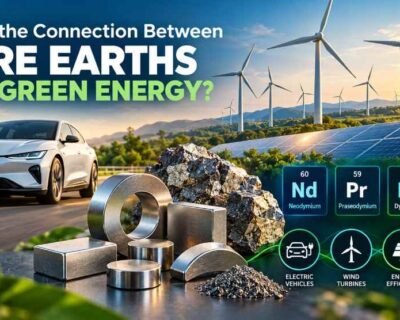
High-performance permanent magnets made from rare earth elements improve motor efficiency, reduce vehicle weight, and increase driving range. Securing the US China Rare Earth supply chain is increasingly important for expanding EV production.
Renewable Energy
Wind turbine generators depend on powerful rare earth magnets for efficient electricity generation, making US China Rare Earth sourcing critical to the global transition toward renewable energy.
Consumer Electronics
Smartphones, laptops, headphones, cameras, wearable devices, and countless electronic products rely on rare earth components. A resilient US China Rare Earth supply chain helps ensure stable production of these technologies.
Medical Equipment
MRI scanners, diagnostic systems, precision sensors, imaging equipment, and other advanced healthcare technologies require specialized rare earth materials to deliver reliable performance and accurate results.
How Is the US Reducing This Dependency?
The US China Rare Earth supply chain is evolving as the United States and its allies invest in strengthening domestic capabilities and diversifying global sources. Several strategic initiatives are underway to reduce reliance on a single supplier and build a more resilient US China Rare Earth ecosystem.
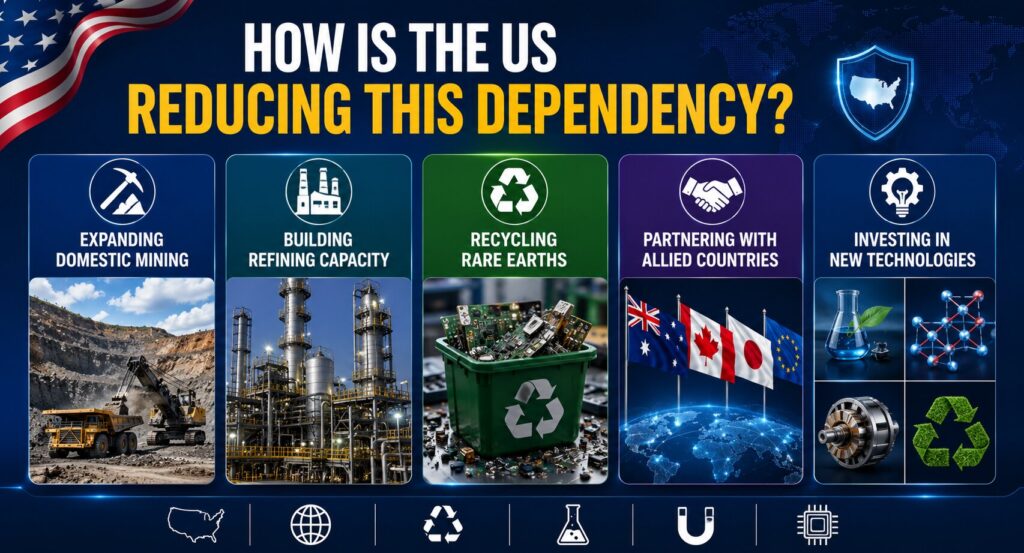
Expanding Domestic Mining
New mining projects are being developed to increase domestic production of rare earth materials, helping strengthen the US China Rare Earth supply chain and improve long-term resource security.
Building Refining Capacity
Significant investment in chemical separation and refining facilities aims to reduce dependence on overseas processing and establish a stronger US China Rare Earth processing infrastructure.
Recycling Rare Earths
Recovering valuable rare earth elements from electronic waste and end-of-life products can supplement primary production while supporting a more sustainable US China Rare Earth supply chain.
Partnering with Allied Countries
The United States is expanding collaboration with Australia, Canada, Japan, and several European nations to diversify sourcing, strengthen supply security, and reduce US China Rare Earth dependency.
Investing in New Technologies
Researchers and manufacturers continue investing in innovative technologies to improve the future of the US China Rare Earth industry, including:
- Improved extraction methods
- Cleaner separation processes
- Alternative magnetic materials
- More efficient rare earth recycling technologies
Challenges Ahead
Diversifying the global rare earth supply chain is a long-term effort.
Key challenges include:
- High capital investment
- Long project development timelines
- Environmental compliance
- Skilled workforce requirements
- Market price volatility
- Processing technology development
Building a resilient supply chain may take many years, even with significant investment.
Why Reliable Rare Earth Suppliers Matter
Manufacturers increasingly seek suppliers that provide:
- Consistent material quality
- Verified chemical composition
- Reliable global logistics
- Technical support
- Stable long-term supply
- International quality standards
As industries such as aerospace, electric vehicles, renewable energy, defense, electronics, and semiconductors continue to expand, dependable sourcing partners become increasingly important.
DOMADIA™ supplies a wide range of high-performance rare earth materials, specialty metals, powders, alloys, and advanced industrial materials that support demanding manufacturing applications across global industries.
Conclusion
The US China Rare Earth relationship reflects decades of industrial development rather than the availability of mineral deposits alone. China’s leadership in mining, refining, processing, and magnet manufacturing has created an integrated ecosystem that many industries rely upon today.
While the United States and its allies are investing heavily to diversify supply chains, developing equivalent capabilities requires significant time, capital, technology, and expertise. Companies that prioritize resilient sourcing, quality assurance, and long-term partnerships will be better positioned to navigate future changes in the global rare earth market. DOMADIA™ remains committed to supporting industries with dependable specialty materials and technical expertise as global supply chains continue to evolve.
Secure Your Rare Earth Supply Chain with DOMADIA™
DOMADIA™ supplies high-performance rare earth materials, specialty metal powders, and advanced alloys with dependable quality, expert support, and reliable global delivery.
Get Expert Guidance from DOMADIA™ to Choose the Right Rare Earth Materials for Your Critical Applications.
Talk to: Er.Pankaj Domadia | Kairav Domadia | Aadil Domadia | Pragati Sanap | Pooja N N
#RareEarth #CriticalMinerals #China #SupplyChain #EV #RenewableEnergy #Defense #Manufacturing #IndustrialMaterials #DOMADIA
Directly whatsapp us for an Enquiry: https://wa.link/kairav
We’ve supplied to Mumbai, Pune, Indore, Jaipur, and Surat—serving industries across Maharashtra, Madhya Pradesh, Rajasthan, Gujarat, and Goa, with exports to Germany, USA, Japan, South Korea, and Italy.